
Here’s what nobody is saying loudly enough: Nigeria allocated N218 billion for health capital projects — but released just N36 million.
That’s not a delay. That’s 0.02% implementation.
While hospitals struggle with broken equipment and overstretched staff, the funding meant to fix them has barely moved.
Nigeria’s public hospitals are battling equipment shortages, stalled infrastructure upgrades, and rising workforce migration — and now a funding revelation has intensified concerns across the health sector.
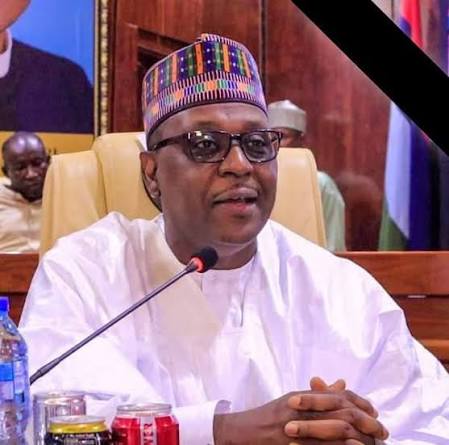
At the 2026 budget defence before lawmakers, the Minister of Health and Social Welfare, Muhammad Ali Pate, disclosed that only N36 million was released from the N218 billion capital allocation approved for the health sector in the 2025 fiscal year.
That figure represents roughly 0.015% of the total allocation.
Let that sink in.
1. Why Capital Funding Matters More Than You Think
When people hear “health budget,” they often assume it covers salaries and drugs.
But capital expenditure funds the backbone of the system:
• Hospital upgrades
• Medical equipment procurement
• Diagnostic laboratories
• Oxygen plants
• Digital health systems
• Expansion of primary healthcare centres
Without capital releases, transformation stalls.
Experts argue that capital financing is what determines whether a hospital can perform emergency surgeries, manage high-risk pregnancies, or treat chronic diseases effectively.
Advertisement
So what happens when 99.98% of that allocation isn’t released?
2. The Bigger Crisis: Health Indicators Already Under Pressure
Nigeria’s health statistics were already concerning before this funding gap.
Maternal mortality remains estimated at over 500 deaths per 100,000 live births.
Neonatal mortality is above 35 per 1,000 live births.
Out-of-pocket healthcare spending remains one of the highest in Africa.
Now ask yourself:
How do these numbers improve without infrastructure investment?
Stakeholders say they don’t.
3. Abuja Declaration: A 24-Year-Old Promise
In 2001, African leaders adopted the African Union Abuja Declaration, pledging to allocate at least 15% of national budgets to health.
More than two decades later, Nigeria has consistently fallen short of that target.
Now, beyond allocation percentages, stakeholders are raising a new concern:
Even approved budgets are not being released.
That’s a different kind of problem.
4. The Human Cost: Beyond the Numbers
According to medical professionals, underfunding capital projects has ripple effects:
• Emergency care gaps – Broken equipment delays life-saving procedures.
• Maternal health risks – Limited surgical capacity increases preventable deaths.
• Health worker frustration – Poor facilities accelerate brain drain.
Nigeria is already experiencing significant migration of doctors, nurses, and pharmacists abroad. When hospitals lack diagnostic tools and infrastructure, professional morale declines further.
And here’s the uncomfortable truth:
No health worker wants to practise in a system where they cannot deliver quality care.
5. Systemic Dysfunction or Fiscal Bottleneck?
Pharmaceutical and medical stakeholders describe the release as “embarrassing” for a country of over 200 million people aspiring to Universal Health Coverage.
But the real issue may be structural:
• Is it a revenue shortfall?
• A bureaucratic bottleneck?
• Competing fiscal priorities?
• Or deeper governance inefficiencies?
Until capital releases align with appropriations, policy intentions remain theoretical.
6. Why This Matters for Every Nigerian
Most people only notice health system weaknesses during emergencies.
But infrastructure gaps silently affect:
• Rural communities without access to upgraded primary health centres
• Urban hospitals overwhelmed by patient volume
Advertisement
• Families pushed into poverty due to private hospital costs
• Health funding is not abstract. It determines survival rates.
And as experts argue, when capital investment stagnates, mortality and system fragility increase.
7. What Needs to Change?
Stakeholders are calling for:
• Full and timely release of approved capital funds
• Transparent tracking of health budget implementation
• Stronger fiscal accountability mechanisms
• Strategic prioritisation of equipment procurement
Because here’s the bottom line:
Allocation without release is symbolic.
Release without execution is wasteful.
But proper implementation is transformational.
Nigeria’s health sector stands at a crossroads.
If this moment becomes a turning point for fiscal reform and accountability, progress is possible.
If not, the consequences will continue to show up in emergency wards and maternal units across the country.
And that’s a cost measured in lives.
You must log in to comment or reply.
Comments