
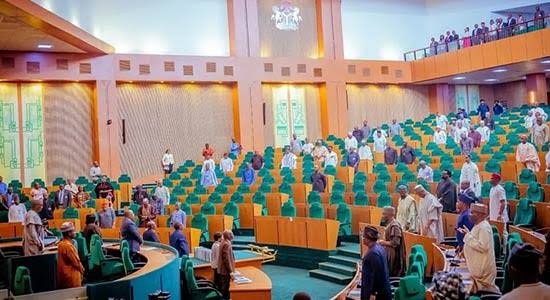
Nigeria's democratic institutions are facing renewed criticism after a bipartisan group of federal lawmakers warned that constitutional governance is under increasing strain. The legislators argue that unresolved questions over lawmaking, public spending, security funding, and budget implementation require immediate parliamentary attention, raising concerns that extend beyond routine political disagreements.
The warning comes at a time when Nigeria is battling economic pressures, persistent insecurity, and growing public demands for greater transparency, placing additional focus on the role of the National Assembly as the country's oversight institution.
A coalition of members of the House of Representatives operating under the Save Democracy Group has called on the leadership of the National Assembly to reconvene both legislative chambers for an emergency session, arguing that Nigeria cannot afford to leave major constitutional and governance issues unaddressed.
In a statement issued on Friday and signed on behalf of the group by Awaji-Inombek Abiante (PDP, Bayelsa), Abubakar Kusada (APC, Katsina), and Mansur Jega (ADC, Kebbi), the lawmakers described themselves as a bipartisan platform committed to constitutional governance, legislative independence, accountability, and the rule of law.
According to the group, several recent developments—including controversies surrounding legislative procedures, delays in budget implementation, concerns over public expenditure, worsening insecurity, and economic hardship—require urgent parliamentary intervention.
Among the issues raised was the National Assembly's approval of the state of emergency declared in Rivers State in March 2025. The lawmakers alleged that the approval relied on a voice vote despite constitutional provisions requiring support from two-thirds of all members of each legislative chamber.
Advertisement
The group also questioned the passage of the Executive State Police Constitutional Alteration Bill in the House of Representatives on July 23, 2026. While House leadership announced that 311 lawmakers voted in favour of the proposal, members of the group claimed fewer legislators were physically present during proceedings and further alleged that votes submitted through WhatsApp by absent lawmakers were included in the final tally.
The lawmakers argued that constitutional amendments must strictly follow procedures outlined in the Constitution, regardless of whether the proposed reforms enjoy broad political support.
Although they acknowledged that creating state police remains a policy option many Nigerians consider necessary to improve internal security, they maintained that procedural compliance is essential to preserve the legitimacy of constitutional reforms.
Coverage of the development has largely centred on the lawmakers' criticism of democratic institutions. Punch Newspapers focused extensively on the group's allegations regarding legislative procedure, fiscal accountability, and security funding. As of publication, there had been no publicly reported response from the National Assembly leadership addressing the specific claims, while the allegations remain unverified and should not be interpreted as established facts without official confirmation.
Beyond legislative procedure, the statement reflects wider concerns that have increasingly dominated public debate over Nigeria's governance. Questions surrounding transparency in public finance, constitutional accountability, and institutional independence have become recurring issues as government spending continues to expand alongside mounting economic challenges.
The lawmakers also criticised what they described as persistent under-implementation of annual budgets. They argued that repeated delays in releasing capital funds, extensions of budget implementation periods, and the rollover of projects into subsequent fiscal years undermine the effectiveness of the Appropriation Acts passed by Parliament.
They cited government indications that only about 30 percent of the 2025 capital budget may ultimately be funded, with remaining projects deferred into 2026. On that basis, the group demanded comprehensive implementation reports covering the 2024, 2025, and 2026 budgets, alongside detailed disclosure of capital releases to Ministries, Departments, and Agencies.
The legislators further called for a parliamentary investigation into what they described as chronic failures to fully implement approved budgets, arguing that appropriated funds should be traceable from legislative approval through expenditure.
Their concerns also extended to public finance transparency. Referencing reports they attributed to the International Monetary Fund, the lawmakers alleged that public expenditure equivalent to approximately two percent of Nigeria's Gross Domestic Product—estimated at about ₦8.83 trillion—was not reflected in recent federal budgets. They called for an independent forensic audit while stressing that the claims require proper investigation rather than political rebuttals.
Budget transparency has remained a recurring issue in Nigeria for years. Successive administrations have faced criticism over delays in capital project execution, while oversight bodies and civil society organisations have repeatedly urged stronger monitoring of public expenditure. Similar debates have surfaced during previous budget cycles as lawmakers questioned implementation rates and revenue performance.
Advertisement
The lawmakers also linked governance concerns to the country's worsening security environment. They argued that funding priorities should favour operational requirements of the Armed Forces, police, and intelligence agencies rather than administrative expenditure.
Citing budget performance figures, they claimed that almost the entire allocation for the Presidential Air Fleet had reportedly been released while only a limited portion of the Nigerian Army's allocation for security equipment became available during the same period. The group said the issue was not whether presidential aircraft should receive funding, but whether frontline security agencies should receive more predictable support while confronting terrorism, banditry, and other security threats.
The lawmakers further praised recent interventions by the Catholic Bishops' Conference of Nigeria and the Supreme Council for Shari'ah in Nigeria, saying public criticism from religious organisations demonstrates the importance of open democratic engagement rather than political hostility.
Ultimately, the group urged Senate President Godswill Akpabio and House Speaker Tajudeen Abbas to reconvene the National Assembly to deliberate on the controversies surrounding budget implementation, legislative procedures, alleged off-budget expenditure, constitutional accountability, and national security.
The allegations contained in the statement remain claims by the lawmakers and have not been independently verified through official parliamentary records or responses from relevant government institutions. The coming days may determine whether legislative leaders respond to the demands for an emergency session or whether the issues raised evolve into a broader national debate over accountability, constitutional procedure, and democratic governance.
You must log in to comment or reply.
Comments