
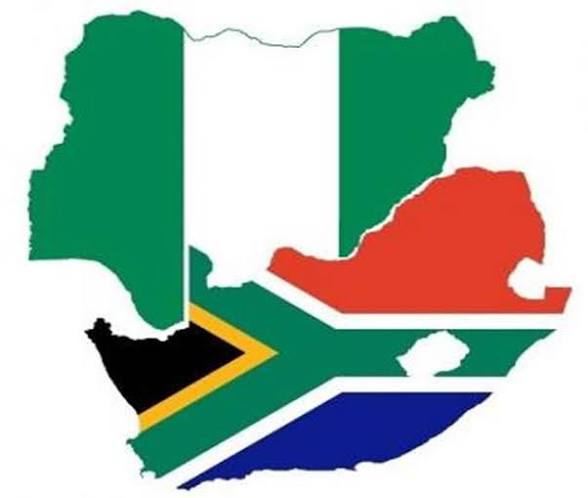
As anti-migrant demonstrations spread across parts of South Africa, Nigeria has issued one of its strongest warnings yet, demanding protection for its citizens and accountability for any attacks linked to the protests. The development has revived painful memories of previous xenophobic violence that strained relations between Africa's two largest economies.
The protests, which began on Tuesday, have once again placed migration, security, and diplomacy at the centre of a growing regional debate.
Anti-migration groups, including the vigilante movement March and March, launched protests following an unofficial June 30 deadline that called on undocumented foreigners to leave South Africa.
Although organisers insisted the demonstrations were aimed only at undocumented migrants and would remain peaceful, reports emerged of harassment and intimidation targeting foreign nationals, including legally resident migrants.
Reacting to the situation, Senior Special Assistant to President Bola Tinubu on Foreign Affairs, Ademola Oshodi, said Nigeria expected immediate action from South African authorities.
"The warning is simple: Nigeria expects action. Investigate every reported attack, protect Nigerian communities, restrain vigilante groups, prosecute wrongdoing, and activate the Nigeria-South Africa Early Warning Mechanism without further delay," Oshodi said.
He stressed that while South Africa has the right to enforce its immigration laws, such responsibilities belong to state institutions and not to vigilante groups or political movements targeting foreigners.
According to Nigerian officials, at least two Nigerians have reportedly been killed since xenophobic attacks resurfaced, although the identities of all victims have not yet been independently verified by major international agencies.
The Nigerian government also confirmed that evacuation flights have already returned some citizens who voluntarily chose to leave South Africa, with more flights expected in the coming days.
Advertisement
South African President Cyril Ramaphosa appealed for calm, warning that violence and criminal activity would face "the full might of the law."
Meanwhile, March and March leader Jacinta Ngobese-Zuma denied allegations that her group intended to incite violence.
"We are not calling for violence. No one will be killed on 30 June and no looting will take place in our name," she said.
International outlets such as the Associated Press and Reuters largely framed the protests as part of South Africa's growing anti-immigration movement and focused on security preparations by authorities.
South African media organisations placed greater emphasis on public frustration over unemployment, crime, and illegal immigration, issues that have become increasingly politicised ahead of future elections.
Nigerian media, however, have highlighted a different angle: the safety of Nigerians abroad and the possibility of renewed xenophobic violence against African migrants.
What many reports underplayed is the diplomatic significance of the crisis. Nigeria and South Africa maintain one of Africa's most important bilateral relationships, with extensive trade ties, investment flows, and cooperation across the continent. Any prolonged tensions could affect both economic and political relations.
This is not the first time South Africa has faced accusations of xenophobic violence.
Major anti-foreigner attacks in 2008, 2015, and 2019 resulted in dozens of deaths, widespread looting, and the displacement of thousands of migrants. The 2019 attacks triggered diplomatic protests from several African nations, including Nigeria, and prompted emergency evacuations.
The underlying drivers have remained remarkably consistent: high unemployment, inequality, and frustrations over economic opportunities.
South Africa's unemployment rate remains among the highest in the world, particularly among young people. In such conditions, migrants often become easy targets for public anger, even though studies have repeatedly found little evidence that immigration is the primary cause of job losses or rising crime.
For Nigeria, the issue extends beyond diplomacy.
Thousands of Nigerians live, study, and operate businesses in South Africa, contributing to sectors ranging from retail and technology to education and healthcare. Renewed attacks could disrupt livelihoods and force additional evacuations, creating humanitarian and economic consequences for affected families back home.
The situation also raises broader questions about African integration. The African Union has long advocated for greater continental cooperation and freer movement of people and capital. Recurring anti-migrant violence risks undermining those ambitions and exposing deep social and economic fractures across the continent.
Historical Context and Data
South Africa hosts millions of foreign nationals from across Africa and beyond, making migration one of the country's most sensitive political issues.
Previous outbreaks of xenophobic violence have resulted in:
Advertisement
Dozens of deaths and injuries.
Thousands of displaced migrants.
Significant economic losses due to looting and business closures.
Diplomatic tensions between South Africa and several African countries.
The activation of the Nigeria-South Africa Early Warning Mechanism, mentioned by Nigerian officials, has become increasingly important as both governments seek to prevent another major diplomatic crisis.
The immediate challenge for South African authorities will be ensuring that protests remain peaceful and preventing vigilante groups from targeting foreign communities.
For Nigeria, the focus has shifted to protecting its citizens and preparing additional evacuation measures if security conditions deteriorate.
The real test, however, may be whether both countries can move beyond emergency responses and address the deeper economic and political grievances that repeatedly fuel anti-migrant tensions. What happens in the coming days could shape not only the safety of thousands of migrants but also the future of one of Africa's most important bilateral relationships.
You must log in to comment or reply.
Comments