
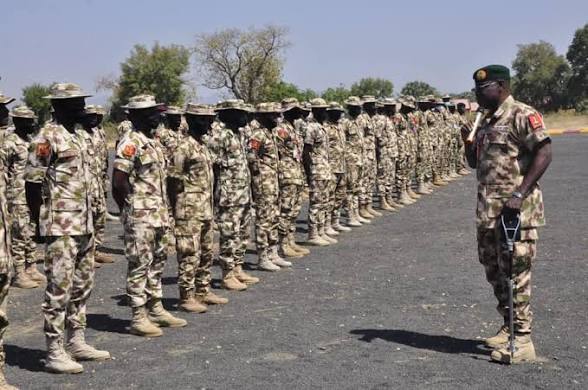
The Nigerian Army has reportedly graduated a new Special Forces battalion following six months of intensive training at its Special Forces School in Doma, Nasarawa State. According to a report by PUNCH Newspapers published on October 9, 2026, the development is intended to strengthen the military's ability to respond to terrorism, criminal networks and emerging security threats.
The reported graduation comes as the Army seeks to improve specialised operational capabilities and prepare personnel for increasingly complex security challenges.
The Nigerian Army reportedly graduated a new Special Forces battalion during a ceremony at the Nigerian Army Special Forces School in Doma, Nasarawa State, on Friday, October 9.
According to PUNCH Newspapers, Chief of Army Staff Lieutenant General Waidi Shaibu said the new battalion would improve the military's ability to conduct specialised operations, operate in difficult terrain and dismantle terrorist and criminal networks.
The report attributed the announcement to a statement by the Acting Director of Army Public Relations, Colonel Appolonia Anele.
Shaibu reportedly explained that the Army needed additional specialised capabilities following the expansion of its divisions from eight to 12. The expansion, according to the report, increased the need to strengthen operational readiness and extend security coverage.
The report also said the newly trained personnel completed six months of intensive instruction intended to improve their combat skills, resilience and ability to operate under challenging conditions.
Training at the school reportedly includes a 20-obstacle course and a maze designed to help soldiers develop confidence in darkness and confined spaces while improving their spatial awareness.
During the ceremony, Shaibu reportedly urged the graduates to maintain discipline, exercise sound judgment and respect human rights in the performance of their duties.
He also emphasised the importance of intelligence-led operations, technological awareness and cooperation among military services and other security agencies.
Superior News has not independently confirmed the specific graduation ceremony or all the details contained in the original report.
Why Does It Matter?
1. Specialised Training Is Important for Complex Security Operations
Counter-terrorism operations can involve difficult terrain, concealed threats and opponents who change their tactics.
Specialised military training is intended to prepare personnel for demanding assignments that may require advanced combat skills, coordination and the ability to make decisions under pressure.
If confirmed, the graduation would represent an addition to the Army's pool of personnel trained for specialised operations.
Advertisement
However, graduating a new battalion does not, by itself, establish how effectively it will perform in the field.
2. Emerging Threats Require Operational Adaptation
The PUNCH report identified drones and improvised explosive devices among the threats confronting military personnel.
These technologies and tactics can complicate military operations by increasing the difficulty of detecting threats and protecting troops.
The Army's reported emphasis on technological awareness and specialised training reflects the need to adapt military capabilities to changing operational conditions.
The practical impact will depend on how personnel, equipment, intelligence and operational planning are combined during actual deployments.
3. Civilian Safety Remains Important
Military operations against terrorists and criminal networks can have direct consequences for communities affected by insecurity.
Successful operations may help reduce threats to residents, travellers, businesses and essential infrastructure. However, the graduation alone does not demonstrate that security conditions have improved in any particular location.
The Army chief's reported emphasis on human rights and public confidence is also significant. Security operations need to distinguish between armed threats and civilians while maintaining appropriate standards of conduct.
4. Additional Personnel Must Translate Into Operational Capacity
Expanding military formations can increase the demand for trained personnel, equipment, logistical support and effective coordination.
The reported expansion from eight to 12 Army divisions provides the stated organisational context for the new battalion.
Nevertheless, the precise effect of the expansion and the new graduates on Nigeria's overall security situation cannot be determined from the graduation report alone.
Key Questions
Where did the reported graduation take place?
The ceremony reportedly took place at the Nigerian Army Special Forces School in Doma, Nasarawa State.
Who is the Chief of Army Staff mentioned in the report?
The report identifies Lieutenant General Waidi Shaibu as the Chief of Army Staff.
How long did the training last?
PUNCH reported that the Special Forces personnel underwent six months of intensive training.
What skills was the training intended to develop?
According to the report, the programme focused on combat proficiency, resilience and adaptability to challenging operational environments.
The training facilities reportedly include a complex obstacle course and a maze intended to help soldiers improve their ability to operate in darkness and confined spaces.
Why does the Army need additional Special Forces personnel?
The report linked the development to the expansion of the Army's divisions from eight to 12 and the need to strengthen its ability to respond to evolving security threats.
The precise allocation of the new graduates and their future deployment locations were not established in the material reviewed.
Does the graduation mean terrorism will decline in Nigeria?
Not necessarily. Specialised training can improve preparedness, but its effect on insecurity depends on operational deployment, intelligence, equipment, coordination and other factors.
The graduation report does not provide evidence that terrorism or other forms of insecurity have declined as a result.
Advertisement
Has the graduation been independently confirmed?
The PUNCH report provides the original account of the ceremony. Other reports reviewed by Superior News discuss the Army's Special Forces activities in Doma, but they do not independently confirm this specific graduation.
The event and its reported details therefore require further verification.
Special Forces are military personnel trained for specialised assignments that may require advanced combat skills, adaptability and the ability to operate in demanding environments.
Their training can include physical conditioning, tactical exercises and preparation for complex operational situations.
In Nigeria, such capabilities form part of the broader military response to terrorism, insurgency and other security threats.
The effectiveness of these units depends not only on training but also on intelligence, equipment, logistics, coordination and compliance with applicable rules and human rights obligations.
The reported graduation should therefore be understood as a claimed development in military training and preparedness, rather than proof of a particular security outcome.
The next important development is independent confirmation of the graduation and further information about the new battalion's operational status.
The material reviewed does not establish where the graduates will be deployed, when they will begin operational assignments or whether a specific deployment has been announced.
Confirmation from an official Nigerian Army statement or its verified public-relations channels would help establish the ceremony's details and clarify the battalion's intended role.
The reported graduation highlights the importance of specialised military training as Nigeria continues to confront terrorism and other security threats.
If confirmed, the development would add to the Army's trained personnel. Its practical significance, however, will depend on the battalion's operational readiness, deployment and contribution to security objectives.
For now, independent confirmation of the October 9 graduation remains an important outstanding step.
You must log in to comment or reply.
Comments