
Nigeria's ₦70,000 national minimum wage is facing renewed pressure as rising petrol prices and other living costs intensify debate over what the statutory wage is worth in practice.
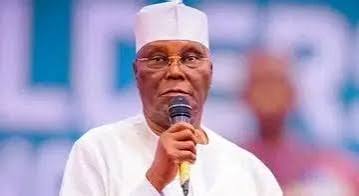
Former Vice President Atiku Abubakar, now the African Democratic Congress presidential candidate, has called on President Bola Tinubu to increase the minimum wage, backing organised labour's demand for a substantial adjustment. His intervention comes amid renewed pressure from the Nigeria Labour Congress for measures to protect workers' purchasing power.
The immediate question is not whether the legal minimum has increased — it has. The more difficult question is whether the ₦70,000 figure established in 2024 still provides workers with sufficient purchasing power as the prices of fuel, transportation, food and other necessities change.
Nigeria's current national minimum wage was increased from ₦30,000 to ₦70,000 under the National Minimum Wage Act 2024. Government records describe the increase as a 133.33 per cent rise from the previous statutory minimum.
The new wage was introduced against the backdrop of major economic reforms, including the removal of petrol subsidies and changes to the foreign-exchange regime. The Federal Government's own subsequent economic assessment acknowledged that those reforms produced short-term inflationary pressures.
By September 2026, however, petrol prices had risen sharply again. Reuters reported that petrol was selling at approximately ₦1,400 per litre in Lagos and Abuja and as high as ₦1,500 in parts of northern Nigeria. The report linked the latest increase to higher global oil prices and said the renewed fuel-price pressure was adding to Nigeria's cost-of-living concerns.
Against that background, Atiku argued that ₦70,000 has lost purchasing power. In the statement reported on September 27, he used a petrol price of ₦1,400 per litre to illustrate the pressure: ₦70,000 would purchase 50 litres of petrol at that price.
The arithmetic is correct:
₦70,000 ÷ ₦1,400 = 50 litres.
That calculation, however, is an illustration of purchasing power rather than evidence that a worker spends the entire salary on petrol. A worker's income also has to cover food, housing, transport, healthcare, education and other expenses.
The central issue in the debate is the difference between the amount written on a payslip and what that amount can actually buy.
The statutory minimum wage rose substantially in nominal terms in 2024. But prices have also changed since then.
Advertisement
The Federal Government's Financial Reporting Council previously documented that the reforms involving the naira and fuel subsidy removal contributed to inflationary pressures. The council reported that Nigeria's three-year cumulative inflation rate had reached 110.9 per cent by the end of 2024, although it concluded that Nigeria did not meet its assessment for classification as a hyperinflationary economy.
That history matters because a wage increase cannot be assessed solely by comparing today's wage with the previous nominal wage. The purchasing power of the wage also depends on the prices workers face.
The latest debate is not solely being driven by Atiku.
The Nigeria Labour Congress has separately demanded measures to protect workers as petrol prices rise. On September 16, NLC President Joe Ajaero called for immediate wage awards, citing the effect of higher petrol prices on workers' purchasing power and living costs. The NLC said transport costs could also feed into prices of food and other essential goods.
Ajaero has also argued that discussions about a new minimum wage should consider workers' real purchasing power, including inflation, fuel prices and food costs. The Guardian reported those comments alongside calls for a review of the existing wage arrangement.
The labour position therefore extends beyond simply asking for a larger figure. It includes the question of how wages should respond when major household costs change.
Atiku's intervention is also part of a wider political argument over the consequences of the Tinubu administration's economic reforms.
In his September 27 statement, he blamed the removal of the petrol subsidy for worsening the financial pressure on working families and argued that the government had not adequately protected workers from the resulting increase in living costs. Those are political claims made by Atiku and his campaign, rather than independently established conclusions.
His wider criticism of the administration's economic record is consistent with statements he has made in recent weeks about purchasing power and the effect of higher nominal government revenues and wages on ordinary Nigerians.
There is also evidence of concern about the adequacy of the existing wage from within government.
Minister of Aviation and Aerospace Development Festus Keyamo said on September 25 that the ₦70,000 minimum wage was inadequate given current economic pressures. He called for measures to improve workers' welfare and said organised labour had demanded as much as ₦500,000 in discussions over a new wage.
This does not mean the government has agreed to a ₦500,000 national minimum wage. It means that figure has been reported as part of labour's demand in the ongoing debate.
The ₦70,000 wage itself was the product of negotiations following the economic disruption that followed the removal of the petrol subsidy.
In January 2024, the Federal Government inaugurated a 37-member tripartite committee on minimum wage. The Federal Ministry of Labour subsequently said the new wage would be backdated to April 1, 2024.
President Tinubu signed the National Minimum Wage Bill into law in July 2024, replacing the ₦30,000 statutory minimum with ₦70,000. Government agencies subsequently began implementing related salary adjustments in the federal public service.
That means today's dispute is occurring only about two years after the last major statutory adjustment.
The speed with which the purchasing-power question has returned is therefore one of the important features of the current debate.
For workers earning around the statutory minimum, increases in transport and household expenses can consume a larger share of income even when the nominal salary has not changed.
Fuel prices are particularly important because petrol affects more than the direct cost of filling a vehicle. Transportation costs can affect commuting expenses and the cost of moving goods, while businesses may pass some higher operating costs through to consumers.
Reuters reported in September that the renewed rise in fuel prices was contributing to renewed cost-of-living pressure, even as Nigeria's headline inflation rate had eased to 15.39 per cent in August.
That combination illustrates an important distinction: slowing inflation does not mean prices have returned to their previous levels. It means the rate at which prices are increasing has slowed.
For a worker, therefore, the question remains how the current level of prices compares with the worker's income.
Advertisement
Several important questions remain unresolved.
First, what new minimum wage, if any, will ultimately be agreed? Public statements have included substantially different figures, but no new national minimum wage has been established by the information reviewed for this report.
Second, when would any new wage take effect? That would depend on negotiations and the eventual legal and administrative process.
Third, how would a major wage increase affect employers? A higher statutory wage could increase earnings for qualifying workers, but the effect on businesses would depend on their revenues, labour costs, productivity and ability to adjust prices or operations.
Fourth, how much of the current cost pressure is temporary and how much is structural? Petrol prices have been affected by global crude-oil movements, while other household costs are influenced by domestic production, transportation, exchange rates and broader economic conditions.
These questions cannot be answered simply by comparing ₦70,000 with a particular petrol price.
The immediate focus is on discussions between government and organised labour over workers' welfare and the question of future wage adjustments.
The NLC has already called for immediate wage awards in response to rising petrol prices, while recent comments from Keyamo indicate that the adequacy of the ₦70,000 wage is also being discussed publicly within government circles.
Atiku's intervention adds a political demand for an immediate increase, but his call does not itself change the statutory minimum wage.
The unresolved issue is therefore straightforward but consequential: whether Nigeria's current wage framework can keep pace with the cost of living, and what form any government-labour response will ultimately take.
You must log in to comment or reply.
Comments