
Nigeria has launched the Digitalised Nigeria Education Management Information System (DNEMIS), but its success will depend on whether states and private schools fully embrace the national education database.
A National Database Alone Will Not Fix Nigeria’s Education Crisis
For years, one of Nigeria's biggest education challenges has not simply been a shortage of classrooms or teachers—it has been the absence of reliable data to guide policy decisions.
Governments cannot effectively solve problems they cannot accurately measure, and fragmented education records have often left policymakers planning with incomplete information.
The Federal Government's launch of the Digitalised Nigeria Education Management Information System (DNEMIS) is therefore more than another digital initiative. It represents an attempt to replace estimates with evidence, although the platform's long-term value will ultimately depend on whether every stakeholder participates.
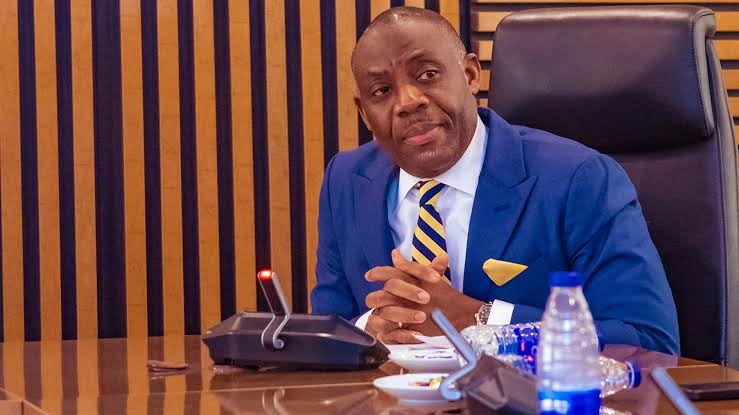
Speaking in Abuja on Wednesday, the Minister of Education, Dr. Tunji Alausa, urged state governments, Local Government Education Authorities and private school owners to register with the new digital platform.
DNEMIS is designed to become Nigeria's central repository for education data, providing real-time information on schools, teachers, learners, classrooms, electricity, water and sanitation facilities, computer laboratories and other infrastructure critical to education planning.
Advertisement
According to figures released during the launch, Nigeria has 213,235 schools, but only 124,548 schools have submitted data, representing a 58.4 per cent reporting rate.
The platform has so far captured information on 40.1 million learners, 1.19 million teachers, 730,447 classrooms and more than 607,000 toilet facilities.
Alausa argued that reliable data would enable governments to deploy teachers more efficiently, identify infrastructure gaps and direct investments to communities where they are needed most.
Addressing private school proprietors, the minister sought to ease concerns that participation could lead to increased taxation.
"Do not worry, the government is not collecting this information to tax you. We recognise the critical role private schools play in Nigeria's education sector."
The Director-General of the National Bureau of Statistics (NBS), Semiu Adeniran, also announced plans to integrate the bureau's systems with DNEMIS, creating what officials hope will become Nigeria's single authoritative source of education data.
The announcement reflects an important shift in how education policy could be developed in Nigeria.
For decades, policymakers have struggled with inconsistent data collected separately by federal agencies, states and development partners. That fragmentation has made it difficult to know where classrooms are most needed, where teacher shortages are most severe or how educational resources should be distributed.
A unified digital database could reduce those blind spots. Better information can improve budgeting, strengthen accountability and help governments evaluate whether education reforms are producing measurable results.
However, technology alone rarely solves institutional problems. The usefulness of DNEMIS will depend on the accuracy, consistency and regular updating of the information submitted by schools across the country.
Two Perspectives on the Initiative
The Federal Government presents DNEMIS as the foundation for evidence-based policymaking. Officials argue that with more than 50 million learners in Nigeria's education system, planning without comprehensive data is no longer sustainable. They also point to support from development partners, including the World Bank, UNICEF, the European Union and the Government of Norway, as evidence of international confidence in the project.
A more cautious view comes from education stakeholders who have long argued that Nigeria's challenges extend beyond data collection. While many welcome a national database, they contend that accurate statistics must be matched by sustained investment in teachers, school infrastructure, security and learning materials. Without those complementary reforms, even the best database risks becoming an impressive record of unresolved problems rather than a catalyst for change.
Both perspectives are valid. Reliable data is essential for effective policymaking, but data alone cannot substitute for political commitment and adequate funding.
Advertisement
The timing of the initiative is significant. Nigeria continues to face one of the world's most serious education challenges, with UNICEF estimating about 18.3 million out-of-school children. Meanwhile, the World Bank says around 70 per cent of Nigerian children experience what it describes as "learning poverty"—an inability to read and understand a simple text by age 10.
These figures illustrate why education planning has become increasingly urgent. In states experiencing rapid population growth, urban expansion or insecurity, incomplete data can result in overcrowded classrooms, uneven teacher deployment and inefficient use of limited resources.
If fully implemented, DNEMIS could provide policymakers in Abuja and state capitals with clearer evidence to guide future investments. It could also improve transparency by allowing governments to measure progress more accurately over time.
Launching a national education database is an important milestone, but history suggests that implementation will determine whether the initiative succeeds.
The real challenge is ensuring that every state, local authority and private school consistently provides accurate information and that governments use the resulting data to make better decisions rather than simply producing better statistics.
Ultimately, the success of DNEMIS will not be measured by the number of schools registered on a digital platform. It will be judged by whether Nigerian children gain access to better teachers, safer classrooms and stronger learning outcomes because policymakers finally have the information needed to act with greater precision.
You must log in to comment or reply.
Comments