
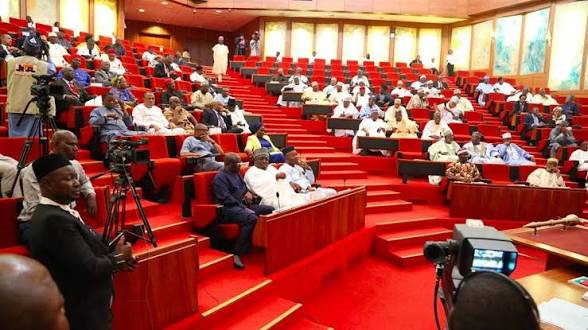
For years, Nigeria’s battle against counterfeit medicines has continued despite repeated enforcement campaigns, arrests and regulatory warnings. The Senate’s decision to advance a bill proposing harsher penalties for fake drug dealers reflects growing concern that existing measures may not be strong enough to stop a market that threatens public health and consumer confidence.
The proposed legislation places a difficult question before policymakers: can tougher punishment finally disrupt the networks behind counterfeit medicines, or will enforcement challenges remain the bigger obstacle?
Senate Moves Against Fake Medicines as Nigeria Targets Counterfeit Networks
The Nigerian Senate on Wednesday advanced a bill seeking stronger penalties for individuals and organisations involved in counterfeit medicines and unsafe processed food products.
The proposed Counterfeit Medical Products, Fake Drugs and Unwholesome Processed Foods (Prohibition and Control) Bill, 2026 (SB.951) passed second reading and was referred to the Senate Committee on Health (Secondary and Tertiary) for further review. The committee was given four weeks to submit its report.
Sponsored by Senator Umar Suleiman, representing Kwara North, the bill seeks to replace the existing legal framework governing counterfeit drugs with a broader system designed to address modern challenges, including online sales, cross-border trafficking and organised counterfeiting networks.
Under the proposed law, offenders involved in producing, importing, distributing, selling or facilitating counterfeit medical products could face penalties of up to 15 years imprisonment, alongside fines, asset forfeiture and compensation for victims.
The bill also targets the sale of medicines through unauthorised channels such as roadside stalls, motor parks, open markets and unlicensed online platforms.
During the debate, Senator Suleiman argued that the existing law no longer adequately addresses the changing methods used by counterfeiters.
Advertisement
He said the proposed legislation was designed to protect Nigerians from preventable deaths and disabilities linked to fake medicines while restoring confidence in the pharmaceutical sector.
Senate President Godswill Akpabio said offenders could face imprisonment, financial penalties, compensation obligations and forfeiture of assets connected to criminal activities.
While the proposed 15-year sentence has attracted attention, experts and public health observers have long argued that punishment alone may not eliminate Nigeria’s counterfeit medicine problem.
Nigeria already has laws prohibiting fake drugs and unsafe products, including the existing Counterfeit and Fake Drugs and Unwholesome Processed Foods legislation, which gives regulatory authorities powers to seize illegal products and prosecute offenders.
The new proposal attempts to close gaps created by changing criminal methods. Unlike previous decades when counterfeit medicines were mainly associated with physical markets, today’s networks increasingly exploit digital platforms, complex supply chains and international routes.
The Senate bill therefore reflects a shift from treating fake drugs as a simple street-level offence to viewing them as a wider organised commercial crime.
Coverage from Nigerian media platforms largely focused on the Senate’s approval of the bill and the proposed 15-year prison term.
Reports highlighted lawmakers’ warnings that counterfeit medicines have contributed to avoidable deaths and serious health complications.
However, the broader issue receives less attention: Nigeria’s counterfeit drug challenge is not only about criminals selling fake products but also about weaknesses in supply-chain monitoring, border controls, consumer awareness and access to affordable genuine medicines.
The National Agency for Food and Drug Administration and Control (NAFDAC) has repeatedly increased enforcement activities, including task forces and surveillance efforts against counterfeit products.
The challenge is that counterfeit networks often adapt faster than regulatory systems.
The fake medicine trade affects more than patients. It also creates economic pressure on legitimate pharmaceutical businesses and weakens trust in Nigeria’s healthcare system.
For ordinary Nigerians, especially in rural communities and low-income areas, medicine decisions are often influenced by price and availability. Where genuine drugs are expensive or difficult to access, counterfeit sellers can exploit desperation.
The consequences can be severe. Patients may experience treatment failure, prolonged illness, drug resistance or complications caused by ineffective medication.
For healthcare providers, counterfeit medicines create additional burdens because doctors may struggle to understand why patients fail to respond to treatments.
The economic impact also extends to legitimate pharmaceutical manufacturers, who compete against illegal operators selling cheaper but dangerous alternatives.
Why Nigeria’s Counterfeit Drug Problem Has Been Difficult to Solve
Advertisement
Nigeria has battled fake medicines for decades, with regulators repeatedly warning about counterfeit products entering through informal markets and international supply routes.
Previous reforms have focused on stronger inspections, public awareness campaigns and collaboration between NAFDAC and security agencies.
The current proposal introduces additional tools, including product-tracking technology, enforcement task forces, inspection powers and stronger surveillance at ports of entry.
But the success of the law will likely depend on implementation.
A strict law without effective investigation, prosecution and monitoring may struggle to create lasting change. Criminal networks often survive not because regulations do not exist, but because enforcement systems face resource limitations and corruption risks.
The Senate’s proposed legislation represents a stronger political response to a long-running public health challenge. If passed and properly implemented, it could provide regulators with additional tools to target counterfeit medicine networks.
However, the ultimate test will not be the severity of punishment written into the law. It will be whether enforcement agencies can consistently identify offenders, secure convictions and protect consumers before harm occurs.
As the bill moves through committee review and possible further legislative stages, Nigeria’s challenge remains clear: turning legal promises into practical protection for millions who depend on medicines every day.
You must log in to comment or reply.
Comments