
Nigeria’s proposed renewable energy reforms have reached another legislative stage, but a central question remains: would creating a dedicated authority improve electricity access, or introduce another layer of regulation into an already complex power sector?
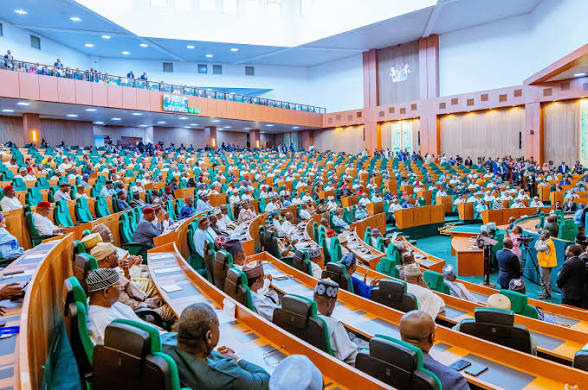
The House of Representatives has passed the Electricity Act (Amendment) Bill, 2025, for second reading. Sponsored by Afam Victor Ogene, the lawmaker representing Ogbaru Federal Constituency in Anambra State, the bill proposes establishing a National Authority for Renewable Energy (NARE).
One of its most consequential provisions would allocate 40 per cent of the annual funds of the Rural Electrification Fund to the proposed authority. The proposal could reshape how renewable energy projects are coordinated and financed, but the bill has not become law, and its practical effects remain uncertain.
The proposed legislation seeks to consolidate renewable energy responsibilities currently distributed among the Nigerian Electricity Regulatory Commission (NERC), the Rural Electrification Agency (REA) and the Rural Electrification Fund.
Under the proposal, NARE would assume specified functions relating to renewable energy regulation, development and promotion.
The bill's sponsor, Ogene, argued that concentrating these responsibilities in a dedicated institution would improve coordination and reduce overlapping functions.
The proposal also covers licensing, technical standards, tariffs, compliance monitoring and dispute resolution in the renewable energy market.
These responsibilities would make the proposed authority more than a project-funding agency. It would have a regulatory role, although the precise division of responsibilities between NARE and existing institutions would depend on the final legislation.
The distinction matters because Nigeria's electricity sector already operates through multiple institutions with different regulatory, infrastructure and development responsibilities.
Expanding electricity access remains one of the main objectives identified by the bill's sponsor.
Extending the national grid is not always the most practical way to supply every remote settlement. Communities far from existing infrastructure can face significant costs and delays when conventional grid connections are required.
The bill therefore proposes greater support for decentralised electricity systems, including mini-grids and off-grid renewable energy projects.
These systems can supply homes, businesses and public facilities without requiring every user to depend exclusively on the national grid.
The proposed authority would focus on rural, unserved and underserved communities, including island settlements.
However, establishing an institution would not automatically connect these communities to electricity. The results would depend on project financing, infrastructure deployment, maintenance, affordability and the ability of the proposed regulator to work effectively with other agencies.
For households and businesses, the relevant measure of success would be whether electricity becomes more accessible, reliable and affordable—not simply whether a new authority is established.
The bill proposes directing 40 per cent of the Rural Electrification Fund's annual resources to NARE to finance renewable energy development.
Advertisement
This provision could become one of the most important aspects of the legislation because funding determines how many projects an institution can support and how effectively it can carry out its responsibilities.
However, the proposal does not establish that the money has already been transferred or that the new authority has begun operating.
Several details require examination as the bill progresses through the legislative process.
First, the final legislation would need to clarify how the allocation would be calculated and administered.
Second, lawmakers would need to consider how the proposed arrangement would affect the funding available for existing rural electrification activities and projects.
Third, the framework would need to establish appropriate controls over expenditure, project selection, reporting and accountability.
These are questions for legislative scrutiny, not evidence that the proposed funding arrangement would necessarily succeed or fail.
The available reports do not establish the future value of the allocation in naira. That would depend on the relevant annual fund resources and the final funding provisions.
The proposal has attracted differing views among lawmakers.
Supporters argue that renewable energy requires more focused regulation and coordination. In their view, a dedicated authority could address gaps in oversight and give greater attention to technologies and electricity systems that operate outside conventional grid arrangements.
Ibrahim Almustapha, a lawmaker from Sokoto, supported the proposal, arguing that gaps in renewable energy oversight justified a specialised institution. Mark Esset, a lawmaker from Akwa Ibom, also backed the bill, pointing to persistent electricity supply challenges and the growing use of renewable energy by households and businesses.
Other lawmakers questioned whether establishing another authority was necessary.
Victor Nwokolo, chairman of the House Committee on Power, opposed the proposal, according to reporting by TheCable. He questioned the rationale for removing renewable energy functions from NERC and raised concerns about duplication and governance costs.
Ahmadu Jaha, a lawmaker from Borno, also expressed concern that separating renewable energy regulation from existing electricity regulation could create confusion.
Their disagreement centres on an institutional question: can Nigeria improve renewable energy oversight by creating a separate authority, or would clearer responsibilities and stronger coordination within existing institutions achieve similar objectives?
The bill's passage at second reading does not resolve that question. It allows the proposal to proceed to further legislative examination.
The Electricity Act, 2023, forms an important part of the background to the proposed amendment.
The Act established a framework for changes to electricity regulation, including greater participation by state governments in electricity markets within the applicable legal and regulatory arrangements.
That development is relevant because renewable energy projects can involve federal and state institutions, private developers, distribution arrangements and local communities.
The proposed NARE framework would therefore need to establish how its responsibilities would interact with existing federal and state electricity arrangements.
For example, developers need clarity about which institution is responsible for particular licences, standards and compliance requirements. Overlapping or unclear rules could increase administrative burdens, while effective coordination could make project development more predictable.
The proposed amendment seeks to reorganise renewable energy responsibilities, but the extent of any resulting change will depend on its final wording and implementation.
If enacted, the bill could affect companies developing solar installations, mini-grids and other renewable energy projects.
The proposed authority would have responsibilities involving licensing, standards, tariffs and dispute resolution. These areas influence the rules under which businesses operate and the requirements they must meet.
A more coordinated regulatory framework could help developers understand their obligations and resolve disputes. However, the creation of another institution could also create transition costs or uncertainty if existing responsibilities are not clearly reassigned.
The bill also proposes incentives to encourage local manufacturing, research, innovation and technical capacity development.
Its proposed renewable energy scope includes solar, wind, hydro, geothermal, biomass and hydrogen.
The legislation therefore seeks to establish a framework extending beyond individual solar projects. Nevertheless, the proposed incentives should not be confused with approved funding, guaranteed investment or confirmed job creation.
Those outcomes would depend on the final law, its implementation and the response of businesses and investors.
Reports published on October 15 by TheCable, PUNCH and The Guardian Nigeria corroborate the bill's passage at second reading, its sponsorship by Ogene and its proposed transfer of renewable energy responsibilities to NARE.
The reports also describe the proposed 40 per cent allocation from the Rural Electrification Fund and the referral of the bill to the relevant House committee.
These are confirmed developments in the reported legislative process.
Advertisement
The available information does not establish that NARE has been legally created, that the proposed funding allocation has taken effect, or that existing agencies have transferred their staff, assets or projects.
Nor does the bill's progress demonstrate that electricity prices will fall or that underserved communities will immediately receive more reliable power.
Those are potential outcomes to assess if the legislation advances and its provisions are implemented.
Several important questions remain open as lawmakers examine the proposal.
How will responsibilities be divided? The legislation will need to clarify the relationship between NARE, NERC, REA and other relevant institutions to avoid uncertainty over regulatory authority.
How will the proposed funding allocation operate? The final framework will need to clarify how the 40 per cent allocation is calculated, administered and monitored, including its relationship with existing rural electrification commitments.
What happens to existing projects and personnel? The committee is expected to examine provisions concerning the transfer of staff, assets and ongoing projects from current institutions.
How will state electricity arrangements be accommodated? The proposed authority's role will need to fit within the legal framework governing electricity generation, distribution and regulation across Nigeria.
How will success be measured? The proposal's practical value will ultimately depend on measurable outcomes, including electricity access, project delivery, regulatory clarity and the effective use of public funds.
The reports available so far do not settle these questions.
Following its second-reading passage, the bill was referred to the relevant House committee for further legislative scrutiny.
The committee is expected to examine its provisions, including the proposed transfer of responsibilities, personnel, assets and ongoing projects.
The bill must continue through the applicable legislative process before it can become law. Its eventual provisions may change during that process.
For Nigerians seeking more reliable electricity, the important next development will be the details that emerge from legislative scrutiny: how the proposed authority would operate, how it would be funded and how it would coordinate with institutions already working in the power sector.
The central issue is no longer simply whether lawmakers want a dedicated renewable energy authority. It is whether the proposed institutional and funding arrangements can be translated into better electricity access while maintaining clear responsibilities and accountability.
You must log in to comment or reply.
Comments