
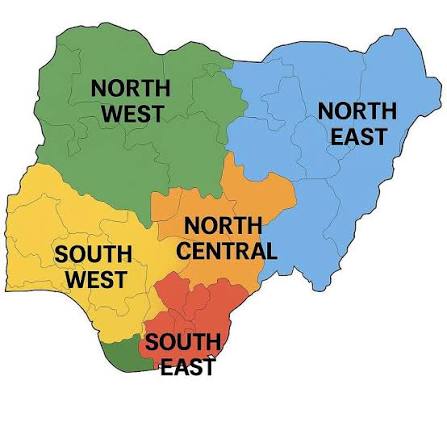
A hardline stance against banditry is resurfacing in Nigeria’s North-West, where governors are now publicly rejecting negotiations with armed groups. But beyond the rhetoric, the real question is whether this shift can deliver security in regions where past policies have repeatedly faltered.
Ahmed Aliyu declared that governors across Nigeria’s North-West would no longer negotiate with bandits, insisting that peace can only be achieved through force and unconditional surrender.
Speaking during the commissioning of the N12.6 billion Yandaki–Shinkafi–Kofar Sauri Road in Katsina State, Aliyu stated:
“We will not negotiate with any criminal, nor will we accept any offer from them unless they surrender unconditionally.”
He added that governments in the region are increasing investment in security infrastructure, strengthening collaboration with federal agencies, and expanding local intelligence networks.
Aliyu also urged residents to support security operations:
“We must do the needful at the community level by remaining vigilant and monitoring the movement of suspicious individuals.”
He commended Dikko Umaru Radda for establishing a Community Guard Corps, noting that Sokoto has adopted a similar model to tackle local threats.
Advertisement
Beyond the official statement, this development highlights a familiar cycle in Nigeria’s fight against banditry—a swing between negotiation and force, often driven by rising insecurity and public pressure.
Rejecting negotiations outright signals political resolve, but it also removes one of the few tools previously used—however imperfectly—to secure temporary peace in rural communities. What makes this more complex is that many of these communities, particularly in Zamfara, Katsina, and Sokoto, remain deeply exposed to reprisals when military operations intensify.
That framing leaves out a difficult reality: past “no negotiation” policies have struggled without consistent military dominance, strong intelligence systems, and community trust.
At the same time, the shift toward community-based security outfits—like those pioneered in Katsina—is becoming central. These local forces provide intelligence and rapid response capacity, but they also raise concerns about:
• Oversight and accountability
• Funding sustainability
• Coordination with formal security agencies
From an economic perspective, insecurity in the North-West continues to disrupt agriculture and food supply chains, contributing indirectly to inflation across Nigeria. Farmers abandoning farmlands due to attacks has already reduced output in key crops, affecting markets far beyond the region.
Banditry in North-West Nigeria has persisted for over a decade, evolving from localized cattle rustling into organized criminal networks involving kidnapping, extortion, and territorial control.
Previous strategies have included:
• Peace negotiations and amnesty deals (notably in Zamfara and Katsina)
• Ransom payments—often unofficial
• Military offensives and airstrikes
Many of these approaches produced short-term relief but long-term instability, with some armed groups reportedly regrouping after negotiations.
Advertisement
Recent security data and field reports indicate:
• Thousands of rural residents remain displaced
• Kidnapping-for-ransom continues as a major funding source for bandits
• Attacks on farming communities persist, especially during planting seasons
This makes the current stance less of a new policy and more of a return to a hardline doctrine, now combined with localized security experimentation.
The declaration may resonate politically, but its success will depend on execution beyond public speeches. Without sustained coordination between state governments, federal forces, and local communities, the gap between policy and reality could widen.
The real concern now is whether this renewed hardline approach can deliver measurable security gains—or whether it will become another cycle in Nigeria’s long struggle to contain banditry. What authorities do next will determine if this shift marks progress or repetition.
You must log in to comment or reply.
Comments