
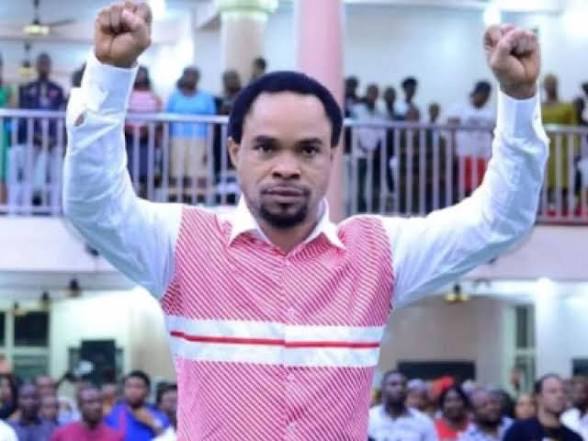
For Christians who regularly contribute money to their churches, questions about tithing can touch on personal faith, financial priorities and the freedom to decide how to give. Prophet Chukwuemeka Ohanaemere, popularly known as Odumeje, has brought the issue into public discussion by saying that his ministry does not collect tithes or focus its preaching on the practice.
The cleric's remarks also raise a broader question for church members: how should religious giving be approached, particularly when teachings about money are linked to spiritual obligations?
Odumeje, the General Overseer of Mountain of Holy Ghost Intervention and Deliverance Ministry, made the comments during an appearance on The Honest Bunch Podcast, according to reports published on October 20, 2026.
He said his ministry focuses on demonstrating spiritual power rather than regularly teaching about tithing and giving. He also criticised churches that, in his view, place too much emphasis on collecting money without providing what he considers practical evidence of spiritual power.
Explaining his position, Odumeje said he did not regard tithing as wrong. Instead, he maintained that the decision to pay should be made voluntarily by individuals in their relationship with God.
He also objected to teachings that suggest Christians would be denied entry into heaven if they failed to pay tithes.
Advertisement
The comments were reported by Nigerian news outlets, including Punch and Vanguard. The statements reflect Odumeje's position on the practice; they do not independently establish how other churches manage donations.
During the podcast appearance, Odumeje said: “I don’t collect tithes. Nobody pays me tithes.”
He added that he was not condemning tithing, describing it as a personal decision rather than something that should be imposed through pressure or persuasion.
The cleric also said his mission was the demonstration of spiritual power, distinguishing his ministry's stated focus from churches that regularly teach about tithing.
His criticism of financial pressure in religious settings is his own assessment. The available reports do not provide independent evidence about the financial practices of the churches he criticised.
Religious giving is a personal matter for many Nigerian Christians. Depending on an individual's circumstances and beliefs, contributions may form part of a wider commitment to supporting a church, its activities and its community work.
For households managing food, transport, rent, school fees and other expenses, decisions about donations can also intersect with everyday budgeting. However, the available reporting provides no figures showing how Odumeje's comments have affected church members' spending or financial behaviour.
His remarks nevertheless highlight a distinction between voluntary giving and giving motivated by fear. For people who take part in religious communities, understanding what their church teaches about contributions can help them make decisions consistent with their beliefs and financial circumstances.
It is also important to distinguish between different Christian interpretations of tithing. Odumeje's position represents his own stated approach; it should not be taken as a universal interpretation shared by all Christian denominations or congregations.
The issue matters because religious teachings can influence how people make personal and financial decisions.
Church members may want clarity about whether contributions are voluntary, how donations are used and what their religious leaders teach about the relationship between giving and salvation. These are questions that can be discussed without assuming that every church handles money in the same way.
Advertisement
Odumeje's comments may also encourage conversations among Christians about the difference between giving as an expression of faith and giving under pressure. His statement does not settle that theological debate, but it makes his own position clear.
The reported development is Odumeje's public explanation of his ministry's approach to tithing. The reports available do not identify a new policy announcement, formal church directive or follow-up action arising from the podcast appearance.
Further clarification from the full podcast episode or the ministry itself would help establish the complete context of his remarks.
For now, the central point is that Odumeje says his ministry does not collect tithes, while maintaining that he does not consider tithing itself wrong.
His position places personal choice at the centre of religious giving and highlights the importance of clear communication between religious leaders and the people who support their ministries.
You must log in to comment or reply.
Comments