
Courtrooms are often the final refuge for survivors of sexual violence. Yet for many, the legal process can feel as traumatic as the crime itself. In Ogun State, the judiciary is now openly acknowledging that reality — and calling for change.
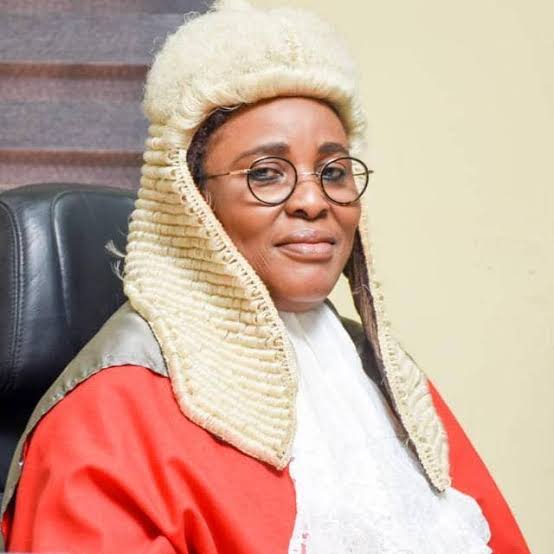
At a stakeholders’ forum in Abeokuta, the Chief Judge of Ogun State, Justice Mosunmola Dipeolu, urged justice sector actors to adopt technology and deepen institutional collaboration to ensure survivors are protected rather than re-traumatised during trials.
Speaking through Justice Funke Odubanjo, Dipeolu said the judiciary occupies a “pivotal and unassailable” position in tackling sexual violence and must ensure that courts serve as fortresses for survivors.
Among her key recommendations was the use of video link facilities in sexual violence cases. This would allow vulnerable witnesses — especially children or traumatised survivors — to testify from separate rooms instead of facing the accused in open court.
The proposal aligns with global best practices aimed at reducing secondary trauma in sensitive criminal proceedings. However, in many Nigerian courts, such technology remains limited or non-existent.
She also pointed to the constitutional foundation of the fight, referencing Section 34 of the 1999 Constitution, which guarantees the dignity of the human person. For survivors, she noted, justice is not only about conviction but about restoring dignity.
Advertisement
Ogun State already operates under the Violence Against Persons (Prohibition) Law of 2017, which broadens definitions of sexual offences, provides survivor protections, and prescribes stiff penalties.
However, a closer look shows that legal frameworks alone have not eliminated systemic barriers. Delays in prosecution, evidentiary challenges, adversarial courtroom culture, and weak coordination among institutions continue to frustrate justice delivery.
Other Nigerian platforms reporting the event largely focused on Dipeolu’s call for collaboration and technology adoption. What received less attention is the structural problem she indirectly highlighted: enforcement gaps.
Across Nigeria, sexual violence cases often collapse due to poor investigation, lack of forensic evidence, intimidation of witnesses, or prolonged court delays. Civil society groups have repeatedly warned that low conviction rates discourage survivors from reporting offences.
The deeper issue is that justice delivery depends not just on judges, but on police professionalism, prosecutorial efficiency, funding, forensic capacity, and survivor support services.
Dipeolu stressed that the judiciary cannot win the battle alone. She called on the executive to fund justice institutions adequately, on lawmakers to review and strengthen laws, and on police to investigate with professionalism and empathy.
She also appealed to the media to report sexual violence cases responsibly, avoiding sensational coverage that may stigmatise survivors.
The event was organised by the Headfort Foundation for Justice, whose Executive Director, Oluyemi Orija, said the goal was to strengthen institutional coordination and ensure a survivor-centred approach to justice.
According to the foundation, it has reached more than 500,000 women with information on accessing justice in sexual violence cases — an indication that awareness efforts are expanding, even if systemic reform remains ongoing.
In jurisdictions where remote testimony systems are properly deployed, vulnerable witnesses can testify without direct confrontation, helping courts obtain clearer, less traumatised evidence.
Advertisement
What makes this more complex in Nigeria is funding. Many state courts still struggle with infrastructure deficits — from digital recording systems to stable power supply. Without sustained investment, calls for technological reform may remain aspirational.
Still, the conversation itself signals institutional recognition that the justice process must evolve.
Sexual violence remains a significant concern across Nigeria, cutting across age groups and regions. During the COVID-19 lockdown period, reported cases spiked nationwide, prompting renewed legislative attention and emergency declarations in some states.
Since then, several states have strengthened domestic violence laws, but implementation gaps persist. Advocacy groups continue to push for faster trials, survivor counselling services, forensic labs, and specialised courts.
You must log in to comment or reply.
Comments