
In times of economic uncertainty and persistent security concerns, words from national leaders often carry significance beyond the moment they are spoken. When those words are rooted in faith, they can inspire hope for some Nigerians while prompting others to ask whether symbolic gestures should be matched by measurable policy outcomes.
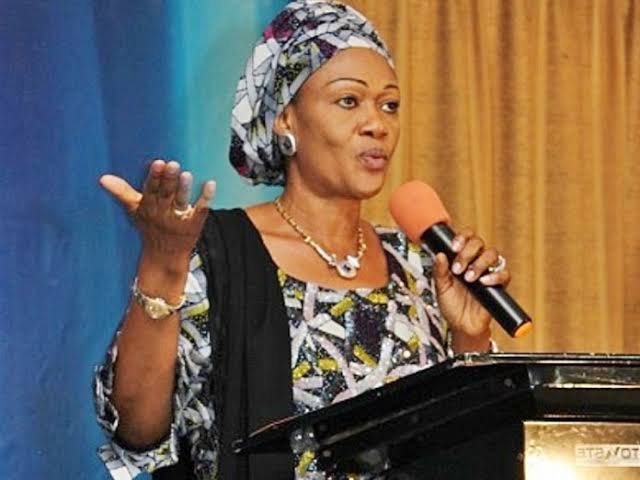
Nigeria's First Lady, Senator Oluremi Tinubu, on Tuesday offered a prayer for peace, prosperity, and national renewal during the commissioning of the Bwari Satellite Town Water Supply Network in the Federal Capital Territory (FCT).
Representing President Bola Tinubu at the ceremony, Mrs. Tinubu described the water project as a symbol of healing and referenced 2 Kings 2:19–21, where the prophet Elisha declares healing over contaminated water. She prayed that Nigeria would experience "no more death or barren land" and declared that the nation would be peaceful, blessed, and fruitful.
The water project forms part of the infrastructure commissioned to commemorate President Tinubu's third anniversary in office.
The First Lady's remarks reflect a familiar feature of Nigerian public life, where political leadership and religious expression often intersect. Invoking scripture at public events is neither unusual nor controversial in itself, especially in a country where faith plays a central role in everyday life.
Advertisement
However, the timing of the declaration gives it broader political significance. Nigeria continues to grapple with security challenges, inflation, unemployment, and public demands for improved living standards. Against that backdrop, statements of hope inevitably become part of a wider conversation about governance.
Supporters may see the prayer as an expression of optimism and national unity. Critics, however, may argue that while spiritual encouragement has its place, many citizens are primarily looking for tangible improvements in security, infrastructure, healthcare, education, and economic stability.
The commissioning of the Bwari water network also illustrates the administration's effort to highlight infrastructure delivery as evidence of progress. Access to clean water remains a pressing issue across many communities, making such projects significant beyond their ceremonial value.
The government's narrative emphasizes infrastructure development alongside a message of faith and optimism. Officials have repeatedly argued that projects across the Federal Capital Territory demonstrate the administration's commitment to improving public services while encouraging Nigerians to remain hopeful about the country's future.
An alternative perspective focuses less on symbolism and more on measurable outcomes. Some observers believe declarations of peace and prosperity resonate only when accompanied by visible improvements in citizens' daily lives. For them, the success of any administration will ultimately be judged by reductions in insecurity, economic hardship, and unemployment rather than inspirational speeches alone.
Both perspectives acknowledge the importance of national unity but differ on what should take priority—building public confidence through hopeful messaging or allowing policy achievements to speak for themselves.
Politically, the remarks reinforce the Tinubu administration's effort to project confidence as it enters another phase of governance ahead of future electoral contests.
Socially, the speech highlights the enduring influence of religion in Nigeria's public institutions, where political events frequently include prayers and religious symbolism.
Advertisement
Economically, infrastructure projects such as the Bwari water supply network have the potential to improve access to essential services, support public health, and stimulate local development if implemented effectively and maintained over time.
The broader challenge remains ensuring that symbolic moments are consistently backed by practical improvements that citizens can experience in their everyday lives.
Ultimately, the discussion is not about whether leaders should pray for the nation. Rather, it is about whether those expressions of hope are matched by policies capable of delivering the peace, security, and prosperity that millions of Nigerians continue to seek. In the end, history tends to remember governments less for the promises they make than for the outcomes they achieve.
You must log in to comment or reply.
Comments