
Oyo State has taken a significant step in its campaign against rising insecurity with the arrival of two long-awaited surveillance aircraft, marking the completion of a procurement process that began more than a year ago. The development underscores Governor Seyi Makinde's strategy of investing in technology-driven security as states increasingly seek greater responsibility for protecting lives and property.
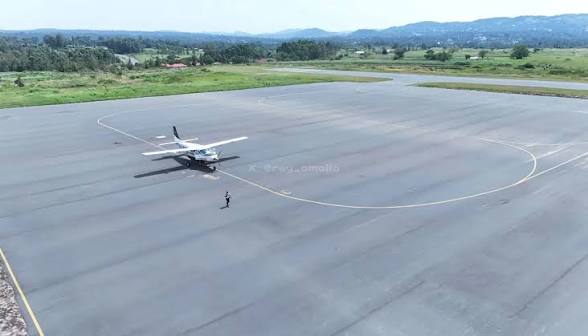
The Oyo State Government on Tuesday officially received two security surveillance aircraft at the Samuel Ladoke Akintola Airport in Ibadan.
Governor Seyi Makinde was present to receive the aircraft, which are expected to strengthen aerial surveillance, intelligence gathering and rapid response operations across Oyo State and neighboring areas.
In a statement issued by the state's Commissioner for Information and Orientation, Dotun Oyelade, the government said the arrival fulfilled its earlier commitment to residents that the aircraft would be delivered before the end of July.
According to the commissioner, the surveillance platforms will support security agencies, including the Amotekun Corps and other security formations, by improving their ability to monitor criminal activities and coordinate faster responses.
Makinde had earlier disclosed on July 18, 2026, that the aircraft had already arrived in Nigeria and were undergoing reassembly at the Nigerian Air Force's hangar in Lagos before their final transfer to Ibadan.
Advertisement
The acquisition traces back to July 2025 when the Oyo State Government announced plans to purchase the aircraft as part of broader efforts to combat kidnapping, banditry and other violent crimes affecting parts of the state.
Punch focused primarily on the confirmation that the aircraft had arrived in Ibadan, emphasizing the government's fulfillment of its earlier promise and the role the aircraft will play in supporting Amotekun and other security agencies.
The Guardian Nigeria had earlier concentrated on the procurement process itself, reporting that the aircraft were delayed during assembly after arriving in Nigeria and identifying them as specialized intelligence, surveillance and reconnaissance platforms designed for security operations.
Tribune Online also highlighted the logistics surrounding the delivery, including official explanations for the delay and the state's insistence that the project remained on schedule despite public concerns.
Across these reports, however, less attention was given to the broader shift occurring across Nigeria, where state governments are increasingly investing in advanced surveillance assets because internal security challenges have become more sophisticated and often require faster intelligence gathering than traditional ground patrols alone can provide.
The arrival of the surveillance aircraft reflects a growing trend among Nigerian states to complement federal security agencies with locally funded technology aimed at preventing crime before attacks occur.
Oyo has experienced repeated security concerns in recent years, including kidnappings along major highways, attacks in rural communities and cross-border criminal activities involving neighboring states. These incidents have increased pressure on state governments to improve intelligence capabilities even though policing remains constitutionally under federal control.
By deploying aerial surveillance, authorities expect to monitor forests, isolated communities and major transport corridors more effectively. Such aircraft can provide real-time intelligence that enables security agencies to detect suspicious movements, coordinate deployments and respond more quickly during emergencies.
While surveillance technology can improve operational efficiency, security analysts have consistently noted that aircraft alone cannot eliminate insecurity. Their effectiveness depends on accurate intelligence analysis, inter-agency coordination, adequate maintenance, trained personnel and sustained operational funding.
The investment also highlights how governors are increasingly using technology-based security initiatives to reassure residents and attract economic activity. Businesses and investors often consider security conditions before expanding operations, making public safety an important economic factor alongside infrastructure and governance.
Advertisement
The Oyo State Government first announced plans to acquire the surveillance aircraft in July 2025 as part of a wider security modernization programme.
Earlier this month, Governor Makinde confirmed that the aircraft had arrived in Nigeria and were undergoing final assembly before delivery to the state.
Across Nigeria, several state governments have expanded investment in surveillance infrastructure, including drones, command-and-control centers, security cameras and community-based intelligence networks, in response to persistent kidnapping, banditry and violent crime.
Although aviation surveillance has become an increasingly important security tool worldwide, experts generally agree that its success depends on how effectively aerial intelligence is integrated with ground operations and law enforcement responses.
With the aircraft now operational in Oyo State, attention is likely to shift from procurement to performance. Residents and security stakeholders will be watching closely to determine whether enhanced aerial surveillance translates into measurable reductions in kidnapping, banditry and other criminal activities. The effectiveness of the investment will ultimately depend on how efficiently intelligence gathered from the aircraft is converted into timely action by security agencies.
You must log in to comment or reply.
Comments