
In Nigeria’s democracy, the debate over justice often extends beyond courtrooms and into the wider question of public trust. Peter Obi’s reaction to the emotional appeal from Nasir El-Rufai’s wife has reopened a familiar national conversation: whether institutions are applying the law equally or whether political circumstances influence how justice is perceived.
The controversy surrounding the former Kaduna State governor is no longer only about legal proceedings; it has become a broader debate about fairness, accountability and confidence in Nigeria’s democratic institutions.
Former Anambra State governor and 2027 presidential candidate of the Nigerian Democratic Congress, Peter Obi, on Wednesday said he was moved by an emotional appeal from Hajiya Asiya El-Rufai, wife of former Kaduna State governor Nasir El-Rufai.
Obi said he watched a viral video of Asiya El-Rufai’s appeal while in the United States and called for justice to remain transparent, fair and guided by due process.
In a statement shared on his X account, Obi said allegations against El-Rufai or any other citizen should not remove their right to fair treatment under the law.
He warned that perceived selective justice could weaken public confidence in democratic institutions and affect national unity.
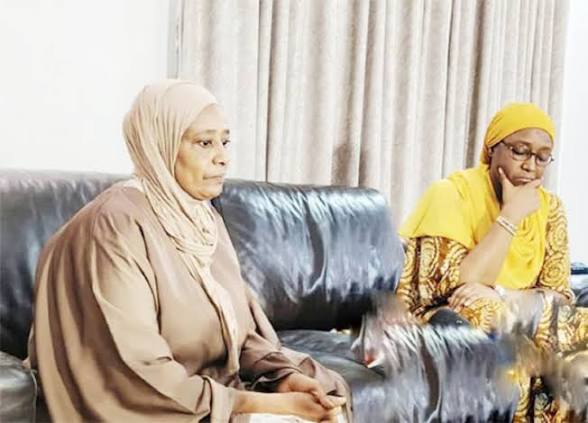
The statement followed an appearance by Hajiya Asiya El-Rufai and Aichatou El-Rufai in Abuja, where they appealed to President Bola Tinubu to ensure that El-Rufai receives what they described as fair treatment.
Asiya El-Rufai said the family supported Tinubu during the 2023 presidential campaign and questioned whether their loyalty should result in what she described as the current difficulties facing her husband.
Advertisement
She also raised concerns about El-Rufai’s health condition, alleging that he had been denied adequate medical attention.
The Independent Corrupt Practices and Other Related Offences Commission (ICPC), however, said it facilitated El-Rufai’s medical visit in accordance with legal requirements and denied any failure to respect his welfare.
The commission also confirmed the arrest of El-Rufai’s personal physician, Prof. Bello Abubakar, over alleged false statements connected to the medical visit.
The El-Rufai case reflects one of Nigeria’s oldest democratic tensions: the struggle to separate legal accountability from political perception.
For supporters of strong institutions, investigations and prosecutions of powerful individuals represent progress. They argue that holding former governors and influential figures accountable is necessary to demonstrate that public office does not provide immunity from scrutiny.
However, critics often view high-profile investigations through a political lens, especially when they involve figures who have played major roles in national politics. In such situations, the central question becomes not only whether the law is being applied, but whether citizens believe it is being applied consistently.
Peter Obi’s intervention highlights this challenge. His argument was not that allegations should be ignored, but that the justice system must maintain credibility by ensuring fairness before conviction.
In democratic societies, public confidence is often built not only through punishment of wrongdoing but through visible commitment to impartial procedures.
The Institutional Perspective
From the perspective of anti-corruption agencies, investigations into public officials are part of strengthening accountability.
The ICPC has maintained that its actions regarding El-Rufai’s medical arrangements were based on legal obligations and court processes. Supporters of this position argue that political influence should not prevent institutions from carrying out their duties.
Those questioning the process argue that powerful political figures must also receive protection from unfair treatment while investigations continue.
El-Rufai’s family has presented the situation as a humanitarian and constitutional issue, calling for dignity, medical access and fairness.
Peter Obi’s position reflects this concern, warning that any appearance of selective justice could damage trust in democratic institutions.
The disagreement is therefore not simply about one individual. It represents a wider national debate over whether Nigeria’s justice system is viewed as consistent, independent and trusted.
The controversy comes at a politically sensitive period as Nigeria approaches another election cycle.
Advertisement
Cases involving former governors and national political figures often attract intense public attention because they influence how citizens judge government commitment to accountability.
If institutions are seen as impartial, such cases could strengthen confidence in the rule of law. But if large sections of society believe enforcement is politically motivated, the opposite effect may occur.
For Abuja’s political environment, the issue presents a difficult balancing act: pursuing accountability while ensuring that legal processes remain transparent enough to avoid accusations of political persecution.
The outcome of the El-Rufai matter may therefore shape not only one political career but also wider conversations about governance, opposition politics and institutional independence in Nigeria.
Ultimately, the question remains whether Nigeria can build a justice system that commands confidence from both supporters and critics of those facing investigation.
Accountability is essential in any democracy, but so is fairness. The strength of institutions is measured not only by how they pursue allegations against powerful figures, but by whether citizens believe those processes are transparent, consistent and guided by the law.
What happens next in the El-Rufai case will likely influence how Nigerians view the relationship between politics, justice and democratic accountability in the years ahead.
You must log in to comment or reply.
Comments