
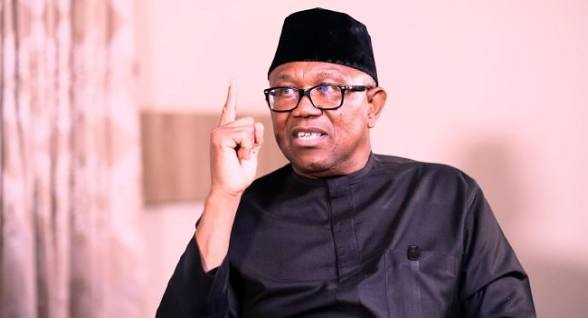
The rescue of dozens of pupils and teachers abducted in Oyo State has reignited debate over Nigeria's security leadership, with former Anambra State Governor and presidential aspirant Peter Obi arguing that stronger presidential intervention could have shortened the victims' ordeal. His remarks have added a political dimension to an incident that already exposed the country's continuing struggle with mass kidnappings.
Speaking days after the victims regained their freedom, Obi questioned the Federal Government's response and suggested that leadership during national security emergencies requires direct involvement from the nation's highest office.
Peter Obi made the comments during an interview on State of the Nation with Peter Obi on Afia TV's Eastern Eye, where he reflected on the kidnapping of schoolchildren and teachers in Oriire Local Government Area of Oyo State.
The victims were abducted on May 15, 2026, and spent approximately 56 days in captivity before security forces secured their release in July.
During the interview, Obi criticised President Bola Tinubu's handling of the crisis, alleging that the President did not personally contact Oyo State Governor Seyi Makinde throughout the lengthy hostage situation. That specific claim has not been independently verified through official government records.
Obi also stated that, if he were President, he would have travelled to the affected area within days.
Advertisement
"The bush is in Nigeria. Everybody in that bush will come out. There might be casualties, but everybody will come out," he said.
He argued that national leaders must take personal responsibility during major security emergencies, insisting that leadership demands decisive action even under difficult circumstances.
Obi further criticised what he described as excessive secrecy surrounding Nigerian security operations, saying authorities should publicly present arrested criminal suspects to demonstrate accountability and reassure citizens.
Drawing from his tenure as governor of Anambra State, Obi recalled consulting former President Olusegun Obasanjo before launching operations against criminal hideouts in forests across the state, saying decisive leadership was essential to restoring public safety.
Punch focused primarily on Obi's criticism of President Tinubu and his declaration that he would have personally entered the forest to oversee rescue efforts.
Channels Television similarly reported Obi's comments but placed greater emphasis on his broader criticism of the Federal Government's handling of insecurity and his repeated calls for more visible presidential leadership.
Meanwhile, fact-checking organisations have noted that Obi's allegation regarding President Tinubu's communication with Governor Seyi Makinde remains unverified, highlighting the distinction between confirmed events and political claims. What is independently established is that the Oriire pupils and teachers were kidnapped in May and rescued after spending nearly two months in captivity.
The Broader Security Debate
Obi's remarks touch on a wider national conversation about how Nigeria should respond to mass abductions, which have increasingly targeted schools, highways and rural communities over the past decade.
Large-scale kidnappings have become one of Nigeria's most persistent security challenges, forcing several states to spend heavily on surveillance technology, intelligence gathering and local security initiatives while federal agencies continue nationwide counter-banditry operations.
The debate also reflects differing views on presidential leadership during crises. While some argue that operational decisions should remain with military and security professionals, others believe visible presidential involvement can boost public confidence, improve coordination and demonstrate accountability during prolonged emergencies.
The Oriire kidnapping renewed concerns about the vulnerability of schools, particularly in rural communities where security infrastructure remains limited despite repeated attacks across different parts of the country.
Advertisement
Nigeria has witnessed multiple mass school abductions in recent years, prompting governments at both federal and state levels to strengthen school security programmes and increase collaboration among security agencies.
Despite improvements in intelligence-led operations that have resulted in several successful rescue missions, prolonged kidnappings continue to raise concerns over response speed, inter-agency coordination and the long-term effectiveness of existing security strategies.
The successful rescue of the Oriire victims ended weeks of uncertainty for affected families but has also intensified political debate over whether stronger leadership and faster operational responses could reduce the duration and frequency of similar incidents.
As preparations for the 2027 general election gradually gather momentum, security is expected to remain one of the dominant issues shaping political campaigns and public expectations.
The real test now will be whether authorities can translate recent rescue successes into lasting improvements that prevent future mass kidnappings rather than simply responding after attacks have already occurred.
You must log in to comment or reply.
Comments