
Political campaigns often turn old government records into present-day arguments, but disputes over public debt require something more durable than competing political claims: verifiable financial records.
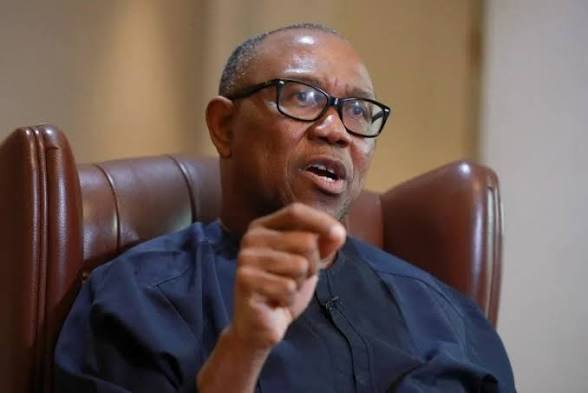
The latest confrontation between Peter Obi, the Anambra State Government and the Presidency illustrates that difficulty. At the centre of the dispute are loans, salary and gratuity arrears, an ecological fund and Obi’s claim that Anambra had no outstanding liabilities when he left office in 2014.
The controversy intensified on September 16, 2026, after Special Adviser to President Bola Tinubu on Information and Strategy, Bayo Onanuga, challenged Peter Obi to honour his pledge to stop campaigning for the 2027 presidency if evidence showed that his administration left financial liabilities in Anambra.
Onanuga's intervention followed a statement from Anambra State Commissioner for Information and Value Reorientation, Law Mefor, disputing Obi's account of the state's finances when he left office.
According to the Anambra government, eight external loans connected to projects implemented during or inherited by Obi's administration remain outstanding. The state put the combined outstanding balance at $92.35 million, equivalent to about ₦127.37 billion as of June 30, 2026. The loans, according to the government, covered areas including healthcare, education, erosion management, malaria control, community development and agriculture.
Mefor also said the Soludo administration had paid about ₦22 billion in inherited gratuity arrears owed to retired state and local government workers and teachers. He further cited outstanding obligations involving workers of the defunct Water Corporation and other legacy liabilities.
Obi disputes the government's account.
In a statement reported on September 16, he maintained that his administration cleared more than ₦35 billion in historical gratuities and arrears and left no outstanding salaries, pensions, gratuities or certified contractor obligations at handover.
He also disputed the treatment of an alleged ₦2.13 billion ecological fund. Obi said the money had been released shortly before the end of his tenure for the Oko/Umuchiana erosion crisis and was deliberately left untouched for his successor because it was tied to that project. He said this money was separate from more than ₦75 billion in savings he claimed his administration left behind.
Obi challenged anyone to produce evidence contradicting his account, saying that if his claims were disproved, he would stop campaigning.
Advertisement
The political language surrounding the dispute can make it appear to be a simple question of whether Obi left Anambra “in debt.” Financially, however, the issue is more complicated.
A government can leave office with cash reserves while also having outstanding long-term loans. It can clear some inherited arrears while other obligations remain disputed or unresolved. Similarly, a loan being associated with projects implemented during an administration does not by itself establish that the borrowing was improper.
That distinction matters.
The Anambra government's argument focuses heavily on outstanding liabilities that subsequent administrations have continued to service. Obi's defence focuses on what his administration paid, what it inherited and what remained available at the point of handover.
Those are related questions, but they are not necessarily identical.
The strongest way to resolve the dispute would therefore be through contemporaneous audited accounts, loan agreements, debt-service records, payroll and pension records, certified project obligations and bank statements covering the relevant period.
The political exchange can establish competing claims. It cannot, by itself, establish which accounting interpretation is correct.
The Anambra State Government's position is that Obi's claim of leaving a clean financial slate does not account for outstanding loans and arrears inherited by later administrations. It says the current government has had to service inherited obligations and has paid substantial sums towards legacy gratuities.
The Peter Obi position is that his administration substantially cleared historical liabilities before leaving office and that claims suggesting otherwise should be supported with evidence. He specifically disputes the characterisation of the ecological funds and says the money was deliberately preserved for its intended erosion-control project.
The Presidency's position, expressed by Bayo Onanuga, goes beyond the accounting dispute. Onanuga has used the Anambra government's allegations to challenge Obi to honour his own condition that he would stop campaigning if his claims about the state's finances were disproved.
The important distinction is that Onanuga's challenge is a political response to the dispute; it is not itself an independent audit of Anambra's finances.
The disputed ecological fund may prove particularly important because the two sides describe the same issue differently.
Obi says more than ₦2.13 billion was left untouched in a First Bank account for the Oko/Umuchiana erosion project. Several reports have reproduced his account and the account number he identified.
The Anambra government, however, says its certified account records do not support Obi's description of the account as an ecological fund. Commissioner Law Mefor said the account was an internally generated revenue consolidated account and that the state's records did not show the claimed ₦2.13 billion as either an inflow or balance.
That is a factual dispute that can potentially be tested through documentary evidence rather than political argument.
The controversy has implications beyond the 2027 presidential campaign.
First, it raises questions about how Nigerians evaluate the financial records of former governors seeking national office. A governor's record cannot be assessed solely through speeches about savings or debt; both sides of the balance sheet matter.
Second, the dispute highlights a persistent problem in Nigerian politics: financial claims about past administrations can resurface years later without the public immediately having access to a single, agreed accounting record.
Advertisement
Third, the controversy demonstrates how state-level governance records can become central to national elections. Obi's eight-year tenure in Anambra is now being examined through the lens of his presidential campaign, while the Soludo administration's own handling of inherited liabilities has become part of the political debate.
The immediate political consequence is likely to be continued scrutiny of Obi's record in Anambra.
But the more useful question for voters is not simply whether one side has produced a stronger political argument. It is whether the underlying figures can be independently reconciled.
For example, the claims concerning the $92.35 million outstanding loan balance, ₦22 billion in gratuity payments, more than ₦35 billion in historical arrears reportedly cleared by Obi's administration, and the ₦2.13 billion ecological fund should each be examined according to the relevant financial records and dates.
That approach would separate three different things that are currently being mixed together: what was inherited, what was borrowed, what was repaid and what remained outstanding when power changed hands.
Ultimately, the Anambra debt controversy is bigger than the exchange of challenges between Peter Obi, the state government and the Presidency.
It is a test of whether political arguments about public finances can move beyond competing narratives and toward documents that ordinary Nigerians can examine.
Obi has said he will stop campaigning if his claims are disproved. The Anambra government says its records contradict those claims. The Presidency has now entered the dispute.
What happens next should therefore be measured less by the volume of the political rhetoric and more by whether the underlying financial records can settle the competing accounts.
You must log in to comment or reply.
Comments