
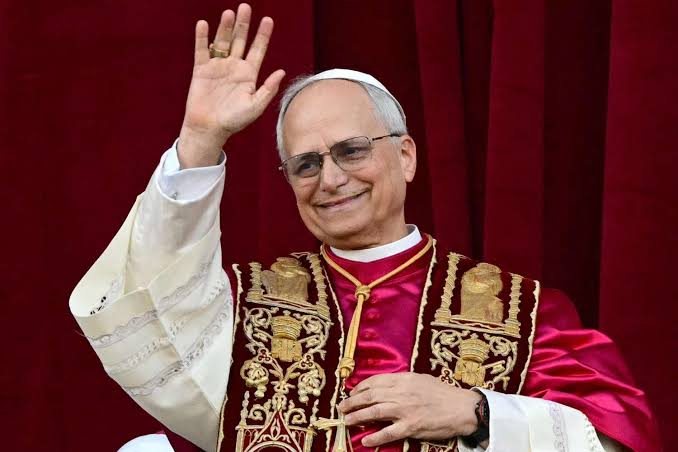
Pope Leo XIV has issued one of the strongest acknowledgements yet of the Catholic Church’s historical connection to slavery, admitting that the Vatican once helped legitimise systems of human subjugation before eventually condemning the practice centuries later.
The apology, delivered through a major Vatican document focused on artificial intelligence, digital exploitation and human dignity, signals a broader attempt by the Church to confront historical injustices while warning that modern technology could create new forms of economic and social bondage.
In a new text titled Magnifica Humanitas (“Magnificent Humanity”), released on Monday, Pope Leo XIV said the Catholic Church was slow to universally condemn slavery despite centuries of suffering tied to the transatlantic slave trade and colonial expansion.
The Pope acknowledged that the Apostolic See had historically intervened “to regulate and legitimise forms of subjugation” in response to requests from rulers during earlier periods of European expansion.
“In the early modern period, the Apostolic See of Rome, responding to requests from sovereigns, intervened several times in order to regulate and legitimise forms of subjugation, and, in certain cases, the enslavement of ‘infidels’,” the pontiff wrote.
He admitted that the Church’s delayed condemnation of slavery remains “a wound in Christian memory.”
Advertisement
“For this, in the name of the Church, I sincerely ask for pardon,” Pope Leo stated.
The Vatican document also warned about emerging “new forms of slavery” linked to artificial intelligence, digital labour exploitation, algorithmic control and widening economic inequality.
What makes this apology especially significant is not simply the language used, but the institution behind it.
Previous popes, including Pope John Paul II and Pope Francis, condemned slavery and apologised for Christians’ participation in the slave trade. Yet Pope Leo XIV went further by explicitly recognising the Vatican’s own institutional role in legitimising systems tied to enslavement.
That distinction could reshape conversations around the Church’s historical accountability.
A closer look also shows the timing is not accidental.
The apology arrives at a moment when global concerns about labour exploitation are evolving beyond traditional definitions. From underpaid digital workers to algorithm-driven workplaces and AI-powered surveillance systems, fears are growing that technology could deepen inequality in poorer economies.
For many African countries, including Nigeria, the Pope’s warning may resonate beyond religion.
Nigeria’s fast-growing digital economy has created opportunities for tech workers, content creators and remote employees, but concerns around low wages, data exploitation and unstable gig work are increasing. Analysts have repeatedly warned that developing economies risk becoming suppliers of cheap digital labour without adequate protections.
The Vatican’s framing suggests the Church now sees exploitation not only through physical chains but through economic dependency, technological imbalance and invisible labour systems.
Historians have long documented the role European religious institutions played during colonial expansion between the 15th and 19th centuries.
Advertisement
Although some Church figures opposed slavery, several papal decrees during earlier centuries allowed forms of enslavement under specific political and religious conditions. It was not until the 19th century that the Catholic Church formally adopted a clear and universal condemnation of slavery.
The issue remains emotionally and politically charged because the transatlantic slave trade displaced millions of Africans and reshaped economies across West Africa.
Nigeria itself experienced long-term demographic, political and economic consequences from slave trade networks that operated through coastal regions centuries ago.
Today, conversations around reparations, colonial-era accountability and institutional apologies continue to gain momentum globally.
What authorities, religious institutions and policymakers do next may determine whether such apologies remain symbolic gestures or become part of broader efforts toward historical reconciliation and economic justice.
You must log in to comment or reply.
Comments