
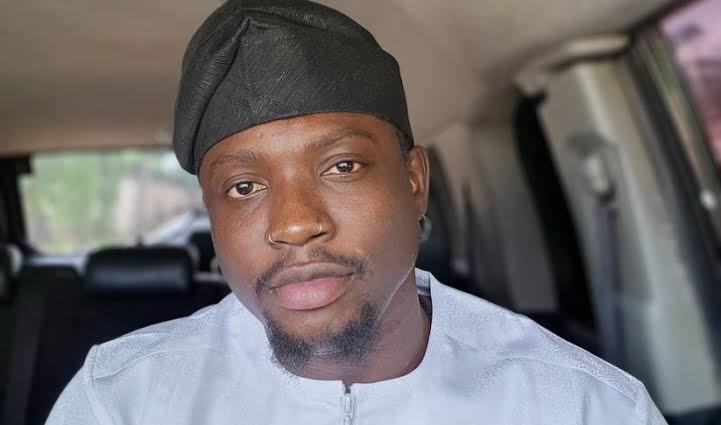
A fresh controversy involving artificial intelligence, political misinformation, and Nigeria’s heated pre-2027 atmosphere erupted on Wednesday after the Presidency threatened legal action against social media commentator Martins Otse, popularly known as VeryDarkMan (VDM), over a viral audio clip allegedly mimicking President Bola Tinubu’s voice.
The dispute goes beyond another online political clash. It highlights growing concerns about how AI-generated content could shape public opinion, deepen ethnic tensions, and influence political narratives ahead of Nigeria’s next general election.
The Presidency, through Special Adviser on Information and Strategy Bayo Onanuga, accused VDM of circulating what officials described as a fake AI-generated audio purportedly featuring President Tinubu making controversial statements about insecurity in the South-East, World Bank loans, the 2027 election, and Labour Party figure Peter Obi.
Reacting via his verified X account, Onanuga said:
“This VDM needs to face the weight of the law for being the conveyor and disseminator of a fake audio of President Tinubu. This is a clear case of an egregious abuse of the social media platform.”
The viral clip allegedly contained a voice resembling Tinubu claiming that insecurity in the South-East was intentional and suggesting that World Bank loans were being used to support political ambitions ahead of 2027.
Advertisement
In a separate video shared online, VDM appeared to reference the clip while criticising Tinubu’s administration and questioning the President’s suitability for another term.
“This man does not have anything to offer,” VDM said in the video. “Come 2027, any other option is welcome.”
However, a closer look at reports from different media platforms shows disagreement over one crucial issue — whether VDM actually uploaded the controversial audio himself or merely reacted to an already circulating clip.
While some platforms framed him as the distributor of the audio, others noted there was no direct evidence showing he originally published the recording.
Beyond the Presidency’s legal threat, the incident reflects a growing global problem: AI-generated media is becoming harder to detect, cheaper to create, and more politically dangerous.
Nigeria has already witnessed fake investment advertisements, manipulated campaign visuals, and digitally altered speeches involving public figures. But cloned voice technology introduces a new level of risk because audio often feels more believable to the public than edited images or text posts.
What makes this more complex is that political distrust in Nigeria is already extremely high. In such an environment, even unverified audio clips can influence public perception long before authorities respond.
Digital misinformation experts warn that deepfake audio could become a major destabilising factor during election periods, especially in countries with intense political polarisation and high social media consumption.
The Coalition for Ethical Technology and Democratic Integrity recently urged Nigerian authorities to criminalise AI-driven blackmail and deepfake political manipulation, warning that unchecked synthetic media could threaten the credibility of the 2027 elections.
Nigeria’s amended Cybercrime Act also gives authorities legal grounds to prosecute individuals accused of knowingly distributing false digital content capable of harming reputations or causing public unrest.
Yet critics argue that enforcement could become controversial if authorities appear to target political critics selectively while broader misinformation networks remain unchecked.
Advertisement
The Tinubu-VDM controversy may ultimately become one of the first major Nigerian political battles shaped directly by AI-generated media.
Nigeria’s online political culture has evolved rapidly since the 2015 and 2023 elections. Influencers, independent commentators, and livestream personalities now command audiences comparable to traditional media outlets.
VDM himself has built a large following by aggressively commenting on politics, celebrity culture, corruption allegations, and social controversies. That influence makes any misinformation allegation involving him politically significant.
The real test now is whether Nigerian institutions can respond to emerging AI misinformation threats without creating fears of political censorship or suppressing legitimate criticism online.
If deepfake technology continues spreading faster than public verification systems, future election cycles could face serious credibility challenges — not only for politicians, but for the public’s ability to distinguish fact from manipulation.
You must log in to comment or reply.
Comments