
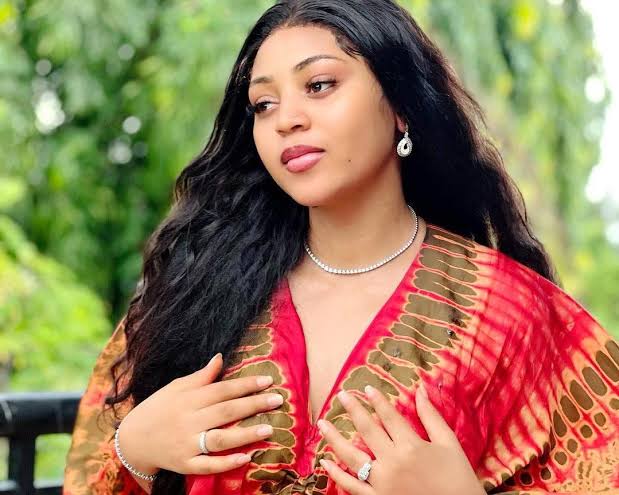
Nollywood actress Regina Daniels has reopened public conversation around her personal life after stating she is no longer interested in marriage following her separation from businessman and politician Ned Nwoko.
Speaking during a livestream session, the actress also shared a deeply personal desire to have a daughter, alongside emotional reflections on motherhood and family separation that have since sparked widespread attention online.
During a livestream session with content creator Jarvis, Nollywood actress Regina Daniels openly discussed her current stance on marriage, motherhood, and her personal life following her separation from Senator Ned Nwoko.
She stated that she has emotionally moved away from the idea of marriage, while emphasizing her continued desire to expand her family. According to her, she still hopes to have more children and is particularly determined to have a female child.
“For some reason, I have checked my mind out of getting married,” she said.
“I am going to have a girl. And I must have a girl child.”
Advertisement
The actress also reflected on her perspective of motherhood, suggesting that raising a daughter carries a different emotional connection compared to raising sons.
“I feel like motherhood starts better when you have a girl child,” she added.
“Girls will always remember home.”
She further revealed that she has not seen her children since 2025, expressing emotional distance but hope for a reunion.
“Yeah, of course, I miss my children… I saw them last year,” she said.
Beyond celebrity headlines, Regina Daniels’ comments reflect a recurring pattern in public discussions around marriage, divorce, and motherhood in Nigeria’s entertainment industry. Her statements highlight how personal relationships under public scrutiny often evolve into national conversations shaped by social media amplification and media framing.
In Nigeria’s celebrity ecosystem, marital breakdowns frequently become layered narratives involving public sympathy, criticism, and speculation. What makes this case more complex is the intersection between personal autonomy and public expectation — especially for women in high-profile relationships.
Her expressed desire for a female child also reflects cultural perceptions around gender and family continuity, a theme that continues to influence discussions in many Nigerian households.
At a broader level, celebrity separation stories often mirror societal debates about marriage stability, co-parenting, and emotional wellbeing, especially when children are involved. While public attention often focuses on sensational details, the underlying human element — separation, distance, and parental attachment — remains central.
Nigeria’s entertainment industry has seen a steady rise in publicized celebrity separations over the last decade, driven largely by social media visibility. According to general media trend observations, relationship-based entertainment stories now account for a significant share of viral celebrity news engagement.
Advertisement
Historically, similar high-profile cases in Nigeria’s entertainment space have shown that public sentiment tends to shift rapidly between support and criticism depending on new revelations, often overshadowing long-term emotional or family consequences.
This pattern reflects a broader digital media trend where personal narratives are consumed as continuous public content rather than private transitions.
As public reactions continue to circulate online, the key question remains how much of this narrative stays within personal boundaries versus how much becomes shaped by ongoing media interpretation.
What happens next in Regina Daniels’ personal and family journey is likely to remain under public scrutiny, but the deeper test will be how she and those involved manage privacy, co-parenting, and emotional stability away from the spotlight.
You must log in to comment or reply.
Comments