
Nigeria's long-running debate over state policing has entered a new phase after the House of Representatives withdrew its own constitutional amendment bill in favour of President Bola Tinubu's Executive proposal. While the decision initially raised questions about the future of state police, lawmakers insist it is intended to strengthen—not abandon—the reform by creating a single constitutional framework.
The move reflects a broader effort to harmonise legislative and executive approaches to one of Nigeria's most consequential security reforms in decades.
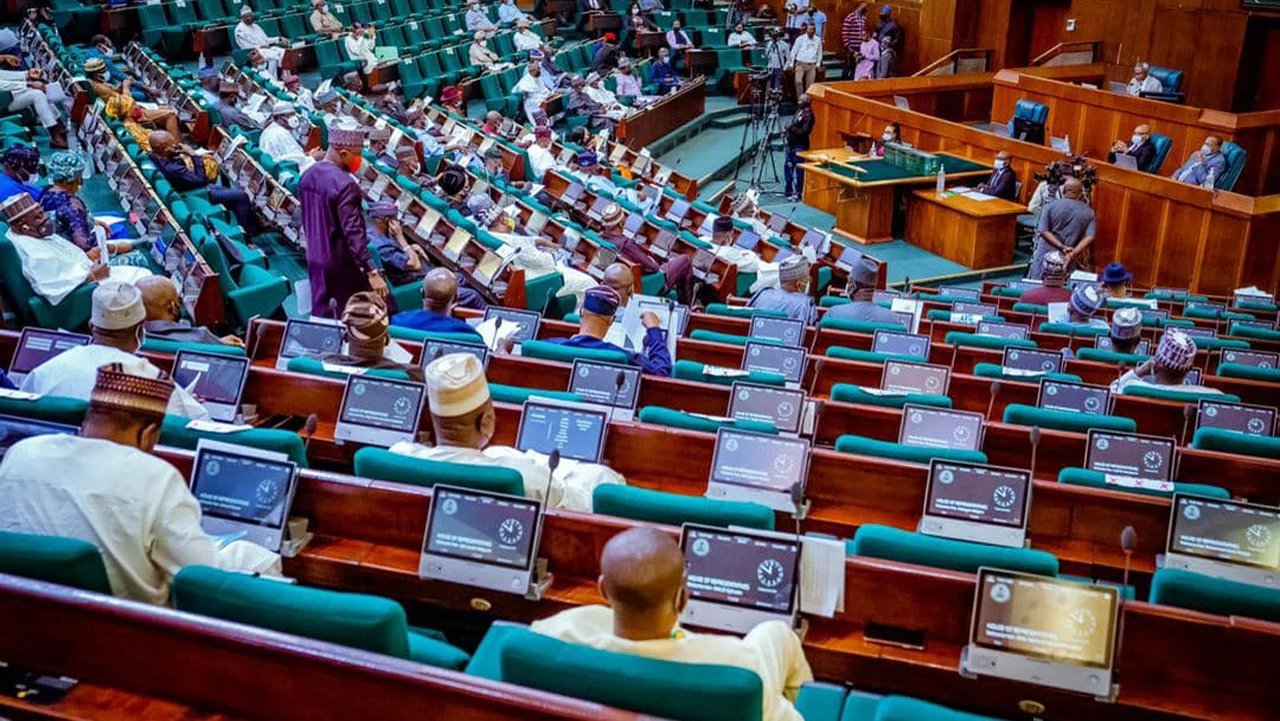
The House of Representatives on Tuesday rescinded its earlier constitutional amendment bill seeking the establishment of state police services, paving the way for consideration of President Bola Tinubu's Executive Bill on the same subject.
House spokesperson Akin Rotimi said the decision followed the transmission of the President's Constitution of the Federal Republic of Nigeria, 1999 (Alteration) Bill, 2026 (HB. 2797) to the National Assembly.
According to Rotimi, the House had already passed its own State Police Constitution Alteration Bill on June 11, 2026, and later inaugurated a 12-member Conference Committee on July 9 to reconcile differences between the House and Senate versions.
However, lawmakers concluded that the Executive Bill introduced broader constitutional and implementation issues requiring a unified legislative process.
The House therefore adopted a motion sponsored by Francis Waive, Chairman of the House Committee on Rules and Business, rescinded its earlier resolution and dissolved the conference committee before giving Tinubu's proposal its first and second readings.
The Executive Bill has now been referred to the House Committee on Constitution Review for detailed legislative scrutiny.
Advertisement
Rotimi stressed that the decision should not be interpreted as a retreat from the state police initiative.
Instead, he said lawmakers remain committed to establishing state police through what they described as a comprehensive constitutional framework capable of addressing Nigeria's evolving security challenges.
President Tinubu, in his communication to the National Assembly, urged lawmakers to expedite consideration of the proposal, describing state police as a key pillar of his administration's broader security reform agenda.
Coverage across Nigeria's leading media outlets converged on the central development but differed in emphasis.
Punch highlighted the House's explanation that the withdrawal was procedural rather than political, focusing on lawmakers' reassurance that support for state police remains unchanged.
Channels Television concentrated on the legislative sequence, detailing how the House dissolved its reconciliation committee after receiving the Executive Bill and explaining the constitutional process ahead.
Meanwhile, Reuters has consistently framed Nigeria's state police debate within the country's wider security crisis, pointing to persistent attacks by armed groups, kidnappers and criminal gangs that have exposed the limitations of the country's highly centralised policing system.
One important point receiving less attention is that replacing the House bill with the Executive proposal may actually reduce the likelihood of conflicting constitutional provisions emerging later in the amendment process. Rather than running two parallel legislative tracks, lawmakers are attempting to build consensus around a single constitutional framework before final passage.
The renewed push for state police comes amid increasing pressure on Nigeria's security institutions.
For years, governors, traditional rulers and security experts have argued that a centrally controlled police force struggles to respond effectively to local security threats across Nigeria's 36 states.
The Nigeria Police Force remains one of the country's most overstretched institutions, with officer-to-population ratios falling below internationally recommended levels. Communities in several regions continue to rely heavily on local vigilante organisations and regional security outfits to fill policing gaps.
Supporters of state police believe decentralising law enforcement would improve intelligence gathering, speed up emergency responses and enhance accountability at the local level.
Critics, however, warn that governors could misuse state-controlled police forces to suppress political opponents, interfere in elections or deepen regional tensions if sufficient constitutional safeguards are not established.
These competing concerns explain why lawmakers insist that the constitutional framework must clearly define operational powers, oversight mechanisms, funding responsibilities and coordination between federal and state policing institutions before implementation.
Calls for state police have resurfaced repeatedly since Nigeria returned to democratic rule in 1999.
Advertisement
Several constitutional review exercises have considered similar proposals, but disagreements over political control, funding and constitutional authority prevented previous amendments from succeeding.
In recent years, worsening insecurity—including banditry in the North-West, farmer-herder conflicts in the North-Central, separatist violence in the South-East and kidnapping across several regions—has intensified demands for policing reforms.
The National Economic Council, comprising state governors and chaired by the Vice President, previously endorsed the establishment of state police after extensive consultations, providing additional momentum for constitutional amendments now before the National Assembly.
Even if approved by both chambers of the National Assembly, the constitutional amendment must still secure endorsement from at least 24 of Nigeria's 36 State Houses of Assembly before becoming law.
That requirement means political negotiations will extend well beyond the National Assembly.
The House Committee on Constitution Review will now examine the Executive Bill before it returns for further legislative consideration.
Whether Nigeria eventually adopts state police will depend not only on parliamentary approval but also on the willingness of state legislatures to support one of the country's most significant constitutional reforms since the return to civilian rule. The coming months are therefore likely to determine whether decades of debate finally translate into structural changes in Nigeria's policing architecture.
You must log in to comment or reply.
Comments