
 As governments and organisations worldwide marked International Women’s Day, leaders across Nigeria used the moment to highlight the role of women in national development and to renew commitments to gender equality.
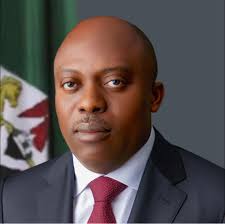
In Rivers State, Governor Siminalayi Fubara said his administration remains focused on expanding opportunities for women, describing them as central to economic growth, community stability, and social progress.
In a goodwill message to women across the state, Governor Fubara praised their resilience and contributions to families, workplaces, and communities.
The message, delivered through a statement by his Chief Press Secretary, Onwuka Nzeshi, emphasised that women play a decisive role in shaping society and driving development.
According to the governor, the state government will continue to promote policies that encourage women to achieve their full potential in leadership, business, and public service.
Advertisement
“As governor, I am proud to stand in solidarity with our women, recognising their pivotal role in shaping our society,” he said.
He also urged residents to use the occasion of International Women’s Day to reinforce commitments toward fairness, opportunity, and gender inclusion.
The statement highlighted several initiatives the state government says are part of its effort to support women’s empowerment.
These include appointments of women to leadership positions within the administration and targeted economic programmes aimed at strengthening women’s participation in the state’s economy.
One such initiative, the Women Economic Empowerment Programme, reportedly provided ₦50,000 grants to 1,000 women, offering small-scale financial support to help them expand businesses and household income sources.
The governor’s wife, Valerie Fubara, has also been involved in agricultural support programmes for women farmers. Under one initiative linked to the Renewed Hope Initiative, 20 women farmers reportedly received a combined ₦10 million in support to strengthen agricultural production.
The state government has also partnered with the National Directorate of Employment to create job opportunities targeting women and young people.
Nigeria continues to face challenges in gender representation across leadership, politics, and economic participation.
Advertisement
According to recent studies by development organisations, women remain underrepresented in political office and corporate leadership roles despite constituting nearly half of the country’s population.
In the labour market, women also face structural barriers including limited access to financing, lower property ownership rates, and cultural expectations that restrict economic participation in some regions.
Against that backdrop, state-level initiatives such as grants, agricultural support programmes, and job creation schemes are often framed as practical steps toward closing the opportunity gap.
Still, development experts frequently stress that sustainable change depends not only on financial support programmes but also on long-term policy reforms that expand education access, leadership representation, and protection from discrimination.
You must log in to comment or reply.
Comments