
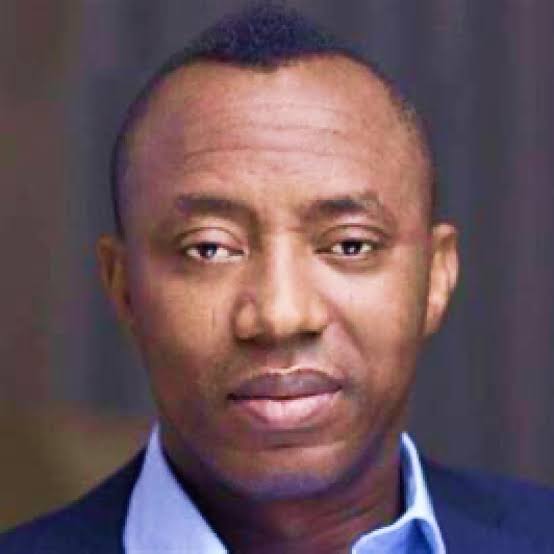
 A major leadership shift has unfolded within the African Action Congress (AAC) as Omoyele Sowore steps down as National Chairman shortly after securing the party’s presidential ticket for the 2027 general elections. The transition, announced during the party’s primaries in Abuja, signals a strategic restructuring ahead of Nigeria’s next election cycle, with implications for party control and campaign direction.
On Tuesday, May 26, 2026, the African Action Congress confirmed that its National Chairman, Omoyele Sowore, has formally resigned from his position. The announcement came just hours after Sowore emerged as the party’s presidential candidate for the 2027 elections during AAC primaries held in the Federal Capital Territory, Abuja.
According to the party’s official statement, Samuel Ajeigbe has been appointed as the new National Chairman of the AAC.
The statement read:
“Omoyele Sowore has officially stepped down as the National Chairman of the African Action Congress. The party hereby welcomes Samuel Ajeigbe as the new National Chairman of our great party.”
Sowore was also presented with the party’s presidential flag after receiving unanimous endorsement from delegates and party leaders.
Advertisement
Beyond the official statements, the development reflects a familiar pattern in Nigerian smaller political parties where leadership roles are often reshuffled to align with electoral ambitions.
Sowore’s resignation effectively consolidates his position as the party’s central political figure ahead of 2027, but it also raises structural questions: who controls party machinery during the campaign, and how independent is the new leadership under Samuel Ajeigbe?
What makes this more significant is AAC’s positioning in Nigeria’s opposition landscape. While the party remains smaller compared to the APC, PDP, and Labour Party, Sowore’s activism-driven political brand gives AAC visibility beyond its numerical strength.
Historically, Nigerian opposition parties have struggled with dual-role leadership conflicts during election cycles. Similar patterns were seen in previous election seasons where party founders or major candidates stepped back from administrative roles to focus on national campaigns—often leading to internal friction or weakened grassroots coordination.
Economically and politically, AAC’s challenge remains scale. Without strong state-level structures or deep electoral funding, the party’s campaign effectiveness will depend heavily on Sowore’s personal influence, media reach, and activist networks rather than traditional party machinery.
Nigeria’s opposition politics has repeatedly shown that leadership centralization around presidential candidates can boost visibility but weaken internal party governance.
In 2019 and 2023 election cycles, smaller parties that aligned chairmanship with presidential candidates experienced:
• Reduced internal conflict in the short term
Advertisement
• But weaker post-election party rebuilding capacity
• Dependence on individual political figures rather than institutional strength
AAC’s current transition fits into this broader trend, suggesting a strategic but risky consolidation ahead of 2027.
The ultimate concern for AAC now is whether this leadership restructuring strengthens its electoral competitiveness or exposes the party to internal operational gaps during the campaign period. As Nigeria moves closer to 2027, the durability of Sowore’s dual influence—as a political symbol and campaign driver—will be closely watched across the opposition landscape.
You must log in to comment or reply.
Comments