
A New Kind of Car Raises Questions About the Future of Transport
For drivers, passengers and people planning their next vehicle purchase, the development of a car that can briefly lift into the air raises a practical question: how much could transportation change as automakers experiment with technologies beyond conventional road travel?
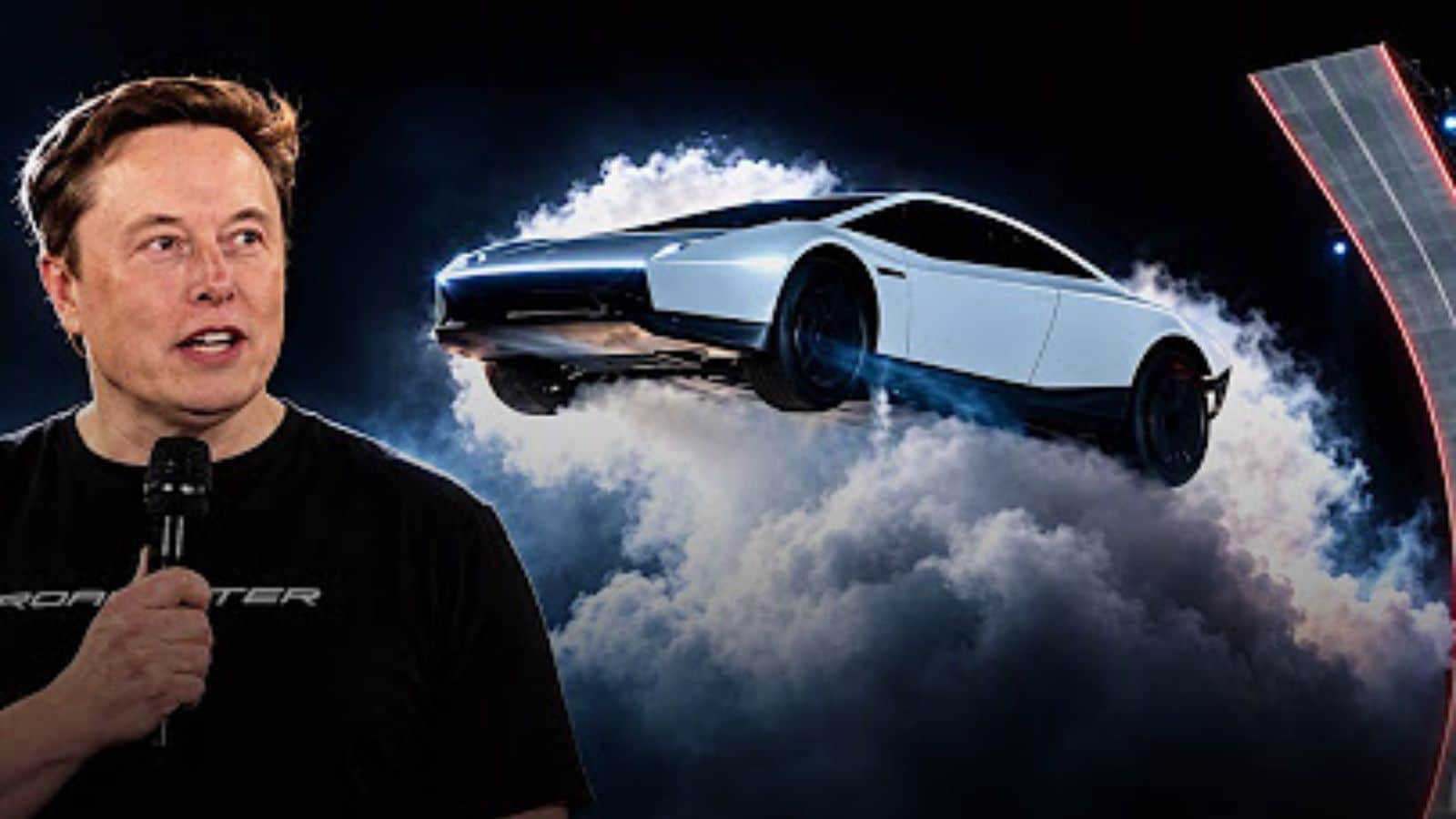
Tesla's redesigned Roadster, unveiled on October 15, 2026, demonstrated brief airborne manoeuvres using rocket-style thrusters developed with SpaceX. The company says production is planned for 2028, although the demonstration did not establish that the vehicle can fly over long distances like an aircraft.
The unveiling has renewed attention on Elon Musk's ambitions for transportation technology. However, the implications for ordinary motorists remain uncertain because the demonstrated vehicle is not evidence of a commercially available flying car.
Tesla unveiled a redesigned version of its Roadster sports car at a demonstration in Texas on October 15.
Reports described the vehicle lifting into the air, turning during the demonstration and landing. The concept incorporates rocket-style thrusters developed with SpaceX, the aerospace company founded by Musk.
Tesla has said it intends to begin production in 2028. That date is a company target rather than confirmation that customers will receive the vehicle on schedule.
The Roadster is part of a broader group of technology ventures associated with Musk, including Tesla's electric vehicles, SpaceX's rockets, Starlink's satellite internet service and Neuralink's brain-computer interface research.
Although Musk is closely associated with these businesses, their products and technologies are developed by teams of engineers, researchers and other employees. Their achievements should not be understood as the work of one individual alone.
For most motorists, the immediate significance of the Roadster demonstration is technological rather than practical.
Advertisement
Conventional cars are designed to travel on roads, where drivers must follow traffic regulations and share space with other vehicles, cyclists and pedestrians. A vehicle that can lift into the air introduces additional questions about safety, control, infrastructure and how it would operate alongside existing transport systems.
The demonstration does not establish whether the Roadster could be used for routine journeys, how it would perform in everyday conditions or what requirements would govern its operation.
Nor does the unveiling confirm that the vehicle will be affordable or accessible to ordinary households.
Until Tesla provides further information about the production model, pricing and operating requirements, motorists cannot reliably assess whether the technology would have any direct effect on their daily journeys.
What About Workers and the Automotive Industry?
Tesla's Roadster project illustrates how automakers and aerospace companies can combine expertise in different engineering fields.
The involvement of SpaceX brings rocket-style propulsion technology into an automotive demonstration. However, a successful demonstration does not by itself establish that the technology can be manufactured economically, maintained safely or used commercially at scale.
For engineers and other workers in the automotive and aerospace industries, such projects highlight the range of technical disciplines involved in developing new transport systems.
The wider significance will depend on what companies can demonstrate beyond prototypes, including reliability, safety, production readiness and compliance with applicable regulations.
The available reporting does not establish how many jobs the Roadster project will create or whether it will lead to measurable changes in employment across either industry.
Musk's businesses have pursued different approaches to changing how people travel and access technology.
Tesla has helped commercialise electric vehicles, while SpaceX has developed reusable rocket systems. Starlink uses satellites in low Earth orbit to provide internet connectivity, including in locations where conventional infrastructure can be limited.
These ventures address different problems, but they share an emphasis on developing technologies that could alter existing markets.
Their practical effects, however, vary by product, location and availability. The existence of a new technology does not automatically mean that it will be affordable, accessible or useful to everyone.
The Roadster's airborne demonstration is therefore best understood as an illustration of an engineering ambition rather than evidence that everyday transportation is about to move away from roads.
For Nigerian motorists and businesses, the Roadster announcement may be relevant as part of the wider international discussion about vehicle technology.
However, the available information does not establish that Tesla plans to introduce the thruster-equipped Roadster into Nigeria, nor does it demonstrate that the vehicle would be suitable for Nigerian roads or local transport needs.
Questions about purchase costs, servicing, technical support, operating requirements and applicable regulations would need to be answered before potential buyers could evaluate its practicality.
Advertisement
For now, the development offers an opportunity to follow advances in automotive engineering without assuming that a demonstration overseas will translate into an immediate change in how Nigerians travel.
Tesla has announced plans to begin Roadster production in 2028.
Further information about the production vehicle, its technical specifications, pricing and operating requirements will be needed to assess what customers could actually buy and how they could use it.
The reported demonstration establishes that the concept can perform brief airborne manoeuvres under the conditions shown. It does not establish sustained aircraft-style flight or readiness for routine public use.
A Demonstration, Not Yet a New Way to Commute
Tesla's redesigned Roadster highlights the ambition of companies exploring the boundaries between automotive and aerospace engineering.
For drivers and transport users, the practical questions remain whether the technology can be made safe, affordable, reliable and suitable for everyday journeys.
Until those questions are answered, the Roadster remains a striking demonstration of a possible direction for vehicle development, not proof that flying cars are ready to become part of ordinary life.
You must log in to comment or reply.
Comments