
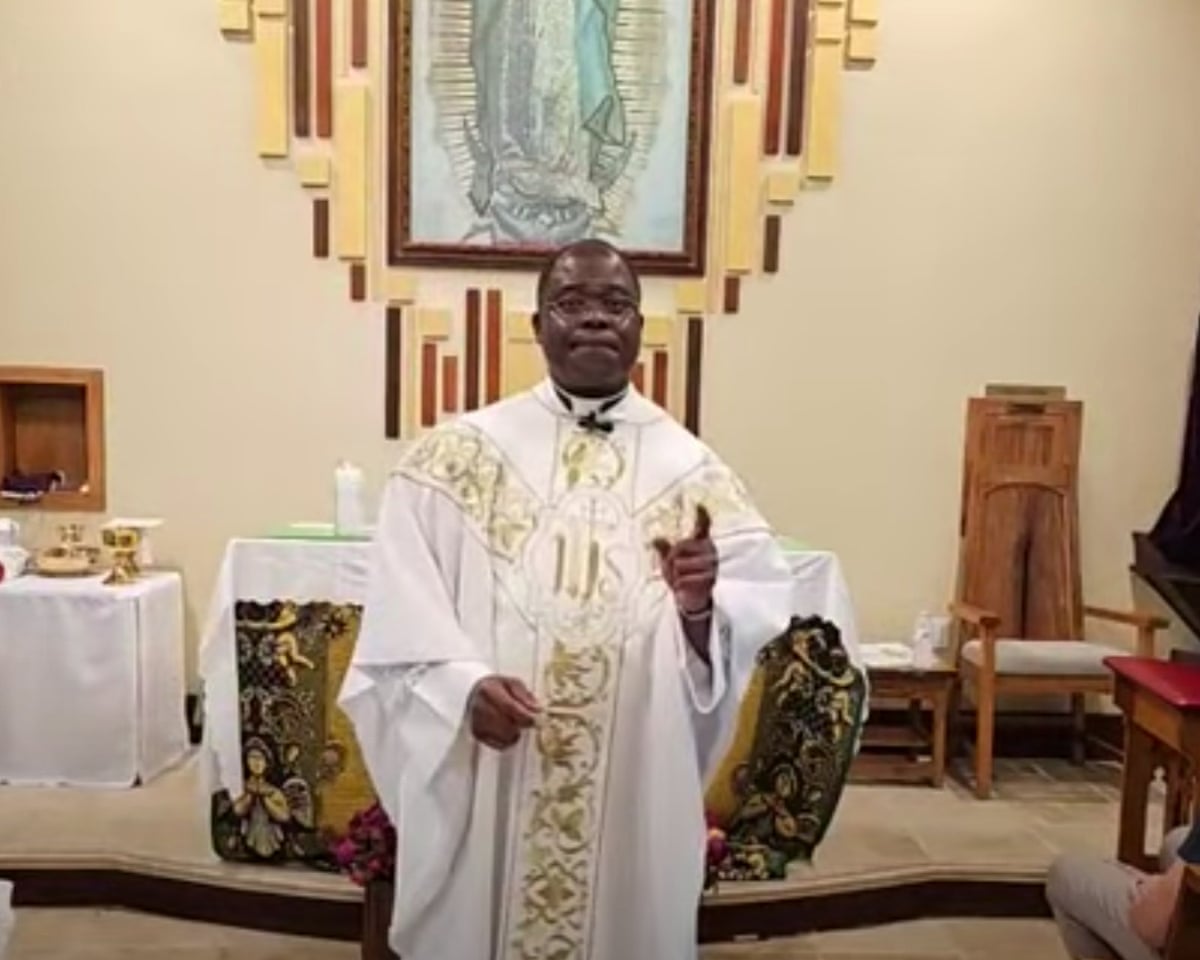
A Texas jury has convicted a Nigerian-born Catholic priest, Anthony Odiong, in a case that has drawn attention to the power dynamics between clergy and vulnerable parishioners.
The verdict, delivered after a brief deliberation in Waco, marks the culmination of allegations spanning years of spiritual counselling that prosecutors say were exploited for sexual access.
A McLennan County jury in Texas found Anthony Odiong, 57, guilty of one count of first-degree sexual assault and two counts of second-degree sexual assault involving two women he counselled spiritually while serving as a Catholic priest.
The verdict was reached after about two hours of deliberation. Odiong, who denied the charges, now faces a possible life sentence on the most serious count, with additional prison terms of up to 20 years for each of the remaining convictions. Sentencing is scheduled to begin before the same jury on Monday.
Court proceedings detailed allegations from two women who testified that Odiong used his position as a spiritual adviser to initiate and maintain inappropriate sexual relationships while they were experiencing personal crises, including divorce and abusive marriages.
Advertisement
One complainant testified that the relationship began during a period of emotional vulnerability and continued for years, while another alleged that the priest pressured her into sexual conduct involving her marriage and later required her to disclose intimate details during spiritual counselling sessions.
A third allegation was dropped during trial after the complainant did not appear in court, with prosecutors citing her fragile emotional condition.
Beyond the courtroom verdict, the case raises broader questions about accountability systems within religious institutions, particularly in transnational clergy assignments.
Odiong, ordained in Nigeria in 1993 before being transferred to the United States in 2006, operated within a pastoral structure that places priests in long-term advisory relationships with parishioners. Experts testified during the trial that clergy are expected to maintain strict boundaries due to the inherent imbalance of authority and trust.
Cases like this are not isolated within the Catholic Church’s global footprint. Over the past two decades, multiple investigations in the United States, Europe, and parts of Africa have documented patterns where spiritual authority is misused to initiate inappropriate relationships. The US Catholic Church alone has faced billions of dollars in settlements linked to abuse claims since the early 2000s, according to widely documented diocesan records and investigative reporting.
What distinguishes the Odiong case is the allegation that coercion occurred not through force, but through sustained spiritual influence—an area that legal systems are increasingly forced to interpret as psychological and positional abuse rather than purely physical misconduct.
For Nigeria, where clergy often hold significant social authority in communities, such cases also raise uncomfortable reflections about oversight, vetting, and post-transfer monitoring of religious personnel sent abroad.
Clergy sexual abuse cases in the United States have led to widespread institutional reforms, including mandatory reporting rules in several states and diocesan-level safeguarding protocols. Despite these reforms, lawsuits and criminal prosecutions continue to emerge, suggesting that oversight mechanisms remain uneven.
Advertisement
In Texas alone, sexual assault cases involving authority figures—teachers, religious leaders, and caregivers—have consistently been treated as aggravated offenses when power imbalance is proven, reflecting a legal trend toward recognizing coercion beyond physical force.
Historically, similar clergy-related convictions have resulted in lengthy prison sentences and civil litigation against dioceses, reinforcing the legal principle that spiritual authority does not exempt individuals from criminal liability.
As sentencing approaches, the case is expected to further test how courts evaluate spiritual authority as a factor in sexual assault prosecutions. It also places renewed attention on how religious institutions monitor clergy conduct across international assignments.
The broader question now is whether institutional safeguards can evolve quickly enough to address cases that operate in the blurred space between spiritual guidance and personal vulnerability—an area where legal clarity is still developing.
You must log in to comment or reply.
Comments