
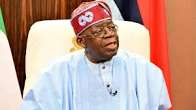
Nigeria’s economic recovery narrative collided with a harsher reality on Friday as President Bola Ahmed Tinubu described insecurity and poverty as national emergencies during Workers’ Day celebrations in Abuja. The statement underscores the strain on livelihoods at a time when inflation, job uncertainty and rural violence continue to shape daily life.
Speaking through the Secretary to the Government of the Federation, George Akume, the president warned that fear and hardship are eroding productivity and undermining the prospects of meaningful employment across the country.
At its core, the message reflects a pattern seen in recent government communications: security and poverty are no longer treated as separate policy challenges but as interconnected threats to economic stability. Tinubu’s framing — calling them “hydra-headed” crises — signals a shift toward urgency, even if it stops short of a formal constitutional emergency.
Coverage across Nigerian media broadly aligns on the headline message. Outlets such as Punch and others highlighted the “national emergency” phrasing, while broadcast platforms leaned more into the Workers’ Day context—wages, labour relations, and welfare promises. What received less scrutiny, however, is how far existing interventions have altered conditions on the ground.
The administration points to several initiatives as evidence of progress:
• Cash transfers reportedly reaching 15 million households
Advertisement
• Infrastructure projects like the Lagos-Calabar Coastal Highway creating jobs
• Security expansion through community guards and agro-rangers
Yet the broader economic backdrop complicates that narrative. Nigeria continues to face:
• Persistent inflation affecting food prices
• Currency pressures following reforms
• Ongoing insecurity in farming regions, particularly in the Middle Belt
These factors directly influence the labour market Tinubu referenced. When farms are disrupted or supply chains become unsafe, the consequences ripple into urban job availability, wages, and business confidence.
While the address projects coordination and scale, it offers limited clarity on measurable outcomes. Claims such as millions lifted out of poverty or hundreds of thousands of jobs created remain difficult to independently verify in real time, and few outlets interrogated these figures in detail.
That framing leaves out a critical dimension: the quality and sustainability of jobs. Temporary infrastructure employment or security recruitment may ease short-term pressures, but they do not necessarily translate into long-term economic resilience.
What makes this more complex is the dual burden on households—rising living costs alongside stagnant income growth. Even where employment exists, purchasing power has been significantly eroded, weakening the impact of wage policies like the new minimum wage.
The president’s call for unions to treat strikes as a last resort reflects an ongoing balancing act between reform and stability. Organised labour groups, including the Nigeria Labour Congress, have repeatedly pushed back against economic policies they argue deepen hardship.
Advertisement
That tension is likely to intensify. Workers’ Day speeches traditionally emphasize solidarity, but this year’s message carried a stronger appeal for restraint, hinting at concerns within government about potential industrial action.
One of the less-emphasized but critical elements is the deployment of agro-rangers to protect farming communities. Agriculture remains a major employer in Nigeria, and insecurity in rural areas has had a measurable impact on food supply and inflation.
By tying security intervention directly to agricultural output, the administration implicitly acknowledges that economic recovery depends as much on stabilizing rural regions as on macroeconomic reforms.
The ultimate concern now is whether the “national emergency” framing leads to clear, trackable policy outcomes rather than remaining rhetorical. Nigerians are already measuring progress not by announcements but by changes in food prices, job availability, and personal safety.
Without visible improvements in these areas, the risk is that urgency in language may outpace results on the ground—further eroding public confidence at a delicate moment for the economy.
You must log in to comment or reply.
Comments