
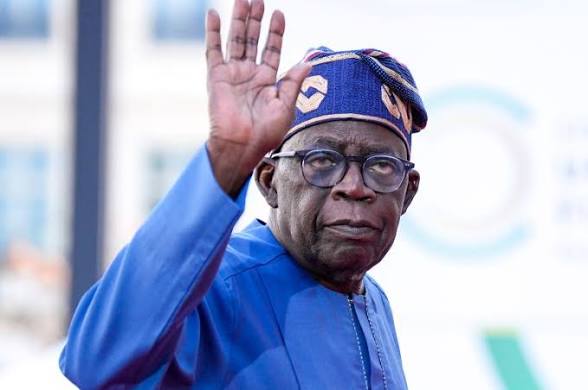
Nigeria's political landscape is already showing signs of an intense contest nearly a year before the official campaign season begins. A fresh war of words between the Presidency and the Allied People's Movement (APM) has highlighted how early positioning, public perception and coalition-building are becoming central to conversations ahead of the 2027 presidential election.
The Allied People's Movement (APM) has accused the administration of President Bola Tinubu of growing increasingly uneasy over the political profile of Oyo State Governor Seyi Makinde, who is the party's presidential candidate for the 2027 election.
The remarks came after Presidential spokesman Daniel Bwala, during an interview on Monday, dismissed both Makinde and the APM as insignificant players in the next presidential race.
Responding in a statement issued on Wednesday by its National Publicity Secretary, Abubakar Yusuf, the APM described Bwala's comments as evidence that the Presidency was relying on political attacks rather than defending its record in office.
The party argued that instead of addressing Nigerians' concerns over governance and the economy, the administration had chosen to ridicule its opponents.
Among the claims made by the APM were that President Tinubu should be concerned about Makinde's electoral prospects because of what the party described as the governor's record in Oyo State. It also claimed Makinde enjoys widespread support among young Nigerians and predicted he would defeat Tinubu in the 2027 presidential election.
The APM further maintained that it would avoid exchanging insults with the Presidency and instead focus on presenting its political agenda.
Advertisement
It is important to note that these assertions are political claims made by the opposition party and have not been independently verified.
Punch focused primarily on the direct exchange between Daniel Bwala and the APM, highlighting the party's accusation that the Presidency had become defensive about Makinde's growing political influence.
Other Nigerian outlets reporting on the development similarly emphasized the increasingly confrontational tone between government officials and opposition figures as discussions about the 2027 election continue to gain momentum.
Most reports, however, devoted limited attention to the broader significance of such exchanges occurring well before formal electioneering begins Nigeria's Electoral Act prohibits official campaigns until the Independent National Electoral Commission (INEC) releases the approved campaign timetable, yet political messaging, alliance-building and image positioning typically intensify years in advance.
The dispute therefore reflects not only a disagreement between political actors but also the gradual shaping of public narratives ahead of one of Nigeria's next major electoral cycles.
The Broader Political Picture
Although the 2027 presidential election remains some distance away, political parties are increasingly attempting to define the national conversation.
For the ruling All Progressives Congress (APC), defending the Tinubu administration's performance on economic reforms, inflation, fuel subsidy removal and security will likely remain central to its political messaging.
Opposition parties, meanwhile, are expected to focus on presenting alternative governance models while highlighting public dissatisfaction over economic hardship and the rising cost of living.
Governor Seyi Makinde has emerged as one of the opposition figures frequently mentioned in discussions about Nigeria's political future, largely because of his profile as a two-term governor and his governance record in Oyo State. Whether that translates into nationwide electoral strength remains uncertain and will depend on coalition negotiations, party structures, voter sentiment and the eventual list of presidential candidates.
Political analysts also note that early exchanges between government spokesmen and opposition parties often serve a strategic purpose—keeping potential rivals in the public conversation while energising each side's supporters.
Nigeria has witnessed similar early political confrontations before previous presidential elections.
Ahead of both the 2019 and 2023 elections, public debates between ruling party officials and opposition figures intensified years before campaigns officially opened. Those exchanges often centred on economic performance, governance records and leadership competence rather than detailed policy proposals.
Advertisement
The country's political environment has also become increasingly influenced by younger voters, whose participation rose significantly following the 2023 elections. Political parties are therefore investing heavily in youth-focused messaging and digital engagement long before the official campaign season.
While the APM claims Makinde enjoys the backing of more than 50 million young Nigerians, no publicly available independent data currently verifies that figure.
Likewise, the party's assertion that President Tinubu is "jittery" over Makinde's ambition remains a political opinion rather than an established fact.
As Nigeria moves closer to the 2027 election cycle, exchanges between the Presidency and opposition parties are expected to become more frequent.
The more significant question for voters may ultimately shift from political rhetoric to measurable governance outcomes, economic performance and the policy alternatives presented by competing parties.
Whether these early verbal battles translate into electoral momentum will likely become clearer only after parties formally begin coalition talks and the official campaign period approaches.
You must log in to comment or reply.
Comments