
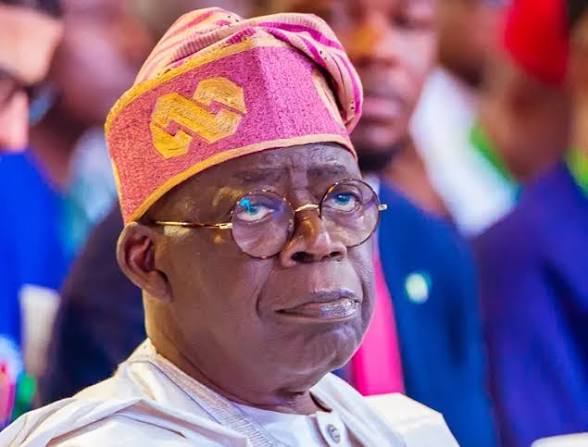
Nigeria’s bid to reposition itself as a major investment destination took centre stage in Kigali on Thursday as President Bola Tinubu declared that the country is on course to attract nearly $20 billion in foreign direct investment in 2026.
The announcement, made during the Africa CEO Forum in Rwanda, comes at a time when Africa’s largest economy is battling inflation, foreign exchange instability, and rising public pressure over living costs. Yet, the Tinubu administration argues that recent reforms are beginning to change investor perception and open new opportunities across energy, agriculture, infrastructure, and technology.
President Tinubu made the remarks during a presidential panel moderated by British broadcaster Zainab Badawi alongside Gabonese President Brice Clotaire Oligui Nguema at the annual Africa CEO Forum in Kigali, Rwanda.
Speaking before business executives and policymakers, Tinubu said Nigeria’s regulatory reforms and efforts to remove economic bottlenecks were helping to improve investor confidence.
“We are removing all the bottlenecks that discourage investment,” Tinubu said. “This year alone, I can beat my chest that Nigeria is attracting close to $20 billion in foreign direct investments.”
However, a closer look at the announcement shows that the figure represents projected or expected investment inflows tied to ongoing reforms and negotiations rather than officially confirmed final inflows already recorded in government data. That distinction is significant for investors monitoring Nigeria’s economic recovery.
Beyond the headline investment figure, Tinubu used the forum to push a broader message about African industrialisation and self-reliance. He argued that African nations must stop exporting raw minerals and importing finished goods at higher prices.
Advertisement
“No one can take metal out of Nigeria without adding value,” the president stated. “I can produce batteries for cars with my minerals.”
That statement reflects a growing policy direction across several African economies seeking to retain more value from natural resources. Countries rich in lithium, cobalt, and rare earth minerals are increasingly moving toward local processing requirements rather than allowing raw exports alone.
The Nigerian president also highlighted the role of the Dangote Group refinery project, describing it as an example of government-private sector cooperation. He said the administration supported the refinery through crude supply arrangements and regulatory backing.
“Nigeria could not survive with over 200 million people in peace without a refinery,” Tinubu said, adding that businessman Aliko Dangote deserved government support for taking major investment risks.
Yet the deeper issue surrounding the refinery goes beyond fuel production. Nigeria’s long-standing dependence on imported refined petroleum products has drained foreign reserves for decades, worsened pressure on the naira, and contributed to repeated subsidy crises. Analysts say the success or failure of domestic refining could significantly influence inflation, fuel pricing, and exchange-rate stability over the next few years.
Tinubu also defended Nigeria’s decision to supply crude oil to local refineries in naira rather than dollars, arguing that it reduces pressure on foreign exchange markets.
“My formula is simple,” he said. “The denominated currency in Nigeria is the naira.”
Economic analysts note that while the policy may help reduce immediate dollar demand, its long-term effectiveness will depend on crude production levels, refining efficiency, and broader market confidence in the local currency.
Another major theme at the forum was Africa’s frustration with international credit rating agencies. Tinubu argued that African economies are frequently undervalued despite strong growth potential in sectors such as tourism, fintech, agriculture, and infrastructure.
That criticism echoes concerns raised by several African leaders and economists who argue that higher borrowing costs imposed on African countries often limit investment and development spending.
On domestic reforms, Tinubu pointed to tax digitisation, infrastructure expansion, mechanised farming programmes, and fibre-optic deployment as signs of economic modernisation. According to him, Nigeria has already laid more than 90,000 kilometres of fibre optic infrastructure nationwide to support digital commerce and connectivity.
The administration also reiterated plans to expand mechanised agriculture through thousands of agricultural zones and storage systems aimed at reducing post-harvest losses. Those efforts come as food inflation continues to affect households across Nigeria.
Advertisement
What makes the situation more complex, however, is the contrast between long-term investment optimism and immediate economic hardship facing ordinary Nigerians. Inflation remains high, the cost of electricity and transportation has risen sharply since subsidy reforms, and many small businesses continue to struggle with foreign exchange volatility.
Nigeria has previously announced ambitious investment targets during past administrations, but implementation gaps and policy reversals often weakened investor confidence. The current administration faces pressure to demonstrate that reforms can produce measurable improvements in jobs, energy stability, and industrial growth rather than remaining headline projections.
Historically, Nigeria experienced significant investment inflows during oil-price booms in the early 2000s and after banking reforms in the mid-2000s. However, capital inflows declined sharply following recessions, insecurity concerns, foreign exchange restrictions, and policy uncertainty over the last decade.
Current reforms appear designed to reverse that trend by liberalising parts of the economy and improving investor access. But economists warn that sustaining confidence will require policy consistency, infrastructure reliability, and stronger security conditions.
The real concern now is whether the government can translate high-level investment announcements into visible economic improvements for businesses and households. Investor commitments may generate headlines, but long-term credibility will depend on execution, transparency, and whether ordinary Nigerians begin to feel the benefits of the reforms being promoted abroad.
You must log in to comment or reply.
Comments