
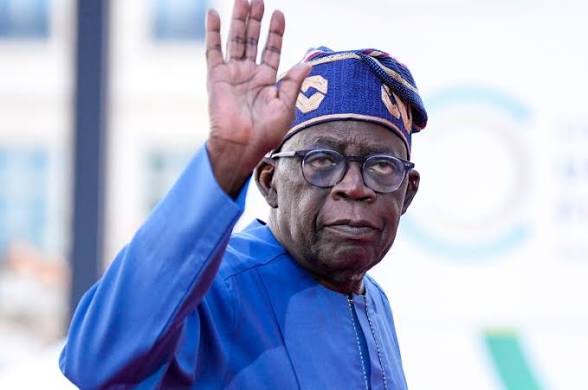
 Nigeria's long-running electricity metering crisis is once again at the centre of the Federal Government's reform agenda, this time with a focus on creating jobs alongside improving power sector transparency. President Bola Tinubu has announced a nationwide programme to train 5,000 young Nigerians as meter installers and technicians, a move that links youth employment with efforts to reduce estimated billing and strengthen electricity distribution.
President Bola Tinubu has unveiled a new workforce development programme that will train 5,000 young Nigerians as meter installers and technicians under the Presidential Metering Initiative (PMI).
The announcement, made on Thursday through the President's verified X account, forms part of the administration's Renewed Hope Agenda aimed at addressing Nigeria's electricity metering deficit while creating employment opportunities for young people.
According to Tinubu, the initiative—named The Power Force—will provide practical technical training and connect successful participants with employment opportunities across Nigeria's electricity industry.
The President said the scheme was created to support the broader objectives of the Presidential Metering Initiative, which seeks to reduce estimated billing, protect electricity consumers and improve confidence in the country's power market.
Tinubu explained that the programme will be open to Nigerians who have completed secondary school education, with a dedicated quota reserved for members of the National Youth Service Corps (NYSC).
He also directed the Presidential Metering Initiative to work with the Federal Ministry of Youth Development, the National Power Training Institute of Nigeria (NAPTIN) and other relevant agencies to commence implementation within the next 30 days.
Advertisement
Emphasising the importance of widespread metering, Tinubu said households and businesses that receive accurate electricity meters would pay only for the energy they consume, while electricity distribution companies would benefit from more transparent revenue collection, allowing greater investment in infrastructure and improved service delivery.
The President encouraged eligible Nigerians to participate, describing the programme as an opportunity to acquire marketable technical skills while contributing to efforts to eliminate estimated billing nationwide.
Most Nigerian news organisations, including Punch, focused primarily on the President's announcement and the employment opportunities attached to the programme. Government communication channels highlighted the initiative as part of ongoing reforms within the electricity sector and the broader Renewed Hope Agenda.
However, many reports devoted less attention to the structural challenge the programme seeks to address—the country's persistent metering shortfall, which has remained one of the biggest sources of disputes between electricity consumers and distribution companies for years.
The announcement also arrives as the Federal Government continues broader reforms aimed at improving electricity market efficiency, attracting investment and reducing commercial losses within the sector.
While the training of 5,000 installers is expected to generate employment, its broader significance lies in the government's attempt to accelerate meter deployment across Nigeria.
For years, millions of electricity customers have relied on estimated billing because they lack prepaid meters. Consumer groups have repeatedly criticised the practice, arguing that estimated bills often exceed actual electricity consumption and weaken public confidence in electricity distribution companies.
Expanding the pool of trained installers could help speed up meter installation if accompanied by sufficient meter production, effective funding and coordination with electricity distribution companies.
The initiative also reflects a growing policy shift towards linking technical skills development with infrastructure delivery. Rather than focusing solely on job creation, the programme seeks to address a practical national challenge while creating employment opportunities for young Nigerians.
Whether the initiative achieves its objectives will depend not only on training participants but also on ensuring adequate meter availability, sustained funding and efficient deployment after certification.
Nigeria has struggled with electricity metering for decades despite multiple intervention programmes.
Advertisement
Successive governments have introduced initiatives to reduce the country's metering gap, yet millions of electricity consumers remain without prepaid meters.
Industry stakeholders have consistently identified inadequate metering as one of the factors contributing to revenue losses, customer dissatisfaction and disputes over estimated billing.
The Presidential Metering Initiative represents another attempt to close this gap while strengthening confidence in Nigeria's electricity market through improved transparency and accountability.
The Federal Government expects implementation of the training programme to begin within the next month, but attention will quickly shift from policy announcements to execution.
The effectiveness of the initiative will ultimately be measured not by the number of trainees recruited, but by how many qualified installers enter the workforce, how rapidly new meters reach consumers and whether Nigerians experience a meaningful reduction in estimated billing. As electricity reform remains central to Nigeria's economic ambitions, the success of the programme could become an important indicator of the administration's broader power sector agenda.
You must log in to comment or reply.
Comments