
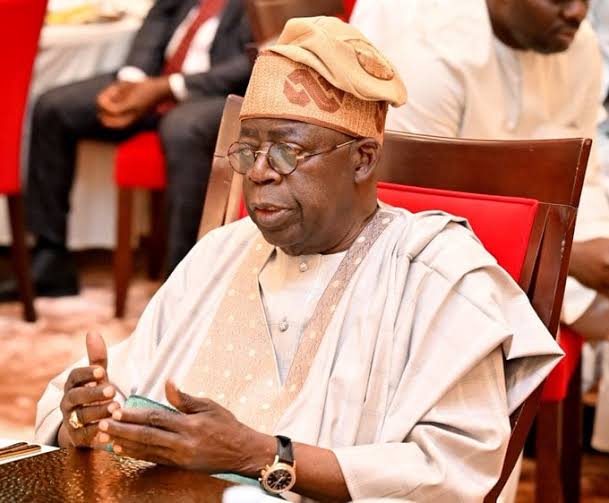
Federal Executive Council meetings often attract little public attention, yet they remain one of the most important indicators of how a government sets its priorities. President Bola Tinubu's decision to reconvene the council after more than two months is therefore more than a routine administrative exercise—it is a reminder of the central role the presidency plays in directing policy and appointments.
The timing is also significant. Nigeria is grappling with economic pressures, security concerns and increasing public scrutiny over government performance. In that context, every cabinet meeting is likely to be viewed not merely as a procedural event but as an opportunity for the administration to demonstrate momentum.
On Monday, President Tinubu presided over a Federal Executive Council meeting at the State House in Abuja, the first such gathering in over two months.
Advertisement
Before the meeting commenced, the President swore in two new Federal Commissioners of the Revenue Mobilisation, Allocation and Fiscal Commission (RMAFC): Amina Gamawa, representing Bauchi State, and Abdullahi Mukhtar, representing Kaduna State.
The Secretary to the Government of the Federation, George Akume, also announced that the agenda included the swearing-in of newly appointed Federal Commissioners of the National Population Commission (NPC). Vice President Kashim Shettima, cabinet ministers and senior government officials attended the meeting.
At first glance, the developments may appear largely ceremonial. However, appointments to institutions such as the RMAFC and NPC carry considerable weight. The RMAFC plays a key role in revenue sharing among the federal, state and local governments, while the NPC is central to population data that influences planning, resource allocation and electoral considerations.
The reconvening of the FEC after an extended break may also invite questions about policy execution. Supporters of the administration could argue that government business continued through ministerial engagements and executive actions outside formal council meetings. Critics, however, may contend that the long interval reflects a lack of urgency at a time when many Nigerians are demanding faster responses to economic hardship and governance challenges.
There is also a broader political dimension. Appointments to federal commissions often reflect efforts to maintain regional balance and institutional representation across the federation. In a politically diverse country like Nigeria, such decisions are closely watched for signals about inclusion and power distribution.
From the government's perspective, the swearing-in demonstrates that institutional processes are moving forward and that key agencies are being strengthened with new leadership. From the perspective of sceptics, however, appointments alone do not address pressing concerns such as inflation, unemployment and insecurity.
Advertisement
The implications of Monday's meeting may therefore depend less on the ceremony itself and more on the decisions that emerge from it. Nigerians are increasingly interested in outcomes rather than official events. They want evidence that government meetings translate into policies that improve living conditions, strengthen institutions and restore confidence in governance.
Ultimately, the question is not whether the Federal Executive Council has resumed meeting. The real test is whether these meetings produce decisions that Nigerians can feel in their daily lives. What happens after the photographs and oath-taking ceremonies may define public perceptions of the Tinubu administration far more than the event itself.
You must log in to comment or reply.
Comments