
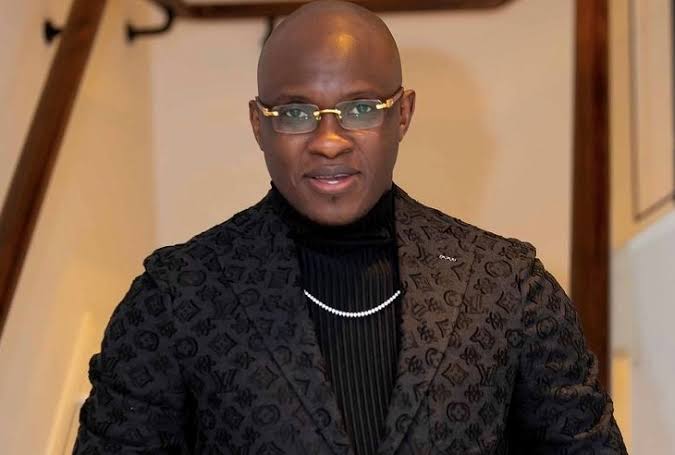
When a religious leader publicly discusses spending hundreds of thousands of pounds a day, the natural debate is not simply about how much money is involved. It is also about transparency, responsibility and the expectations placed on influential figures who command the attention of young followers.
Pastor Tobi Adegboyega’s latest comments have reopened that conversation, particularly because they come against the backdrop of longstanding controversy surrounding his former organisation, SPAC Nation.
Adegboyega reportedly made the comments during a livestream with streamer Davrel on August 17, 2026, while discussing his daily and monthly financial obligations.
According to Vanguard, the UK-based Nigerian pastor said he spends no less than £300,000 a day. He identified about £14,000 in daily food expenses and said he has an obligation to give £5,000 every day to African countries.
“To be honest, nothing less than £300,000.”
Adegboyega also responded to people who describe SPAC Nation as a cult, arguing that the organisation's unity and the financial success of some of its young members contributed to that perception.
The spending figures, however, come from Adegboyega's own reported remarks and have not been independently established.
The most striking feature of the claim is not necessarily the size of the figure itself, but what it raises about financial transparency.
Advertisement
£300,000 a day would amount to approximately £9 million over 30 days. Yet the two specific expenses Adegboyega mentioned — £14,000 for food and £5,000 for African countries — account for only £19,000 of that daily figure.
That leaves a substantial portion of the reported expenditure unexplained.
That does not, by itself, establish that the £300,000 claim is inaccurate. Adegboyega may have been referring to numerous other obligations, organisations, businesses, charitable activities or personal expenses. But when a figure is this extraordinary, basic questions about what it covers are reasonable.
There is another reason the discussion deserves care: wealth itself is not evidence of wrongdoing. Nor should criticism of a religious leader automatically become an accusation of financial misconduct.
The more useful question is whether people who publicly exercise significant religious and social influence can explain their finances clearly enough for followers and the wider public to understand them.
Two Very Different Interpretations
Adegboyega's own explanation presents his wealth and spending as part of a broader model in which young people around him can also achieve financial success.
His response to the “cult” criticism is essentially that unusual levels of unity and prosperity among his followers should not automatically be interpreted negatively.
That is one side of the debate.
The other perspective comes from the documented history surrounding SPAC Nation. The UK High Court ordered the organisation to be wound up in 2022, while subsequent reporting on a Charity Commission investigation detailed concerns involving financial and safeguarding practices.
Those developments do not prove that Adegboyega's latest spending claims are false. They do, however, explain why statements about large sums of money connected to the pastor and his organisations are likely to attract greater scrutiny.
That distinction matters. Historical regulatory concerns should not be turned into proof of a new allegation, just as a leader's personal explanation should not automatically settle questions about financial accountability.
The debate extends beyond one pastor.
Religious organisations play an enormous social and economic role in Nigeria and among Nigerian communities abroad. Churches frequently provide education, employment, charity, mentorship and other forms of support.
That influence can be positive, but it also creates a responsibility for transparency when large sums of money are involved.
Adegboyega's claim that he sends money to African countries every day also raises an important distinction between personal expenditure and philanthropic spending. If substantial amounts are genuinely being used to support communities or organisations, clear documentation would help the public understand the scale and purpose of that assistance.
Advertisement
At the same time, the public should resist the temptation to judge financial claims solely by their size. Extraordinary numbers require evidence, but they should not automatically be treated as evidence of misconduct.
The Bigger Issue: Transparency
There is a temptation to make this story about whether £300,000 a day is believable.
A more productive discussion is about what the money represents and how such financial claims can be independently understood.
Adegboyega is entitled to explain his finances on his own terms. The public, particularly people who may be influenced by prominent religious figures, is equally entitled to ask reasonable questions about money, organisations and accountability.
Ultimately, the real issue is not simply how much Tobi Adegboyega says he spends. It is whether extraordinary financial claims surrounding influential religious figures are accompanied by enough transparency to allow people to distinguish personal wealth, business activity, charitable giving and organisational finances.
That is the standard that matters far beyond one pastor or one church.
You must log in to comment or reply.
Comments