
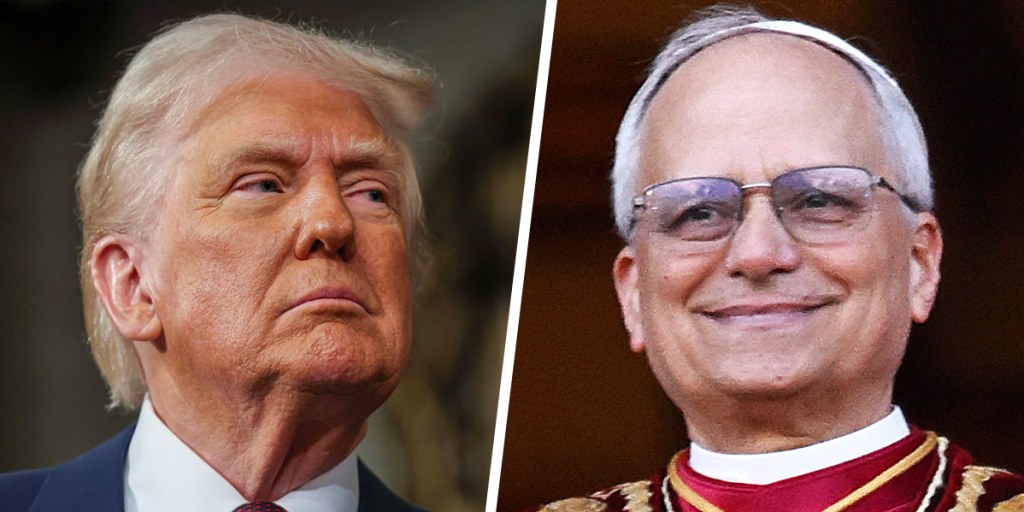
A sharp exchange between the White House and the Vatican is drawing global attention, as political power collides with moral authority. What began as a plea for peace has escalated into a rare public clash that could reshape diplomatic tone between the United States and the Catholic Church.
On April 12, 2026, former U.S. President Donald Trump publicly criticised Pope Leo XIV, describing him as “not a big fan” and accusing him of holding overly liberal views on global security.
The comments came shortly after the pope, speaking at St. Peter’s Basilica, issued a strong anti-war appeal urging global leaders to end escalating conflicts, particularly tensions involving Iran.
Trump, speaking to reporters and later on Truth Social, suggested the pope’s stance could embolden nations pursuing nuclear capabilities, insisting he opposed any position that appeared tolerant of Iran’s ambitions.
This exchange follows the collapse of recent U.S.–Iran negotiations in Islamabad, where talks reportedly ended without agreement after Washington presented what it called a “final offer.”
Advertisement
However, a closer look shows this is less about a single comment and more about competing worldviews.
Donald Trump represents a doctrine of strategic dominance — prioritizing military strength, deterrence, and hardline foreign policy. Meanwhile, Pope Leo XIV embodies a moral diplomacy framework, emphasizing dialogue, humanitarian concerns, and de-escalation.
Yet the deeper issue is how these opposing approaches influence global stability. Trump’s rhetoric suggests a willingness to apply maximum pressure, while the pope’s message warns that such strategies risk triggering wider conflict.
That framing leaves out a critical dimension for countries like Nigeria:
• Rising global tensions often translate into economic shocks, especially through oil prices
• Nigeria’s revenue depends heavily on crude exports, meaning instability in Iran-related conflicts can boost earnings short-term but increase inflation locally
• Past geopolitical crises have shown that fuel price volatility quickly impacts transport, food costs, and small businesses
What makes this more complex is that both positions carry risks. Military escalation could disrupt global supply chains, while prolonged diplomacy without enforcement may embolden aggressive states.
This is not the first time a U.S. administration has clashed with the Vatican, but direct public criticism of a pope remains rare in modern diplomacy.
Historically, similar tensions emerged during the Iraq War era, when religious leaders questioned military intervention. However, today’s environment is more fragile:
Advertisement
• Global oil markets remain sensitive to Middle East instability
• Nuclear proliferation concerns are higher than at any point in the past decade
• Diplomatic trust between major powers is increasingly strained
Recent data shows that even minor escalations involving Iran can shift global oil prices by 5–10% within days, a ripple effect that significantly impacts economies dependent on imports and exports alike.
You must log in to comment or reply.
Comments