
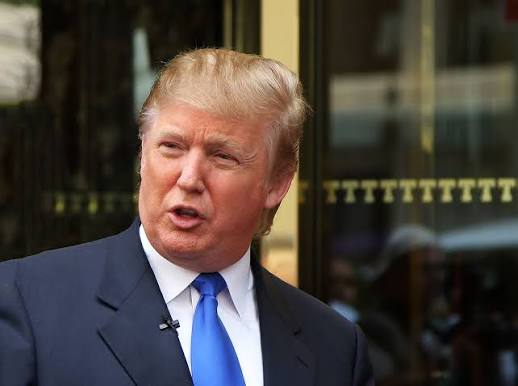
Rising tensions in the Middle East took a sharp turn on April 12, 2026, after Donald Trump announced a U.S. naval blockade of the Strait of Hormuz—a critical artery for global oil supply. The move follows the collapse of high-stakes negotiations with Iran, raising fears of economic shockwaves and potential military confrontation.
Beyond the immediate rhetoric, the decision signals a deeper escalation that could disrupt global trade, spike fuel prices, and reverberate across economies far beyond the region—including Nigeria.
On April 12, 2026, the United States government, under President Trump, ordered its navy to begin a blockade of the Strait of Hormuz, a narrow but vital shipping route through which roughly 20% of the world’s crude oil passes daily.
The directive came shortly after failed diplomatic talks in Islamabad, where U.S. Vice President JD Vance met with Iranian officials led by Mohammad Bagher Ghalibaf. Despite what U.S. officials described as progress on several issues, negotiations broke down over Iran’s nuclear program.
Trump’s order authorizes U.S. forces to intercept vessels entering or leaving the strait, framing the move as a response to Iran’s actions, including alleged threats to shipping and possible mining of the waterway.
Advertisement
However, a closer look shows this is not just about nuclear negotiations—it is about control of global energy flows.
The Strait of Hormuz is one of the world’s most sensitive geopolitical chokepoints. Any disruption immediately affects oil prices, insurance costs for shipping, and global supply chains. For oil-dependent economies, even short-term instability can trigger inflation and currency pressure.
For Nigeria, the implications are complex. As a crude oil exporter, higher global oil prices could boost government revenue. Yet, the country’s reliance on imported refined fuel means Nigerians could simultaneously face higher petrol prices, worsening inflation and increasing pressure on households and small businesses.
Beyond the official statements, the blockade raises legal and military concerns. Under international law, a full naval blockade can be interpreted as an act of war, especially in an international waterway used by multiple nations.
What makes this more complex is the risk of miscalculation. A single confrontation between U.S. forces and Iranian units could escalate rapidly, drawing in regional actors and disrupting not just oil flows but broader global trade.
The current crisis builds on weeks of escalating tensions, including reported U.S. and Israeli military actions targeting Iranian positions. Historically, disruptions in the Strait of Hormuz have had immediate global consequences.
• In past incidents, even minor threats to the strait caused oil prices to spike by 10–20% within days.
• Roughly one-fifth of global petroleum consumption passes through the route.
Advertisement
• Key Asian economies—including China, India, and Japan—depend heavily on this corridor.
Nigeria faced a comparable external shock during previous global oil disruptions, where rising crude prices did not translate into domestic stability due to refining constraints and subsidy pressures.
That pattern could repeat if tensions persist.
You must log in to comment or reply.
Comments