
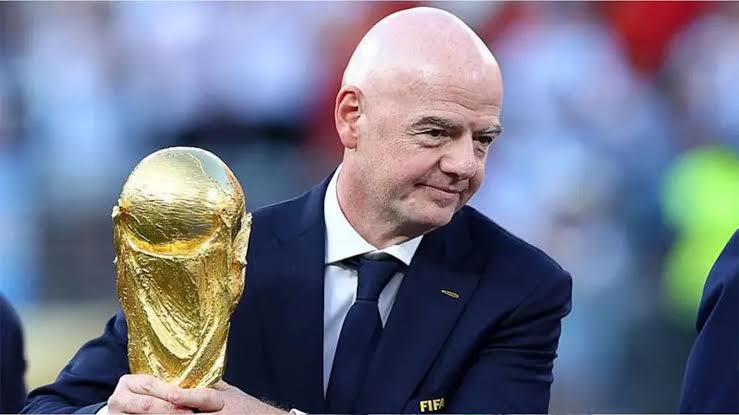
The standoff between European football and FIFA appears to be easing, bringing relief to teams preparing for international competition.
UEFA is expected to withdraw its threat to boycott FIFA competitions after receiving assurances that a controversial plan to allow private investors to buy stakes in major FIFA tournaments will not be brought back.
The dispute centred on FIFA Forward Enterprises, a proposal linked to FIFA president Gianni Infantino that could have opened investment opportunities in major competitions, including the World Cup. UEFA’s 55 member associations had backed the boycott threat after the proposal became public. FIFA later abandoned the plan following strong opposition from European football officials.
UEFA, however, wanted more than the withdrawal of the proposal. European football’s governing body also sought assurances that FIFA would not revive the plan or introduce a similar arrangement in the future. According to reports, those assurances have now been provided, paving the way for UEFA to end its boycott threat.
Advertisement
The development is particularly important for European teams preparing for the FIFA Under-20 Women’s World Cup in Poland. The tournament is scheduled to begin on September 5, with England, France, Italy, Portugal, Spain and hosts Poland among the European nations expected to compete.
A formal decision is expected at a UEFA meeting in Monaco, where officials are expected to confirm that the conditions for ending the boycott threat have been met.
But the dispute has not completely disappeared.
UEFA president Aleksander Čeferin has remained critical of Infantino’s leadership, while European football officials continue to push for changes to the way world football is governed. Ending the immediate boycott threat therefore appears to resolve one major confrontation without ending the wider disagreement between UEFA and FIFA.
For players and teams, the immediate concern is simpler: the threat of missing FIFA competitions appears to be receding, allowing preparations for the upcoming women’s Under-20 tournament to continue without the uncertainty created by the dispute.
The situation also shows how quickly decisions involving football’s biggest competitions can affect teams far beyond FIFA’s headquarters. A governance dispute at the top of world football had created uncertainty for players and national teams preparing to represent their countries.
Advertisement
For now, UEFA is expected to remain inside FIFA competitions while continuing to demand broader reforms.
The boycott threat may be fading, but the battle over the future direction of world football is far from over.
You must log in to comment or reply.
Comments