
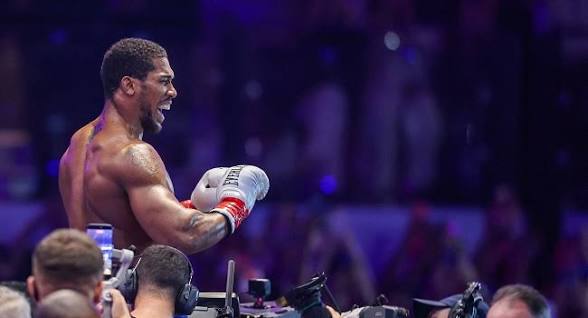
The long-awaited heavyweight clash between Tyson Fury and Anthony Joshua has moved a step closer after both fighters secured recent victories. Yet before a date and venue are officially confirmed, a disagreement over where the blockbuster contest should be held has become one of the biggest talking points surrounding the fight.
Promoter Eddie Hearn says the agreement signed by Anthony Joshua's team requires the bout to take place in the United Kingdom, even as reports suggest Saudi boxing chief Turki Alalshikh is exploring alternative venues to maximize the event's global audience.
The debate has introduced a fresh layer of uncertainty to one of boxing's most anticipated contests, highlighting the growing influence of international investors on where the sport's biggest events are staged.
Joshua strengthened his case for a showdown with Fury after stopping Kristian Prenga in the second round in Jeddah, Saudi Arabia. Less than 24 hours earlier, Tyson Fury had defeated Mariusz Wach in Thailand, keeping both British heavyweights on course for a meeting expected around October or November.
Speaking after Joshua's victory, Hearn made it clear that the current agreement leaves little room for relocating the contest abroad.
Advertisement
According to Hearn, negotiations that produced the fight contract took months, with both parties agreeing the contest would be staged in Britain. While acknowledging Saudi boxing chairman Turki Alalshikh's significant role in promoting elite boxing events, Hearn maintained that any move away from England would require Anthony Joshua's approval and a renegotiation of the legally binding agreement.
Joshua echoed that position, describing the contest as a fight for British boxing supporters and insisting Wembley Stadium remains the natural destination.
He said the original roadmap never mentioned another venue, adding that Wembley carries the history and atmosphere expected for a fight of such magnitude.
However, reports across several international media outlets suggest discussions continue over whether staging the contest elsewhere could generate even greater commercial returns.
Reuters highlighted the contractual disagreement between Joshua's camp and promoters exploring alternative venues, emphasizing that the location remains unresolved despite widespread expectations that the fight will happen later this year. AFP focused largely on Hearn's insistence that the agreement protects the UK as host while also noting Joshua's strong preference for Wembley. Other reports have pointed to Madison Square Garden in New York as a possible alternative if negotiations over broadcasting schedules and venue restrictions become more complicated.
One issue receiving increasing attention is television timing. Saudi-backed organizers reportedly want the fight to air during peak viewing hours across multiple international markets. If Wembley hosts the event, achieving those broadcast goals could require a very late local start time, meaning organizers would likely need special approval to extend the stadium's normal operating curfew.
The debate reflects a broader transformation within professional boxing, where commercial considerations increasingly compete with sporting tradition. Over the past several years, Saudi Arabia has invested heavily in hosting some of boxing's biggest events, attracting world champions with record-breaking purses while expanding its influence across international sport.
Historically, major British heavyweight fights have drawn enormous crowds at Wembley Stadium, which has become synonymous with some of the country's biggest sporting occasions. A Fury-Joshua clash at the 90,000-capacity venue would likely rank among the highest-attended boxing events in British history, while also delivering significant economic benefits through tourism, hospitality and broadcasting revenue.
Advertisement
The discussion also illustrates how modern boxing is no longer shaped solely by promoters and athletes. Global broadcasters, investors and host governments now play increasingly influential roles in determining where championship fights take place, reflecting the sport's shift toward maximizing worldwide television audiences rather than serving traditional home markets.
For fans in Nigeria and across Africa, the venue decision could influence viewing times and broadcast accessibility. Boxing remains one of the continent's most-followed combat sports, with heavyweight championship bouts attracting millions of viewers and generating significant online engagement across social media platforms.
Despite growing speculation about overseas venues, no official announcement has been made regarding the final location. Negotiations are expected to continue as organizers balance contractual commitments, commercial interests and logistical requirements before confirming one of the most anticipated fights in recent heavyweight boxing history.
The real test now will be whether all parties can reconcile business ambitions with existing contractual obligations, as the countdown to one of boxing's biggest modern rivalries continues.
You must log in to comment or reply.
Comments