
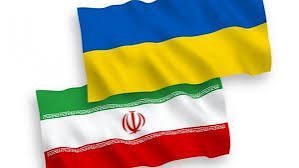
The conflict between Iran and Ukraine has entered a more direct and volatile phase following a deadly attack on an Iranian commercial vessel in the Caspian Sea. Tehran's warning that Kyiv will "pay" for the strike underscores how the Russia-Ukraine war is increasingly drawing in regional powers, raising concerns about broader geopolitical escalation.
Body Content
Iran has issued a stern warning to Ukraine after an attack on one of its commercial vessels in the Caspian Sea killed one sailor and injured another.
The warning came from Ebrahim Azizi, head of the Iranian Parliament's National Security Commission, days after Iranian authorities summoned Ukrainian diplomats to protest the incident.
According to Iranian officials, the vessel was struck on Saturday during an operation that Ukraine said targeted Russian ships allegedly transporting military supplies linked to Iran. Kyiv has argued that the ships formed part of Russia's military logistics network.
Responding on social media, Azizi said Iran would not allow the attack to pass unanswered.
Advertisement
"Any attack on Iran always comes with a cost," he wrote, adding that the United States and Israel were already familiar with Iran's response to perceived aggression and warning that Ukraine "may soon come to realize that Iran does not overlook such actions."
The exchange comes as relations between Tehran and Kyiv continue to deteriorate amid the wider Russia-Ukraine conflict.
International coverage has largely converged on the core facts but differed in emphasis.
Reuters focused on the diplomatic fallout, highlighting Iran's decision to summon Ukraine's chargé d'affaires and noting Kyiv's claim that the targeted vessels were involved in transporting military cargo. Reuters also avoided describing the vessel as purely civilian without acknowledging Ukraine's competing explanation.
Al Jazeera gave greater prominence to Azizi's warning, portraying it as another indication that Iran views the attack as a direct challenge to its national security. The outlet also placed the incident within the broader context of escalating regional tensions involving Iran, Israel, and the United States.
The Daily Post Nigeria report emphasized Azizi's warning to Ukraine but also referenced claims that Iran is under a U.S. naval blockade. However, major international reporting has instead described extensive U.S. sanctions and maritime enforcement measures rather than a formal naval blockade, making that characterization less established.
Most reports also paid relatively little attention to the significance of the Caspian Sea itself. Traditionally regarded as one of the more stable maritime regions due to agreements among bordering states, the latest strike suggests the Russia-Ukraine conflict is expanding into areas previously considered less exposed to direct military confrontation.
The attack reflects more than a single military operation—it illustrates how the Russia-Ukraine war continues to reshape international alliances.
Iran has been accused by Western governments of supplying drones and military technology that Russia has used during the conflict, allegations Tehran has repeatedly disputed or qualified. Ukraine's willingness to target vessels allegedly connected to that supply chain signals an expansion of its military strategy beyond conventional battlefields.
For Iran, the incident presents both a diplomatic and strategic challenge. Responding too aggressively could further widen regional tensions, while failing to respond may be viewed domestically as a sign of weakness.
For countries like Nigeria, the implications extend beyond diplomacy. Continued instability involving major energy producers and shipping routes has historically contributed to volatility in global oil prices, freight costs, and insurance premiums. Although the Caspian Sea is not a primary shipping route for Nigerian trade, broader geopolitical escalation often affects international commodity markets that influence Nigeria's economy.
The episode also demonstrates how modern conflicts increasingly involve commercial infrastructure, logistics networks, and supply chains rather than purely military targets, blurring traditional distinctions between civilian and strategic assets.
Advertisement
Iran and Ukraine have experienced deteriorating relations since Russia's full-scale invasion of Ukraine in 2022.
Western governments have repeatedly accused Iran of supplying Russia with drones and other military equipment, prompting multiple rounds of sanctions against Tehran. Iran has consistently denied providing weapons for use in the conflict while maintaining military cooperation with Moscow.
The Caspian Sea, bordered by Iran, Russia, Kazakhstan, Turkmenistan, and Azerbaijan, has historically remained relatively insulated from direct military confrontations. Any increase in hostilities within the region could complicate existing security arrangements among the littoral states.
The latest confrontation also comes amid heightened tensions involving Iran, the United States, and Israel following months of military exchanges across the Middle East, increasing concerns that separate regional conflicts could become increasingly interconnected.
The immediate diplomatic dispute between Tehran and Kyiv may prove only one chapter in a broader geopolitical confrontation. The real test now will be whether both sides limit the conflict to political and diplomatic exchanges or whether retaliatory actions create another flashpoint in an already unstable international security environment. As investigations continue and governments assess their next steps, the situation remains fluid with implications extending well beyond the Caspian Sea.
You must log in to comment or reply.
Comments