
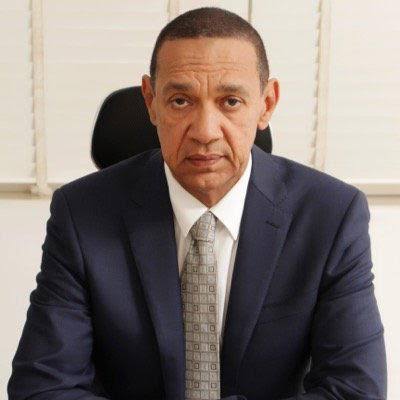
Former Bayelsa East senator and Silverbird founder Ben Murray-Bruce has called on President Bola Tinubu to make the rehabilitation and commercially viable operation of Nigeria’s government-owned refineries a major priority.
Murray-Bruce said Nigeria should move beyond repeated promises and ensure the Port Harcourt, Warri and Kaduna refineries actually produce refined petroleum products. His comments come as the Federal Government continues efforts to increase domestic refining capacity.
Murray-Bruce made the call in posts on his X account on Tuesday, August 18, 2026.
He argued that Nigeria has significant crude oil reserves and decades of petroleum-sector experience but has historically relied heavily on exporting crude while importing refined petroleum products.
He urged Tinubu to appoint capable people to oversee the refineries and said the government should be willing to change the management structure if necessary.
Murray-Bruce suggested that the government could consider technical partnerships, private investment, restructuring or concessions, depending on which approach would deliver sustainable operations.
He also proposed an ambitious production target for the three government-owned refining complexes.
Using the 650,000 barrels-per-day nameplate capacity of the Dangote refinery as a benchmark, he suggested that the three government-owned refineries should eventually target at least half of that figure — approximately 325,000 barrels per day of reliable refining throughput.
The former senator also pointed to Central Bank Governor Olayemi Cardoso and National Security Adviser Nuhu Ribadu as examples of officials he believes have demonstrated a willingness to challenge established systems.
Tinubu’s Position on the Refineries
Advertisement
Murray-Bruce's comments come shortly after President Tinubu addressed the long-running issue of Nigeria's state-owned refineries.
On August 13, 2026, Tinubu told the leadership of the Nigeria Union of Petroleum and Natural Gas Workers at the Presidential Villa in Abuja that the government-owned refineries would return to operation.
The President said the government was undertaking a broader economic restructuring and that the refineries would be part of the process.
The administration has also continued to promote increased domestic refining as part of efforts to strengthen Nigeria's energy security and reduce dependence on imported petroleum products.
The condition and performance of Nigeria's government-owned refineries have direct implications for the country's petroleum supply chain.
If the facilities operate reliably, they could process more Nigerian crude domestically and increase the amount of refined petroleum products available within the country.
For consumers, increased domestic refining could potentially reduce Nigeria's exposure to international refined-product supply disruptions and import-related pressures. However, the actual effect on petrol and other product prices would depend on several factors, including production costs, crude supply, distribution and market conditions.
For government, getting the refineries to operate commercially would also be important because the facilities have required substantial public expenditure over the years.
The central issue is therefore not simply whether the refineries are rehabilitated, but whether they can operate consistently and commercially after rehabilitation.
Which refineries is Murray-Bruce referring to?
He is referring to Nigeria's three major government-owned refining complexes:
- Port Harcourt Refinery
- Warri Refinery
- Kaduna Refinery
What production target did he propose?
Murray-Bruce proposed a combined minimum target of about 325,000 barrels per day, equivalent to half of the Dangote refinery's 650,000-bpd nameplate capacity.
This is a proposal from Murray-Bruce, not a production target formally announced by the Federal Government.
Has the Federal Government promised to revive the refineries?
Yes. President Tinubu said on August 13 that the government-owned refineries would return to operation as part of what he described as a broader economic reset and restructuring.
Does Murray-Bruce want the government to operate the refineries itself?
Advertisement
Not necessarily. His proposal allows for different operating structures, including technical partners, private capital or concessions, provided the chosen model results in commercially viable operations.
Nigeria's refinery debate has continued for years because the country is a major crude-oil producer but has struggled to maintain reliable domestic refining capacity.
The emergence of the Dangote Refinery has changed the country's refining landscape. With a stated nameplate capacity of 650,000 barrels per day, the privately owned facility provides a large domestic refining benchmark.
Murray-Bruce's proposal effectively asks the government to measure the performance of its refineries against what private investment has demonstrated is possible in Nigeria.
However, a production target alone does not guarantee commercial success. Reliable crude supply, plant maintenance, financing, management, technical expertise and access to markets would all be important to sustaining operations.
The Federal Government's stated position is that Nigeria's government-owned refineries are being brought back into operation as part of its broader petroleum-sector and economic reforms.
The key development to watch is therefore whether the Port Harcourt, Warri and Kaduna facilities can achieve sustained commercial production, rather than simply completing rehabilitation or restarting temporarily.
For now, Murray-Bruce is calling for a stronger focus on measurable output and commercial viability, while the Tinubu administration maintains that the refineries will return to operation.
The next major test will be whether Nigeria's long-running refinery rehabilitation efforts translate into consistent domestic production of refined petroleum products.
You must log in to comment or reply.
Comments