
A major indigenous petrochemical project in Bayelsa State is facing an unexpected threat—not from market conditions or funding challenges, but from relentless shoreline erosion. Lawmakers are now urging the Federal Government to act quickly, warning that further delays could jeopardise hundreds of jobs, weaken investor confidence, and undermine Nigeria's push for industrial self-reliance.
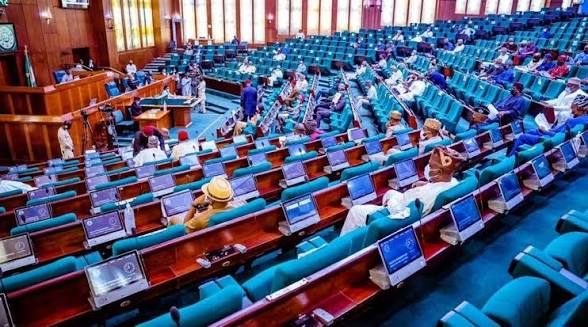
The House of Representatives has called on the Federal Government to urgently deploy resources from the Ecological Fund to protect the Eraskorp Industrial Park in Gbarain, Yenagoa Local Government Area of Bayelsa State, where severe shoreline erosion is threatening a major indigenous petrochemical investment.
The resolution followed a motion of urgent public importance presented by Oboku Oforji, who represents Yenagoa/Kolokuma/Opokuma Federal Constituency
According to the lawmaker, the Eraskon Lubricants and Chemicals Blending Plant was established to strengthen Nigeria's manufacturing sector by reducing dependence on imported lubricants and chemical products while supporting industrialisation and economic diversification.
The project consists of a lubricant and chemical blending plant with a planned production capacity of 128,000 litres per day, alongside an aerosol manufacturing facility and a carton production factory.
Before erosion intensified, construction had advanced significantly. Most processing equipment had already been delivered and installed, while several critical facilities were nearing completion.
Oforji disclosed that the Integrated Manufacturing Complex building had reached approximately 75 percent completion, roofing work stood at 40 percent, and the base oil storage tanks were about 70 percent complete before shoreline erosion damaged foundation structures and protective barriers.
Advertisement
He warned that the environmental damage has delayed construction and now threatens the viability of what lawmakers describe as a strategic national industrial investment.
Following debate on the motion, the House directed the Federal Government to instruct the Secretary to the Government of the Federation to utilise the Ecological Fund for shoreline protection and erosion control around the industrial park and neighbouring communities.
The House also mandated its Committee on Ecological Fund to oversee implementation and submit a report within six weeks.
Punch largely focused on the parliamentary proceedings and the lawmakers' appeal for immediate federal intervention, highlighting the project's economic importance and the extent of construction already completed.
The Guardian similarly reported the House resolution but placed greater emphasis on the project's role in reducing Nigeria's dependence on imported industrial products and boosting domestic manufacturing.
Earlier reports by The Nation had already highlighted warnings from local traditional leaders and company officials, who said shoreline erosion had destroyed parts of the facility and threatened years of investment before lawmakers formally raised the issue in the National Assembly.
Across these reports, one important issue receives relatively limited attention: the growing conflict between industrial development and environmental degradation in the Niger Delta. While discussions often focus on oil production and flooding, shoreline erosion is increasingly becoming a major threat to private investments, infrastructure, and long-term economic planning across coastal communities.
The debate extends beyond one manufacturing plant.
Nigeria has repeatedly announced policies aimed at reducing imports, encouraging local manufacturing, and expanding value-added production in sectors such as petrochemicals. Projects like the Eraskon blending plant align closely with those objectives by producing industrial products locally rather than relying heavily on imports.
However, environmental risks remain one of the least discussed barriers to industrial investment in many parts of the Niger Delta.
Without adequate shoreline protection, investors face rising costs associated with rebuilding damaged infrastructure, securing insurance, and mitigating climate-related risks. These factors can discourage future private-sector investments, even when government policies promote industrial expansion.
The project is expected to create more than 200 direct jobs and over 1,000 indirect employment opportunities, making its survival important not only for Bayelsa State but also for Nigeria's wider manufacturing ambitions.
The situation also highlights broader concerns about climate resilience. Rising water levels, coastal erosion, and frequent flooding have increasingly affected communities and businesses across the Niger Delta, with billions of naira reportedly lost over the years due to damaged roads, homes, farmlands, and industrial facilities.
As Nigeria seeks to diversify its economy beyond crude oil exports, protecting strategic infrastructure from environmental threats is becoming as important as attracting investment itself.
Advertisement
The Ecological Fund was established to address environmental emergencies including erosion, flooding, desertification, and other ecological disasters affecting states across Nigeria.
Bayelsa remains one of the country's most environmentally vulnerable states because of its extensive river networks and low-lying coastal terrain.
Over the past decade, shoreline erosion and flooding have repeatedly damaged public infrastructure and private investments across the Niger Delta, prompting recurring calls for stronger coastal protection measures.
The Eraskon project represents one of several indigenous industrial investments intended to strengthen Nigeria's downstream petrochemical industry by increasing domestic production capacity and reducing reliance on imported industrial chemicals.
The House of Representatives has made its recommendation, but the next move rests with the Federal Government.
Whether funding is released quickly enough to stabilise the shoreline could determine not only the future of the Eraskon Industrial Park but also how investors assess environmental risks in Nigeria's coastal industrial zones. The response may become an important test of the country's commitment to protecting strategic investments while advancing its industrialisation agenda.
You must log in to comment or reply.
Comments