
Growing uncertainty around negotiations between the United States and Iran is raising fresh concerns over global security, oil markets, and diplomatic stability in the Middle East. Although both sides have recently signaled interest in reviving dialogue, new remarks from senior US officials suggest Washington is preparing for tougher alternatives if talks collapse.
The renewed tension comes at a delicate moment for global markets already grappling with geopolitical instability, rising energy risks, and fears of wider regional conflict.
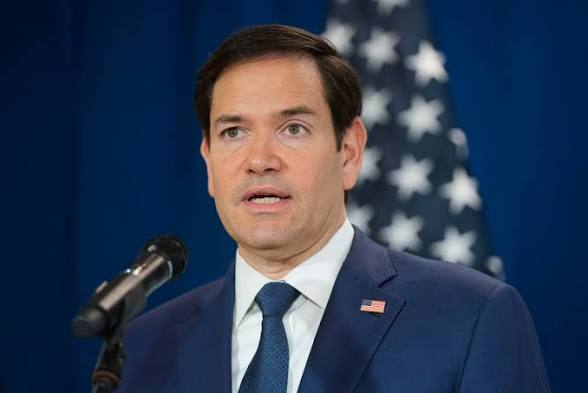
US Secretary of State Marco Rubio said on Sunday that Washington still prefers a diplomatic agreement with Iran but warned that the United States would “deal with it another way” if negotiations fail.
Speaking to reporters, Rubio stated:
“We’re going to have to deal with it another way. We would prefer to have a good agreement.”
He added that the US intends to give diplomacy “every chance to succeed,” signaling that negotiations have not entirely broken down despite rising tensions.
Advertisement
The remarks followed recent speculation that Washington and Tehran were edging closer to a possible understanding over Iran’s nuclear activities and enriched uranium stockpile. However, optimism cooled after Donald Trump indicated that the United States would not rush into any agreement with Tehran.
Trump had earlier insisted that sanctions pressure and security concerns remain central to American policy toward Iran, especially as fears grow over Iran’s nuclear capabilities and regional military influence.
Beyond official statements, the deeper issue is the growing risk that failed diplomacy could destabilize already fragile global economic conditions.
Iran remains strategically important because of its influence around the Strait of Hormuz, one of the world’s most critical oil shipping routes. Any escalation involving Iran could disrupt global crude supply chains, potentially affecting fuel prices across Africa, Europe, and Asia.
For Nigeria, prolonged Middle East instability often creates mixed economic consequences. Higher oil prices can increase government revenue due to Nigeria’s crude exports, but they can also worsen local fuel inflation, transportation costs, and pressure on consumers if domestic supply systems remain unstable.
That contradiction has repeatedly shaped Nigeria’s economic experience during previous Middle East crises.
What makes the current situation even more complex is uncertainty surrounding Iran’s enriched uranium stockpile. While some early reports suggested Tehran might consider limits or transfers as part of negotiations, Iranian officials reportedly pushed back against claims that a final agreement had been reached.
This leaves major unanswered questions about how close both countries truly are to a deal.
The United States and Iran have experienced repeated cycles of negotiation and confrontation for more than two decades.
The 2015 nuclear agreement, formally known as the Joint Comprehensive Plan of Action (JCPOA), temporarily eased tensions by limiting Iran’s nuclear activities in exchange for sanctions relief. However, the deal weakened after the US withdrew during Trump’s first administration.
Since then, diplomatic efforts have repeatedly stalled amid disagreements over uranium enrichment, sanctions, regional military activity, and verification mechanisms.
Energy analysts warn that even diplomatic uncertainty alone can trigger market volatility. Oil traders often react not only to confirmed conflict but also to the possibility of disruption around the Gulf region.
Advertisement
For developing economies already facing inflation pressure, including Nigeria, that risk carries significant consequences.
The real challenge now is whether both governments can maintain diplomatic engagement long enough to prevent another major breakdown in relations.
Washington appears determined to keep pressure on Tehran while still leaving room for negotiations. Iran, on the other hand, continues balancing economic pressure from sanctions against its strategic regional ambitions.
What authorities do next could influence everything from oil prices and international security to inflation pressures in emerging economies.
If talks collapse completely, global markets may begin preparing for a more confrontational phase between both countries — one that could extend far beyond diplomacy.
You must log in to comment or reply.
Comments