
A fragile ceasefire that has held for nearly three months is once again under pressure after fresh military exchanges between the United States and Iran raised fears of a broader regional escalation. The renewed violence comes at a striking moment: while missiles and drones were exchanged across the Gulf, Iranian football players were simultaneously being cleared to travel for the 2026 FIFA World Cup.
The contrast highlights the complex reality of US-Iran relations, where diplomatic channels remain partially open even as military tensions continue to simmer.
Fresh hostilities erupted on Friday after the United States military announced it had intercepted Iranian drones heading toward the Strait of Hormuz, one of the world's most strategically important maritime corridors.
According to US Central Command (CENTCOM), American forces subsequently launched strikes against Iranian radar facilities on Qeshm Island and in the coastal region of Goruk, arguing that the installations posed a threat to regional shipping and military operations.
Hours later, air raid sirens were reported in Kuwait and Bahrain, both key US allies in the Gulf. Residents reportedly heard explosions as regional defense systems responded to incoming threats.
Iran’s Revolutionary Guards responded by claiming responsibility for missile attacks targeting what they described as “enemy bases in the region.” Iranian state media framed the operation as retaliation for what it called a US invasion of Sirik and Qeshm Island.
CENTCOM later stated that Iran launched seven ballistic missiles toward Kuwait and Bahrain. Six were intercepted, while another failed to reach its intended destination. US officials reported no casualties among American personnel and dismissed Iranian claims that the US Fifth Fleet headquarters in Bahrain had been damaged.
The military escalation occurred despite a separate diplomatic development. US officials confirmed that Iran’s national football team had received visas to participate in the 2026 FIFA World Cup, which is being co-hosted by the United States, Canada, and Mexico.
Advertisement
US Ambassador Tom Barrack described sports as a bridge between nations, while Iranian media reported that some support staff members were still awaiting visa approvals.
The latest confrontation is not occurring in an ordinary location.
The Strait of Hormuz serves as one of the world's most critical energy chokepoints, connecting Gulf oil producers to global markets. A significant portion of internationally traded crude oil passes through the narrow waterway every day.
Even limited military activity around the strait can trigger volatility in global energy markets, push up shipping insurance costs, and create uncertainty among investors.
For Nigeria, such developments present a mixed picture. Rising oil prices could boost government revenues and foreign exchange earnings. However, prolonged instability can also increase fuel import costs, worsen inflationary pressures, and raise transportation expenses throughout the economy.
This dynamic has played out repeatedly during previous Middle East crises, including tensions involving Iran in 2019 and the broader regional conflicts that followed.
The current ceasefire traces its origins to April 8, following a period of intense conflict that reportedly involved US and Israeli operations targeting Iran’s senior leadership and strategic military infrastructure.
Although the ceasefire reduced direct confrontations, negotiations aimed at securing a permanent settlement have repeatedly stalled.
Iranian officials continue to push for the release of frozen assets and broader economic concessions, while Washington has maintained pressure through sanctions and military deterrence.
The latest exchange suggests that neither side has fully abandoned military options despite ongoing diplomatic contacts.
Adding another layer of complexity, regional tensions now extend beyond the Gulf itself.
Lebanon has become increasingly vocal about its concerns regarding the conflict’s spillover effects. Lebanese Prime Minister Nawaf Salam publicly urged Iran to stop turning southern Lebanon into what he described as a bargaining tool in broader regional struggles.
The exchange reflects growing frustration among neighboring countries that fear becoming collateral damage in the rivalry between Tehran and its adversaries.
The renewed fighting arrives at a politically sensitive moment.
Advertisement
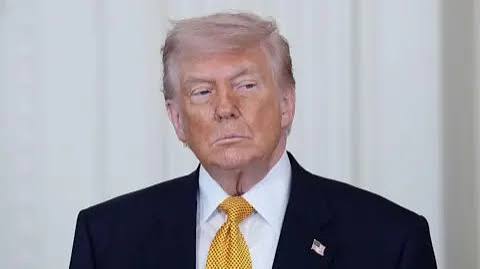
For US President Donald Trump, the conflict remains a test of foreign policy leadership ahead of important domestic political battles. While Washington argues that Iranian military capabilities have been severely degraded, Trump recently acknowledged that Tehran still retains more than one-fifth of its missile stockpile.
Iranian officials, meanwhile, continue to signal that economic relief remains central to any lasting agreement.
The gap between both positions illustrates why negotiations remain deadlocked despite months of diplomacy.
The combination of unresolved political demands, military retaliation, and regional proxy conflicts means the ceasefire remains vulnerable to collapse.
The latest exchange demonstrates how quickly isolated military incidents can escalate into broader regional confrontations.
While both Washington and Tehran continue to keep diplomatic channels partially open, the events of the past 24 hours suggest that the margin for error is narrowing.
The real challenge now will be whether negotiators can prevent tactical military responses from evolving into a wider conflict that threatens global energy supplies, destabilizes neighboring states, and further complicates one of the world's most volatile geopolitical standoffs.
You must log in to comment or reply.
Comments