
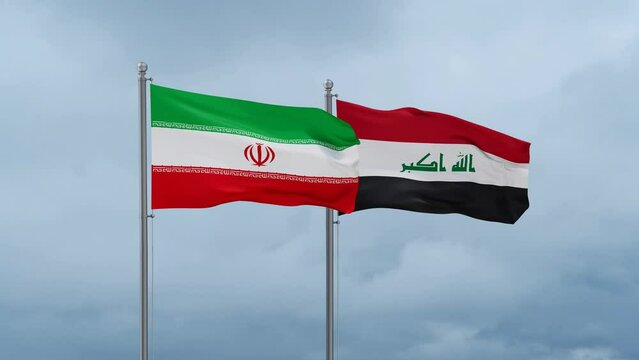
The decision to give Iraqi Airways a limited exemption from US sanctions illustrates how difficult it is to separate geopolitics from ordinary civilian movement. For Baghdad, the issue is not simply about restoring an air route to Iran; it is also about maintaining religious, medical and educational links while navigating increasingly restrictive US measures against Tehran.
The United States has granted Iraqi Airways a special sanctions exemption allowing the Iraqi national carrier to operate flights between Iran and Iraq’s holy city of Najaf, according to Iraq’s Transport Ministry and reports from Reuters and AFP.
Iraq’s Transport Ministry said on September 29 that efforts by Prime Minister Ali al-Zaidi and Transport Minister Wahb al-Hasani had secured the exemption. The ministry said flights from Najaf were expected to begin in October once the necessary organisational requirements had been completed.
The arrangement follows new US sanctions targeting Iran’s aviation sector. Reuters reported that the initial waiver was expected to cover Iraqi Airways operations for one month, with the possibility of a longer-term exemption depending on how the arrangement works.
The route is particularly important for Iranian and Iraqi Shia pilgrims travelling between religious sites in the two countries. It is also used by Iraqi students studying in Iran and people travelling for medical treatment.
There is, however, an important timing discrepancy in reports. Iraq’s National Iraqi News Agency reported on September 28 that Iraqi Airways had resumed flights between Najaf and Iranian airports, while the Transport Ministry said on September 29 that flights from Najaf would begin in October after organisational requirements were fulfilled.
The exemption may look narrow, but its significance extends beyond aviation.
Advertisement
Washington's sanctions campaign is designed to restrict Iran's international economic connections, including aviation services. The US Treasury said in September that its sanctions action targeted companies and intermediaries supporting Iran's aviation sector, alleging that the sector was being used to move weapons, personnel and illicit cargo.
Yet civilian travel does not always fit neatly into the logic of an economic sanctions campaign.
Najaf occupies a particularly sensitive position because it is one of the world's most important Shia religious centres. Cutting direct or convenient air links between Iran and Najaf therefore affects more than commercial passengers. It can affect pilgrims, families, students and patients whose journeys have little connection with the political disputes between Washington and Tehran.
That helps explain why Baghdad sought a specific exemption rather than simply accepting the wider restrictions.
The arrangement also demonstrates Iraq's difficult position between two powerful relationships. Baghdad maintains longstanding political, economic and religious ties with Iran while also dealing with the United States and its sanctions regime.
The waiver therefore represents a practical compromise: limited air connectivity is permitted while Washington retains the broader sanctions framework.
From the US perspective, the restrictions are part of a wider effort to pressure Iran and prevent aviation networks from being used for activities Washington considers prohibited. The US Treasury has explicitly linked its aviation sanctions to concerns about the movement of weapons, personnel and illicit cargo.
From the Iraqi government's perspective, however, some travel has a distinctly civilian and religious character. Baghdad has argued for exemptions covering pilgrimage, medical treatment and education, while offering safeguards intended to reassure Washington that the flights will not be used to transport weapons, sanctioned individuals or illicit funds.
There is also a broader interpretation from the Iranian side. Tehran has objected to restrictions that reduce its regional air connectivity, while the disruption has affected flights involving several neighbouring countries. Reuters reported that the new US measures had contributed to widespread suspensions involving Iranian airlines in countries including Iraq, the United Arab Emirates, Oman, Georgia and Azerbaijan.
These positions do not necessarily cancel one another out. The United States is focused on enforcement of sanctions, Iraq on maintaining essential connections, and Iran on preserving international access. The Najaf exemption exists at the intersection of those competing interests.
For travellers, the immediate implication is the restoration of an important connection between Iran and Najaf, although the exact timetable and operating arrangements still depend on Iraqi authorities completing the required procedures.
For pilgrims, the route could reduce the disruption caused by the suspension of flights. For students and medical travellers, maintaining an air connection could also provide a more direct alternative to longer or more complicated journeys.
For Iraq, the issue carries a diplomatic dimension. Baghdad must demonstrate that it can maintain essential links with Iran without undermining its commitments concerning US sanctions.
Advertisement
The one-month nature of the reported waiver makes the next phase particularly important. Reuters reported that a longer-term exemption could follow if the initial arrangement operates successfully.
That means the practical implementation of the flights may matter as much as the announcement itself. Passenger screening, information sharing and compliance with the conditions attached to the exemption will likely determine whether the temporary arrangement becomes something more durable.
For Nigeria and other countries observing the dispute, the episode also offers a reminder that sanctions imposed by major economies can have effects well beyond the financial institutions or companies directly targeted. Aviation networks, tourism, religious travel, education and medical access can all become part of the consequences.
Ultimately, the Najaf exemption is less about one airline than about the limits of sanctions in a region where political relationships and civilian life are closely intertwined.
The United States has maintained pressure on Iran's aviation sector, while Iraq has sought room to preserve essential connections with its neighbour. The compromise reached over Iraqi Airways provides that room, but only on limited terms.
What happens next will depend on whether the temporary arrangement can satisfy Washington's enforcement concerns while giving Baghdad enough flexibility to maintain the travel links it considers necessary. The real test will not be the announcement of the exemption, but whether the flights can operate consistently without reopening the wider dispute over Iran's access to regional aviation.
You must log in to comment or reply.
Comments