
The United States' latest sanctions targeting an alleged ISIS financing network have again placed West Africa at the centre of international counterterrorism efforts. For Nigeria, the inclusion of a Nigerian national in the designation raises fresh questions about how extremist groups continue to access financial channels despite years of military operations against insurgents.
The move also highlights an increasingly important reality in modern counterterrorism: disrupting the flow of money is now considered as critical as fighting militants on the battlefield.
The U.S. government has designated a Nigerian national and several individuals and entities across Europe, the Middle East and West Africa for allegedly facilitating financial activities linked to the Islamic State of Iraq and Syria (ISIS).
In a statement issued by U.S. Department of State spokesperson Thomas Pigott and released on Monday, Washington announced sanctions against three individuals and six entities accused of helping ISIS move funds across international borders.
According to the U.S. government, the network stretches from France and Syria to Türkiye and Nigeria and allegedly provided financial support that enabled ISIS operations and regional affiliates.
The statement said the designated individuals include:
- A France-based facilitator accused of providing information on the use of explosives to ISIS supporters.
- A Syria-based operator alleged to have used cryptocurrency to transfer funds on behalf of ISIS associates in several countries, including the United States.
Advertisement
- A Nigeria-based facilitator whose money exchange businesses allegedly served as conduits for ISIS financing.
The U.S. government said the objective of the sanctions is to cut off financial lifelines that allow ISIS to fund attacks, support affiliates and threaten civilians around the world.
The sanctions generally freeze any assets under U.S. jurisdiction and prohibit American individuals and companies from engaging in transactions with designated persons and entities.
Importantly, the designations represent allegations by U.S. authorities and do not constitute criminal convictions.
Most Nigerian media outlets, including Punch and several online publications, reported the announcement primarily as a breaking security development involving a Nigerian citizen.
International coverage, however, has placed greater emphasis on the broader architecture of ISIS financing and the growing use of cross-border financial networks, digital assets and informal money transfer systems.
Some reports have also highlighted that extremist groups increasingly depend on financial facilitators located far from active conflict zones, enabling operations through seemingly legitimate businesses and money exchange services.
What has received less attention in local reporting is the strategic significance of the designation. The U.S. action appears to be part of a wider effort to dismantle financial ecosystems that support extremist organisations in Africa, particularly those linked to the Islamic State West Africa Province (ISWAP), one of ISIS's most active regional affiliates.
For Nigeria, the development revives concerns about the financial infrastructure that sustains insurgency in the Lake Chad region and parts of the country's north.
Security analysts have long argued that military operations alone cannot defeat extremist organisations if their financing networks remain intact.
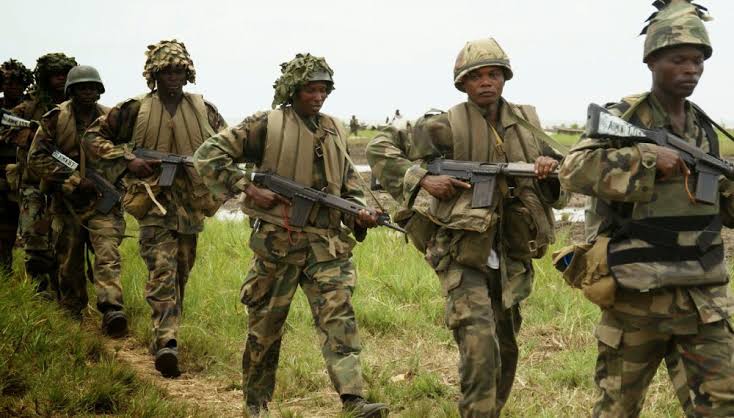
Over the past decade, Nigeria has invested heavily in military campaigns against Boko Haram and ISWAP. Yet both groups have repeatedly demonstrated an ability to regenerate, recruit and sustain operations despite territorial losses.
Part of that resilience has been attributed to diversified funding streams that include extortion, kidnapping for ransom, illicit trade, taxation in areas under militant influence and informal financial networks that can move money across borders.
The latest U.S. sanctions suggest that international authorities believe those financial channels remain active and globally connected.
Nigeria's insurgency in the northeast has lasted for more than 15 years and has become one of Africa's deadliest security crises.
Advertisement
According to various humanitarian assessments, the conflict has displaced millions of people and contributed to severe food insecurity and economic disruption across parts of Borno, Yobe and Adamawa states.
In recent years, international partners including the United States, the United Kingdom and the European Union have increasingly shifted focus toward disrupting terrorist financing, arguing that extremist organisations have become more sophisticated in their use of global financial systems.
The use of cryptocurrencies and informal money exchange networks has also emerged as a growing concern among counterterrorism agencies worldwide.
The latest sanctions therefore fit into a broader international strategy that targets not only militants but also the individuals and businesses allegedly enabling them financially.
The immediate impact of the sanctions may be financial and diplomatic rather than criminal. Authorities in Nigeria and other affected countries may now face increased pressure to investigate the allegations, monitor financial networks and strengthen cooperation with international partners.
For Nigeria, the larger challenge remains balancing security operations with stronger financial intelligence and regulatory oversight.
The real test now will be whether these designations lead to concrete legal action and meaningful disruption of extremist financing networks or simply become another reminder that the battle against terrorism increasingly extends beyond the battlefield and into the global financial system.
You must log in to comment or reply.
Comments