
A renewed Ebola outbreak in Central and East Africa has pushed the World Health Organization into issuing one of its highest levels of global alert, raising concerns over cross-border transmission, weak healthcare systems, and the growing difficulty of containing outbreaks in conflict-affected regions.
The declaration comes as health authorities confirm infections in both the Democratic Republic of the Congo and Uganda, with early signs suggesting the outbreak may already be larger than officially detected.
The WHO announced that the Ebola outbreak linked to the Bundibugyo virus strain now qualifies as a Public Health Emergency of International Concern (PHEIC), a designation reserved for serious health threats capable of spreading internationally.
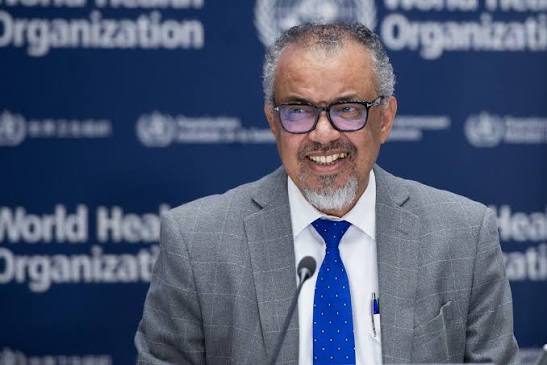
According to WHO Director-General Tedros Adhanom Ghebreyesus, the decision followed consultations with both affected countries and was based on scientific evidence, transmission risks, and potential disruptions to international travel and trade.
However, the WHO clarified that the outbreak does not currently meet the threshold for classification as a pandemic emergency under the International Health Regulations.
As of May 16, 2026:
• Eight laboratory-confirmed Ebola cases had been recorded in DR Congo.
• Authorities identified 246 suspected cases and 80 suspected deaths in Ituri Province.
Advertisement
• Uganda confirmed two laboratory cases in Kampala, including one death involving travellers from DR Congo.
• One confirmed case was also detected in Kinshasa involving a traveller returning from Ituri Province.
The outbreak has affected Bunia, Rwampara, and Mongbwalu health zones, areas already facing humanitarian and security pressures.
A closer look at the outbreak shows several warning signs that epidemiologists typically associate with underreported transmission.
WHO officials disclosed that at least four healthcare workers had already died under circumstances consistent with viral haemorrhagic fever. That detail has alarmed global health experts because infections among frontline medical staff often indicate gaps in infection prevention systems.
The agency also warned that unusual clusters of unexplained community deaths had emerged across Ituri and neighbouring North Kivu Province, suggesting the virus may already be circulating beyond officially confirmed zones.
What makes this more complex is the strain involved.
Unlike the Zaire Ebola strain, which has approved vaccines and more established treatment pathways, the Bundibugyo strain has fewer targeted medical tools available. That limitation could complicate containment efforts if transmission accelerates.
WHO further warned that insecurity, population displacement, informal healthcare networks, and cross-border movement could rapidly increase exposure risks.
Although no cases have been reported in Nigeria, the development is likely to trigger renewed public health surveillance across major African travel hubs, including Lagos and Abuja.
Nigeria’s successful containment of Ebola in 2014 remains one of Africa’s most studied outbreak responses. At the time, aggressive contact tracing and rapid isolation measures prevented what could have become a national crisis after an infected traveller arrived in Lagos.
However, health analysts warn that Africa’s urban mobility patterns have expanded significantly since then, increasing the speed at which infectious diseases can spread through air travel and informal migration routes.
The latest outbreak also comes at a time when many African healthcare systems remain financially strained following years of post-pandemic recovery efforts, inflation pressures, and reduced international health funding.
Beyond the immediate health emergency, the outbreak could carry broader economic consequences if transmission widens.
Advertisement
Historically, Ebola outbreaks have disrupted trade routes, weakened tourism activity, increased border restrictions, and triggered investor concerns across affected regions.
In eastern Congo particularly, humanitarian instability and armed conflict have repeatedly complicated disease response operations. Medical workers often face difficulties reaching remote communities, while misinformation and distrust of authorities can slow emergency interventions.
WHO’s warning about “significant uncertainties” surrounding the true geographic spread suggests officials are concerned that confirmed numbers may represent only a fraction of actual infections.
That framing leaves open the possibility of further emergency measures in the coming weeks.
WHO said an Emergency Committee under the International Health Regulations framework will now advise member states on additional response measures, surveillance protocols, and travel-related recommendations.
The bigger risk is not simply the number of confirmed cases today, but whether health authorities can prevent silent transmission across urban corridors before containment systems are overwhelmed.
What governments across Africa do next — especially regarding border surveillance, rapid testing, and emergency preparedness — could determine whether the outbreak remains regionally contained or escalates into a wider continental health crisis.
You must log in to comment or reply.
Comments