
Political endorsements can influence how voters interpret alliances, party loyalties and the direction of an election. But when an endorsement attributed to a prominent politician is disputed, the controversy becomes a test of political communication: who actually said what, and what evidence supports the claim?
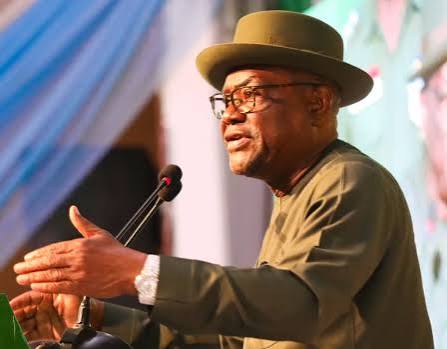
The reported denial by Federal Capital Territory Minister Nyesom Wike over an alleged endorsement of Labour Party governorship candidate Ishaku Abbo in Adamawa State highlights the importance of distinguishing political claims from verified positions.
On October 23, 2026, Report stated that Wike had denied endorsing Abbo, the Labour Party's candidate for the 2027 Adamawa governorship election.
According to the publication, the denial appeared in a statement issued by Wike's Senior Special Assistant on Public Communications and Social Media, Lere Olayinka.
The statement described a social media post claiming that Wike had encouraged Adamawa residents to support Abbo as false. It also said Wike had no relationship with the Labour Party or its candidates in the state.
Wike reportedly maintained that he had not endorsed Abbo or another Labour Party candidate and that he would personally announce any candidate he chose to support.
The controversy comes after Abbo's departure from the African Democratic Congress for the Labour Party in May 2026. The Labour Party subsequently affirmed him as its candidate for the Adamawa governorship election.
However, the original social media post and the October 23 statement were not independently authenticated in the sources reviewed for this analysis.
An endorsement from a nationally prominent politician can carry significance beyond the immediate statement. It may influence perceptions of political alliances, encourage supporters to reconsider their positions or generate discussion about relationships between political figures and parties.
That does not mean every endorsement automatically translates into votes.
Advertisement
Voters consider multiple factors, including a candidate's record, party platform, local relationships, campaign promises and ability to address their concerns. The influence of an endorsement depends on the circumstances and cannot be assumed simply because a politician holds a prominent public office.
In Abbo's case, the alleged endorsement would connect Wike, a leading figure in Nigerian politics, to a governorship contest outside Rivers State, where Wike built his political base.
Such a connection could attract attention because political relationships in Nigeria do not always follow straightforward party lines. Nevertheless, without verified evidence of an endorsement, it would be premature to interpret the alleged statement as proof of a new alliance.
The denial itself also does not establish which political candidate Wike may support in the Adamawa contest. It addresses a particular claim, rather than providing a comprehensive account of his political preferences in the state.
The dispute presents two distinct narratives, although the available evidence does not establish that they have equal credibility.
The first is the alleged endorsement circulating on social media. As described in Daily Post's report, the post attributed a statement of support for Abbo to Wike and presented him as encouraging Adamawa voters to choose the Labour Party candidate.
The second is Wike's reported denial through his spokesperson. That account rejects the endorsement and says the minister did not make the statement attributed to him.
These positions cannot both accurately describe Wike's position if the disputed quotation is presented as a genuine endorsement. Establishing what happened requires examining the original post, its source and any available evidence of authenticity.
It would be inappropriate to treat the social media claim as genuine simply because it circulated online. Equally, independent verification of the denial remains important when reporting the dispute as a fact-checking matter.
There is also a distinction between denying an endorsement and endorsing another candidate. Wike's reported statement does not, by itself, identify whom he intends to support in Adamawa.
For readers, that distinction is essential. Political reporting should explain what has been established, what a politician has denied and what remains unknown.
As political competition develops ahead of the 2027 elections, social media will remain an important channel for communicating campaign messages, political alliances and endorsements.
It also creates an environment in which statements can circulate without sufficient information about their original source.
An endorsement attributed to a prominent politician may become a talking point before journalists, political parties or the person concerned establish whether the statement is authentic. When a denial follows, the public can be left deciding between competing claims without access to the underlying evidence.
For Nigerian voters, the practical issue is not simply whether a politician supports a particular candidate. It is whether political information can be trusted enough to support informed decisions.
For news organisations, the responsibility is equally clear. A claim should not be presented as a confirmed endorsement merely because it has attracted attention. Reporters should seek the original statement, contact the relevant spokesperson where possible and distinguish verified evidence from claims made by interested parties.
These standards matter particularly when the people involved hold public office or are contesting elections.
The controversy also illustrates why a politician's personal relationships, party membership and electoral endorsements should not be treated as interchangeable. A politician can have relationships across party lines without necessarily endorsing every candidate associated with those parties.
Advertisement
In this case, the available reporting does not establish that Wike endorsed Abbo, nor does it independently resolve every question about the origin of the disputed social media post.
Further clarification could come from the original social media account, an authenticated copy of Olayinka's statement or additional comments from Wike and the Labour Party.
Such evidence could help establish whether the alleged endorsement was fabricated, misrepresented or circulated without adequate context.
The political implications, if any, would depend on what the evidence shows. It would be premature to conclude that the dispute signals a new political alliance or a wider conflict between the figures involved.
As the 2027 election approaches, subsequent statements from political actors may provide more information about their positions. Until then, the controversy should be reported within the limits of the available evidence.
Nigeria's political debates often focus on who supports whom, which party is gaining influence and what an endorsement might mean for an election. Yet the reliability of the information driving those debates deserves equal attention.
Wike's reported denial over the alleged endorsement of Ishaku Abbo presents a straightforward but important challenge: political claims need evidence, and denials need careful attribution.
Ultimately, voters are better served when political reporting distinguishes an authenticated statement from a social media claim and an official denial from an independently established conclusion. That distinction may not settle the political debate, but it gives the public a firmer basis on which to understand it.
You must log in to comment or reply.
Comments