
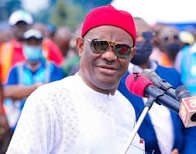
The Federal Capital Territory (FCT) Administration has renewed its commitment to completing ongoing infrastructure projects, with Minister Nyesom Wike insisting that no project initiated under President Bola Ahmed Tinubu's administration will be abandoned. The assurance comes as the government intensifies work on major road networks across Abuja, where years of delayed public projects have remained a source of concern for residents and businesses.
The pledge is significant because abandoned infrastructure has long been one of the biggest challenges facing Nigeria's capital. Successive administrations have inherited unfinished roads and bridges, leading to increased construction costs, traffic congestion, and reduced investor confidence.
Speaking on Thursday, July 30, after inspecting ongoing road projects in Abuja, Wike said the current administration has adopted a zero-tolerance policy toward abandoned public infrastructure.
Among the projects inspected were the dual carriageway linking Nile University to Ring Road III and the full development of Arterial Road N1 from Wuye District to Ring Road II.
According to the minister, the Tinubu administration is determined to complete inherited projects while ensuring newly awarded contracts are delivered as scheduled.
"I have said before, no project will be abandoned under Tinubu's administration and we are keeping that promise," Wike said.
He added that many projects originally awarded as far back as 2010 have already been completed, while work continues on the remaining ones.
Advertisement
Wike also assured residents that construction of the N20 bridge over the Shehu Musa Yar'Adua Expressway would be completed, urging Abuja residents to remain patient as contractors continue work.
The minister further praised construction firms handling the projects, saying the quality and pace of delivery have met government expectations.
Several Nigerian news platforms reported Wike's inspection tour, but with different areas of emphasis.
Daily Post focused primarily on the minister's assurance that no project would be abandoned and highlighted his promise that many projects would be delivered before the end of December.
TheCable placed greater attention on Wike's broader argument that the current administration has completed numerous projects inherited from previous governments, presenting the statement as evidence of continuity in infrastructure development.
Meanwhile, other Abuja-focused reports concentrated on the physical progress of the road projects and the expected improvement in transportation within the Federal Capital Territory.
However, many reports devoted less attention to the wider policy implications of completing long-delayed infrastructure and how sustained project execution could influence economic activity and urban planning in Nigeria's capital.
The Bigger Picture Behind the Promise
For decades, abandoned government projects have become a recurring feature of public infrastructure across Nigeria. Changes in political leadership, funding constraints, contract disputes, and shifting priorities have often left major projects unfinished for years.
The Federal Capital Territory has not been immune to this pattern. Several roads, bridges, and public facilities awarded by previous administrations remained incomplete long after their expected delivery dates, increasing maintenance costs and delaying development in rapidly expanding districts.
Completing these projects could reduce travel times, improve access to developing communities, encourage private investment, and lower the long-term financial burden associated with restarting dormant contracts.
The government's emphasis on finishing inherited projects also reflects a broader policy shift toward infrastructure continuity rather than launching entirely new projects without completing existing ones. Whether that approach delivers lasting results will depend largely on sustained funding, contractor performance, and consistent oversight throughout the remaining phases of construction.
Advertisement
Nigeria has repeatedly faced criticism over the large number of abandoned public projects across federal and state governments.
Over the years, billions of naira have been tied up in incomplete infrastructure, with analysts arguing that project continuity is often more cost-effective than repeatedly initiating new contracts.
Since assuming office, the Tinubu administration has repeatedly identified infrastructure completion as one of its priorities, particularly in Abuja, where rapid population growth continues to increase demand for improved transport networks.
The ongoing expansion of major roads, bridges, and arterial routes forms part of wider efforts to ease congestion and support future urban development within the Federal Capital Territory.
Attention will now shift from government assurances to actual project delivery. While Wike has expressed confidence that most ongoing projects will be completed before the end of the year, residents and businesses will judge the administration largely by whether construction milestones are met on schedule.
The coming months are likely to determine whether the government's promise to eliminate abandoned projects becomes a lasting policy achievement or another pledge tested by funding pressures and implementation challenges.
You must log in to comment or reply.
Comments