
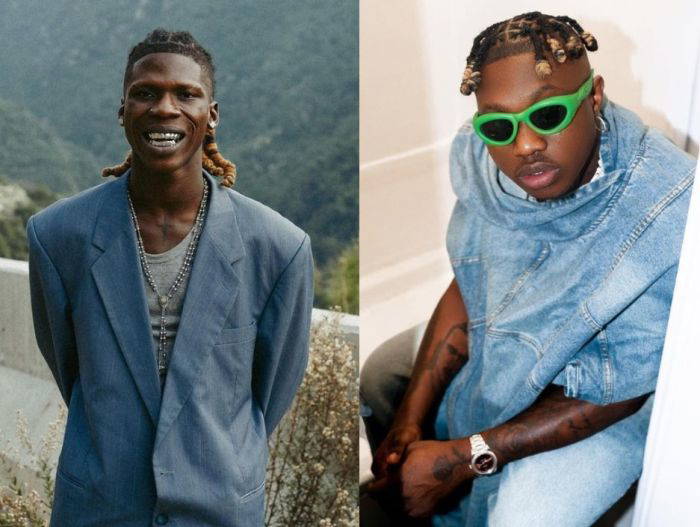
What began as another social media disagreement between two of Nigeria's biggest music stars may be heading toward a peaceful resolution after rapper Zlatan Ibile publicly reached out to Seyi Vibez in an attempt to end their recent online clash.
The episode has drawn widespread attention across the entertainment industry, not only because of the artists involved but also because it highlights how quickly misunderstandings can escalate in Nigeria's highly competitive music scene.
The tension surfaced earlier this week when Seyi Vibez appeared to react to comments and ad-libs linked to Adekunle Gold's song Life of the Faaji. The singer reportedly interpreted the remarks as subtle shots directed at his Fuji Moto project, sparking a public exchange that quickly gained traction among fans.
As the conversation intensified online, Seyi Vibez allegedly accused Zlatan of mocking his work and responded with sharp criticism, reportedly referring to him as a "backup artiste." He also took aim at Zlatan's fashion brand, adding another layer to the dispute.
Advertisement
However, in a move that shifted the tone of the conversation, Zlatan publicly denied any intention to disrespect his colleague and instead described the situation as a misunderstanding.
Taking to social media on Thursday, the rapper wrote:
"It actually hurts that my brother thinks I would diss him in any way. It's literally a misunderstanding. @seyi_vibez it's all love bro, when you're ready to talk it out I'm here!! 4L ABURO MI."
The message was widely interpreted by fans as an effort to de-escalate tensions and prevent the disagreement from developing into a prolonged industry feud.
Beyond the apology itself, the incident reveals how sensitive artistic competition has become within Nigeria's music industry. As artists increasingly build powerful personal brands alongside their music careers, perceived criticism—whether intentional or accidental—can quickly trigger public reactions.
What makes this situation more complex is that the disagreement appears connected to a broader conversation surrounding Fuji-inspired contemporary music. Over the past year, artists have increasingly blended traditional Fuji influences with Afrobeats and street-pop sounds, creating new subgenres that have attracted passionate fan communities.
Several entertainment platforms noted that discussions around Fuji Moto and related musical styles had already generated debate among listeners before the Zlatan-Seyi Vibez exchange emerged.
While some reports focused primarily on the social media drama, the larger story reflects the growing influence of online fan culture in shaping narratives around artists and their work. A single lyric, ad-lib or interpretation can rapidly become a trending topic capable of generating headlines across multiple platforms.
Advertisement
Historically, Nigerian music has witnessed several public disagreements that later evolved into collaborations or reconciliations. Industry observers often note that artists frequently use dialogue and private communication to resolve misunderstandings once emotions settle.
As of the latest updates, Seyi Vibez had not issued a detailed public response to Zlatan's apology immediately after it was posted. However, fans continue to monitor developments closely, hoping both artists can move beyond the disagreement.
The real test now is whether the reconciliation effort translates into direct communication between the two musicians. In an industry where perception can spread faster than facts, the willingness of artists to clarify misunderstandings publicly may prove just as important as the music itself.
You must log in to comment or reply.
Comments