
A resource opportunity with a difficult history
For Borno State, renewed oil exploration is about more than finding hydrocarbons. It is also about whether natural-resource development can become part of a broader economic recovery in a region that has faced years of insecurity and disruption.
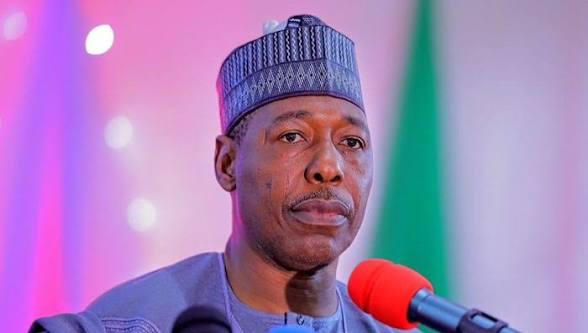
That makes Governor Babagana Zulum’s latest call significant, but it also demands caution: exploration can create opportunities, but it does not automatically translate into commercial production, jobs or new revenue.
Zulum made the call on Saturday, October 3, 2026, while addressing the 13th regular meeting of the North-East Governors’ Forum at the Government House in Maiduguri.
The two-day meeting, which began on October 2, brought together the governors of the six North-East states to discuss regional development, security and economic cooperation.
Zulum welcomed the Federal Government’s renewed efforts around the Kolmani oil project in Bauchi State and argued that renewed exploration in the North-East could create employment, encourage infrastructure development and broaden the revenue base of states and communities.
He then asked the Federal Government to revisit oil exploration activities that had previously started but stalled in Magumeri and Gubio Local Government Areas of Borno State.
His argument was that responsible exploration and development of natural resources could complement reconstruction, strengthen local economies, restore livelihoods and create opportunities for the region’s growing population.
The significance of Zulum’s statement lies partly in its timing.
Advertisement
The North-East has long sought ways to move beyond dependence on reconstruction and security interventions towards broader economic activity. Oil exploration offers one possible route, but only if exploration eventually demonstrates commercially viable resources and the necessary infrastructure and security conditions exist.
That distinction matters.
The current development is a request to revive exploration, not an announcement that Borno has entered commercial oil production. The available reports establish renewed political pressure for exploration; they do not establish that commercial production is imminent.
There is, however, a substantial history behind the request.
Oil exploration in the Magumeri-Gubio area has previously been conducted. In July 2017, an exploration team working around the Lake Chad Basin was attacked by Boko Haram. Contemporary reports said the team included NNPC personnel and University of Maiduguri geology staff.
That history illustrates one of the central complications surrounding any renewed effort: economic development and security in the North-East cannot easily be treated as separate questions.
The development argument is straightforward. Zulum and other North-East leaders see oil exploration as a potential source of employment, infrastructure investment, local economic activity and government revenue. From that perspective, reviving stalled exploration is part of a larger strategy for economic diversification and regional recovery.
The cautionary argument is equally important. Exploration does not guarantee a commercially viable discovery, while the region's previous experience shows that security can directly affect the ability of technical teams to operate. The 2017 attacks demonstrate that restarting exploration would involve more than simply deploying drilling equipment.
There is therefore no contradiction in saying that Borno can pursue oil exploration while recognising that exploration itself is only one stage in a much longer process.
For communities in Borno, the most important issue will ultimately be whether resource development produces tangible economic activity rather than remaining a political announcement.
Zulum has identified jobs, infrastructure, stronger local economies and restored livelihoods as potential benefits. Those are objectives rather than confirmed results at this stage.
The distinction is particularly important in resource-rich economies, where the existence of natural resources does not by itself guarantee broad-based prosperity.
For Borno, any future exploration programme would therefore have implications beyond the oil sector itself: roads, security, technical employment, services and the participation of communities could all become relevant if exploration advances.
But those effects should be assessed from actual projects and measurable outcomes rather than assumed in advance.
Security remains part of the equation
The history of oil exploration in the Lake Chad area makes security impossible to ignore.
Advertisement
The 2017 attack on an exploration convoy between Magumeri and Gubio resulted in the abduction of members of an exploration team and the deaths of security personnel, according to contemporary reports.
That history does not determine what would happen under a future exploration programme, but it provides important context for Zulum’s emphasis on economic development alongside the region's continuing security concerns.
The North-East Governors’ Forum itself covers both security and socioeconomic development, reflecting how closely those issues remain connected in the region.
The immediate development is political rather than commercial: Zulum has formally asked the Federal Government to revisit stalled exploration in Magumeri and Gubio, while supporting renewed activity around Kolmani and the Lake Chad Basin.
The next meaningful evidence would therefore be concrete action on exploration — rather than simply another political commitment.
That could include decisions by the Federal Government and relevant petroleum institutions concerning exploration programmes, technical assessments, investment and security arrangements. The reports reviewed do not establish that such a new programme has already been announced for Magumeri and Gubio.
Ultimately, the question is not simply whether Borno has oil beneath its soil. It is whether exploration can be conducted safely, responsibly and economically enough to translate a natural-resource possibility into sustained opportunities for people and communities.
Zulum has put that question back on the regional agenda. What happens next will depend less on the rhetoric surrounding oil and more on whether exploration resumes, what it discovers, and whether any resulting economic activity reaches beyond the industry itself.
You must log in to comment or reply.
Comments