
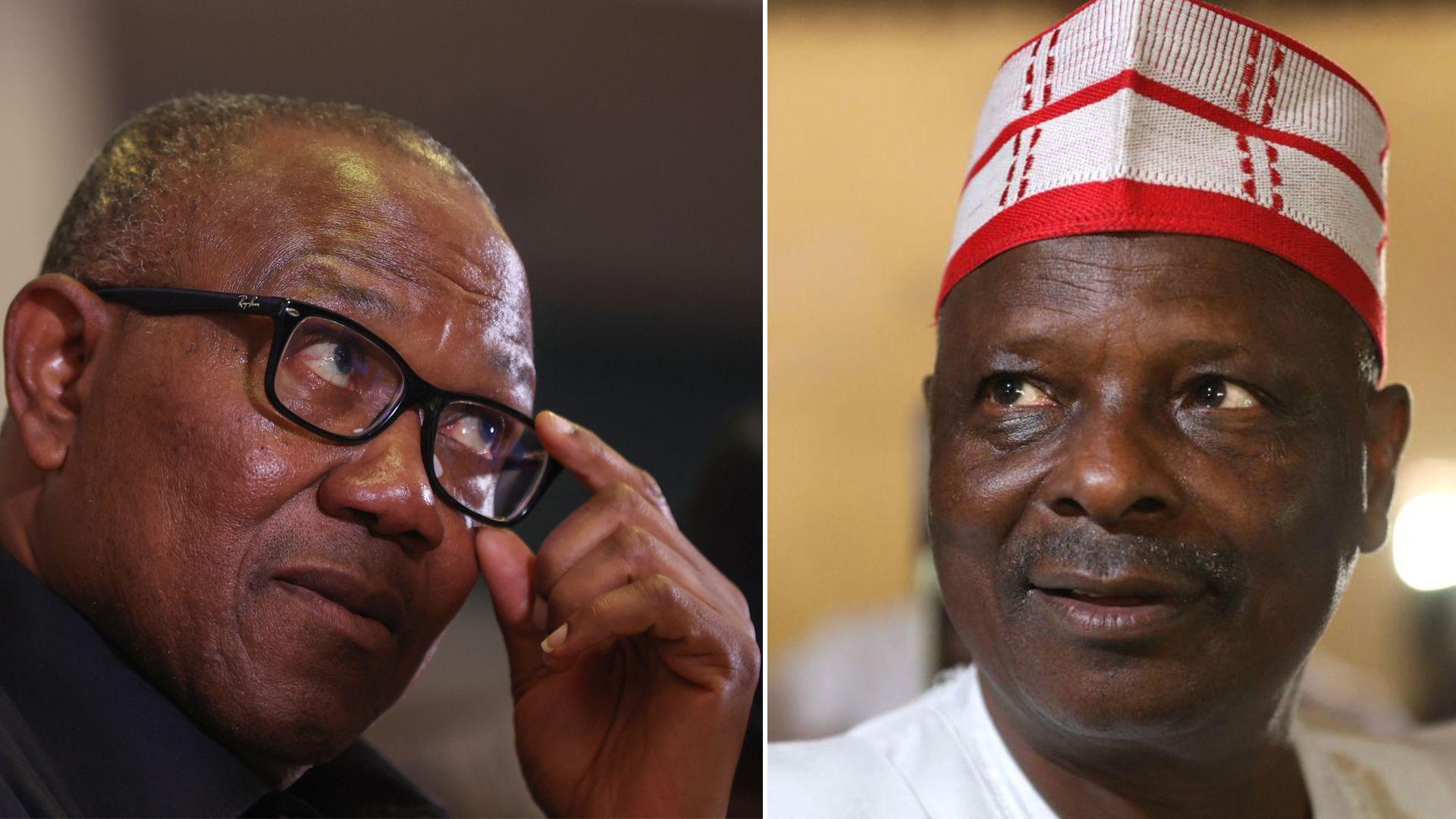
Nigeria’s opposition realignment ahead of the 2027 presidential election is beginning to take clearer shape, with former Kano State Governor Rabiu Kwankwaso publicly outlining why northern political leaders decided to work with Peter Obi under the Nigeria Democratic Congress coalition.
The development goes beyond routine alliance-building. It reflects growing efforts among opposition figures to rebuild regional trust, consolidate anti-incumbent forces and reshape electoral calculations after the fractured outcome of the 2023 general election.
Former Kano State governor and leader of the Kwankwasiyya Movement, Rabiu Kwankwaso, said northern political stakeholders deliberately evaluated possible partners before agreeing to align with Peter Obi ahead of the 2027 elections.
Speaking during an interview on Arise TV, Kwankwaso dismissed speculation that the emerging alliance between both camps was driven by hidden rivalry or temporary political convenience.
“I looked around together with our leadership in the north to say, okay, who do we think is capable? Who can come and work together with us honestly so that we can move this country? Along the line, we realised that Peter Obi is at the forefront of it. That’s why we all accepted to work together,” he said.
The remarks are among Kwankwaso’s clearest public explanations yet on the political calculations behind the growing North-South opposition partnership now forming around the NDC platform.
Kwankwaso, who was the presidential candidate of the New Nigeria Peoples Party in 2023, commands a strong grassroots structure across Kano and parts of northern Nigeria through the Kwankwasiyya Movement. Obi, meanwhile, built one of the country’s most energetic youth-driven political movements during the 2023 election under the Labour Party platform.
While both politicians lost the last presidential election, their combined voting strength remains politically significant. A closer look at the emerging coalition shows that both camps appear focused on avoiding the fragmentation that weakened opposition parties in 2023.
Advertisement
Reuters and other political observers have noted that opposition leaders are increasingly under pressure to consolidate support early ahead of 2027 instead of waiting until the final months before elections. That urgency partly explains the speed of current negotiations and defections across political blocs.
Both men recently aligned with the NDC after distancing themselves from the crisis-hit opposition coalition previously linked with the African Democratic Congress. Their movement has already triggered fresh political calculations within the ruling All Progressives Congress and other opposition parties.
Beyond the official statements, the deeper issue is Nigeria’s long-running regional power balance.
Kwankwaso repeatedly referenced historical political partnerships between northern and southeastern leaders, arguing that the current alliance follows a pattern established during the First and Second Republics.
“Right from the beginning, this sort of alliance has been in existence. Now we are going back to what Tafawa Balewa did during their time,” he said.
He also cited the relationship between former Prime Minister Abubakar Tafawa Balewa and NCNC leaders, alongside the partnership between former President Shehu Shagari and former Vice President Alex Ekwueme after the civil war era.
Political analysts say the references are strategic. For years, many southeastern political leaders have argued that the region has remained underrepresented in Nigeria’s presidential power rotation since the return to democracy in 1999.
Kwankwaso indirectly acknowledged that argument while discussing how power eventually shifted toward the South-West following the annulled June 12 election crisis and subsequent democratic transition.
“There was a change during the third republic where for many obvious reasons an election was annulled and the government under the military decided to bring in Shonekan from the South-West,” he said.
“Even after that, the military and other leaders worked together and brought in Chief Olusegun Obasanjo from the South-West again. Even Bola Tinubu probably is a beneficiary of all that.”
One issue repeatedly raised since news of the alliance emerged is whether Obi and Kwankwaso can sustain a stable political partnership without internal conflict over power-sharing arrangements.
Kwankwaso attempted to downplay those fears, arguing that political disputes between leaders and deputies are often products of personal ambition rather than structural problems.
“The problem people are having, especially leaders, is that they are too greedy to the extent that they begin to have issues. There is so much to do. You don’t have to fight your deputy,” he said.
He pointed to his own experience as deputy speaker of the House of Representatives and later as Kano governor, where he said political partnerships survived difficult moments without collapsing.
Advertisement
However, a closer look at Nigeria’s political history shows why observers remain cautious. Coalition politics in Nigeria has frequently struggled under pressure from zoning disputes, regional bargaining and disagreements over candidate selection.
That framing leaves out one critical challenge already facing the opposition: deciding who eventually emerges as the coalition’s presidential candidate if both camps maintain strong political ambitions.
The alliance also reflects cold electoral mathematics.
Kwankwaso retains influence across sections of the North-West, particularly Kano, one of Nigeria’s biggest voting blocs. Obi continues to command loyalty among many urban professionals, first-time voters and southeastern supporters.
Combined, both camps could potentially reshape opposition strategy if they successfully avoid internal fragmentation.
Yet the bigger risk is whether ideological differences, regional expectations and candidate negotiations eventually weaken the coalition before the election cycle fully begins.
What authorities, opposition leaders and party stakeholders do next will determine whether this emerging alliance becomes a serious governing alternative or simply another short-lived electoral arrangement in Nigeria’s volatile political landscape.
You must log in to comment or reply.
Comments