
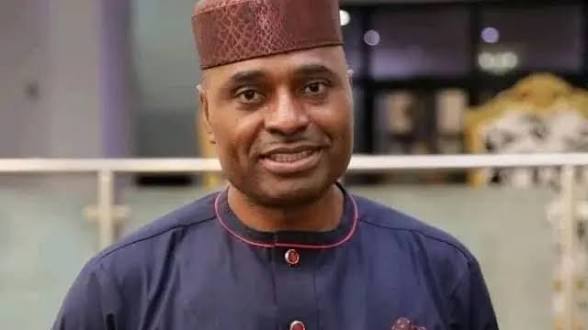
Kenneth Okonkwo has criticised President Bola Tinubu’s proposed campaign schedule for the 2027 election, while figures on federal revenue and debt-interest payments have raised further questions about Nigeria’s fiscal position.
Okonkwo, a spokesperson for the African Democratic Congress (ADC) presidential candidate, described Tinubu as an “absentee President” in a statement published on his verified X account on Saturday, October 17, 2026. He argued that the president should engage Nigerians more directly through independent media interviews and debates with opposition candidates.
His criticism also focused on Nigeria’s public finances. Citing figures showing that federal government interest payments reached ₦7.7 trillion in the first half of 2026, compared with revenue of ₦6.2 trillion, Okonkwo argued that the administration’s economic record raises questions about its suitability for another term.
The figures provide a measurable basis for examining the government’s fiscal pressures. However, the broader claims about presidential performance, the proposed campaign itinerary and the country’s financial condition require separate scrutiny.
Figures attributed to the World Bank’s October 2026 Nigeria Development Update indicate that the Federal Government spent approximately ₦7.7 trillion on interest payments during the first half of the year, while generating about ₦6.2 trillion in revenue.
The difference was approximately ₦1.5 trillion, meaning interest payments amounted to roughly 124 per cent of federal revenue over the period.
The figures were reported by TheCable, which attributed them to the World Bank’s assessment of Nigeria’s economy.
The relationship between revenue and interest payments matters because the government needs resources to finance public services, infrastructure, security, education and healthcare, alongside its debt obligations.
When interest payments consume more than the revenue collected during a given period, the government faces a significant fiscal constraint. However, the figures alone do not establish that the country is bankrupt. A fuller assessment would also examine other expenditure, borrowing, principal repayments, available financing and the government's overall capacity to meet its obligations.
The figures therefore support a narrower conclusion than the one advanced in Okonkwo’s statement: federal interest payments exceeded federal revenue during the first half of 2026.
Whether this represents an improvement or deterioration in the country's broader fiscal position requires additional economic indicators and historical comparisons.
Okonkwo also questioned the reported plan for Tinubu to campaign personally in 12 states out of Nigeria’s 36 states and the Federal Capital Territory.
Advertisement
He argued that a presidential candidate should engage voters directly, explain his policies and participate in national debates with political opponents.
The dispute raises a broader question about how presidential candidates should communicate with voters in a country with 36 states and substantial regional, economic and political differences.
A campaign itinerary covering fewer states does not, by itself, establish that a candidate is disengaged from governing or communicating with the public. Political parties can also organise rallies, town halls and other activities through their candidates, running mates and campaign organisations.
Premium Times reported on October 16, 2026, that an APC Presidential Campaign Council representative, Obafemi George, defended the proposed approach, saying the president would prioritise governance while the party's campaign organisation mobilised support across the country.
That explanation provides the governing party's position in the debate. It does not independently establish how many states Tinubu will ultimately visit or how extensively his campaign organisation will engage voters in states he does not personally visit.
The distinction between a candidate's personal itinerary and the geographical reach of an entire campaign is important when assessing the competing claims.
Another part of Okonkwo’s criticism concerns Tinubu’s engagement with independent media and his alleged absence from national debates involving opposition candidates.
These claims raise questions about public accountability, but they require evidence beyond a political statement.
A systematic assessment would need to establish how many substantive interviews Tinubu has granted independent media organisations during his first term, the period covered by those interviews, and whether invitations to televised debates have been issued and accepted or declined.
Public speeches and official broadcasts are relevant to assessing presidential communication, but they are not equivalent to interviews in which journalists can ask follow-up questions.
Similarly, participation in a presidential debate is a distinct form of political engagement. Whether a candidate has taken part in such debates should be established through records of specific events rather than inferred from the absence of a general statement.
Tinubu delivered an Independence Day address on October 1, 2026, according to the Presidency's published record. That establishes that he made a public address on that occasion, but it does not resolve the separate questions about independent-media interviews or participation in debates.
Without a documented review of those activities, the claim that the president has not engaged regularly with independent media should remain attributed to Okonkwo.
The Claim That Tinubu Has Failed to Deliver on 70 Per Cent of His Initiatives
Okonkwo also asserted that Tinubu had not surpassed 30 per cent in any of the initiatives undertaken during his first term.
The statement is a broad assessment of the administration's performance, but the report does not provide a list of initiatives, their original targets or the indicators used to calculate progress.
Testing the claim would require identifying the relevant policies and comparing their stated objectives with measurable results.
For example, an assessment of an economic reform could examine implementation milestones and outcomes. An assessment of infrastructure policy could examine project completion, expenditure and delivery against published targets. Social programmes would require their own measures of coverage, implementation and impact.
Without a defined set of initiatives and a consistent measurement method, the 30 per cent figure cannot be independently established from the information provided.
This does not invalidate the need to scrutinise the administration’s record. It means that a meaningful evaluation requires specific targets, reliable data and a clear explanation of how progress is measured.
The controversy brings together two issues that will matter in the 2027 election: how candidates account for their performance and how they communicate their plans to voters.
The fiscal figures provide a concrete starting point for evaluating Nigeria’s economic position. Interest payments exceeding federal revenue indicate pressure on the government’s finances, although they do not, on their own, describe the entire national budget or establish the overall sustainability of public debt.
The campaign debate raises a different question: whether voters will have sufficient opportunities to question candidates directly about their policies, records and plans.
Advertisement
For voters, the most useful evidence will be specific commitments, documented implementation results, credible economic data and clear explanations from the candidates and their parties.
Political criticism can draw attention to issues that deserve scrutiny. Its individual claims still need to be tested against records and measurable outcomes.
Several important questions remain unresolved in the available reporting.
First, the final campaign itinerary has not been established by the information examined here. The reported plan to visit 12 states should not be treated as a final schedule without confirmation from the campaign organisation.
Second, a comprehensive record of Tinubu’s independent-media interviews and invitations to presidential debates would be needed to assess Okonkwo’s criticism of the president’s media engagement.
Third, the claim that the administration has failed to achieve more than 30 per cent of its initiatives remains unverified without a defined list of policies and performance indicators.
Finally, the ₦7.7 trillion in interest payments and ₦6.2 trillion in revenue describe the first half of 2026. They do not, by themselves, establish the government's full-year financial position or prove that Nigeria is technically bankrupt.
The next significant developments to watch are any official confirmation of Tinubu’s campaign itinerary, further responses from the Presidency or APC campaign organisation, and the publication of additional fiscal data.
A fuller assessment of the government's economic record will also require comparisons across reporting periods and scrutiny of specific policy outcomes.
For now, Okonkwo’s remarks establish the opposition’s position on Tinubu’s proposed campaign strategy and economic record. The financial figures provide a concrete basis for examining the government’s interest burden, while several of the broader political claims remain matters for further verification.
The central question is whether the evidence presented by the competing sides will give Nigerians a clear basis for assessing the administration’s record and the policies offered by its challengers ahead of the 2027 election.
You must log in to comment or reply.
Comments