
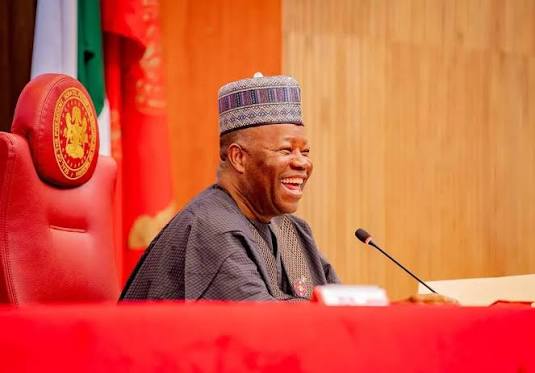
Nigeria’s political landscape is entering an early phase of maneuvering ahead of the 2027 general elections, and Senate President Godswill Akpabio believes the opposition may struggle to mount a coherent challenge to the ruling party.
Speaking in Uyo during a reception for First Lady Oluremi Tinubu, Akpabio argued that opposition parties remain divided and could stay that way until the next election cycle concludes.
Akpabio pointed to what he described as premature political mobilisation by opposition figures before the official timeline set by the Independent National Electoral Commission (INEC).
INEC has scheduled the formal commencement of political activities for August 26, 2026, yet several politicians have already begun coalition talks and campaign-style consultations across the country.
Advertisement
According to the Senate President, such early activity reflects internal confusion rather than strategic preparation.
He also suggested that legislative resistance from opposition parties often signals that the ruling party’s policies are on the right track.
Akpabio cited leadership disputes within major opposition platforms, particularly the Labour Party and the Peoples Democratic Party (PDP).
In recent months, both parties have faced competing leadership claims, court cases and factional disagreements, issues widely reported by multiple Nigerian media outlets.
While some reports focused mainly on Akpabio’s criticism, the broader political context reveals deeper structural problems.
Several opposition figures are currently exploring coalition platforms or new political alliances, an indication that existing party structures may be struggling to unify influential actors ahead of 2027.
The Senate President’s remarks also highlight a strategic reality within Nigerian politics: the ruling party appears to be positioning itself early while opposition groups attempt to rebuild internal cohesion.
Advertisement
Yet critics argue that dismissing the opposition’s challenges could underestimate the fluid nature of Nigerian electoral alliances.
Historically, shifting coalitions have reshaped election outcomes, including the political realignments that led to the formation of the All Progressives Congress (APC) in 2013.
The ultimate concern now is whether opposition parties can overcome internal disputes and present a unified alternative before campaign season formally begins.
You must log in to comment or reply.
Comments