
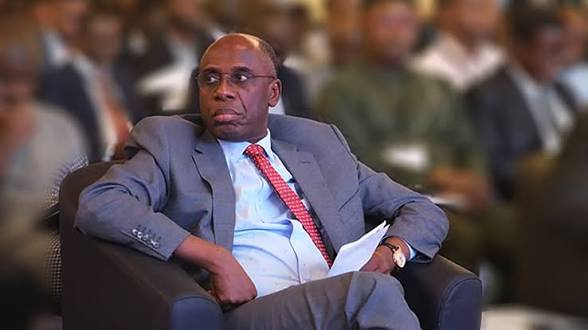
Former Minister of Transportation and ex-Rivers State governor, Rotimi Amaechi, has openly questioned the electoral strength of former Vice President Atiku Abubakar ahead of the African Democratic Congress presidential primary, intensifying tensions within Nigeria’s emerging opposition coalition before the 2027 elections.
The remarks, delivered during a televised interview on Monday night, highlight the growing struggle inside the ADC as leading political figures attempt to position themselves as the strongest challenger to President Bola Tinubu. Beyond the public exchanges, the contest reflects a deeper debate about electability, regional balance, and the future direction of opposition politics in Nigeria.
Speaking during an interview on Trust TV, Amaechi acknowledged Atiku’s long-standing dominance in party primaries but argued that repeated primary victories had not translated into national electoral success.
“I listened when the former vice president said he never failed a primary before. I hope this will be the first time he will fail primary,” Amaechi said.
He added that the real issue before ADC delegates was not popularity inside party structures but the ability to win a general election.
“The issue is that at all times that you have passed primary, you have not won an election. So it’s about electability,” he stated.
Amaechi also attempted to frame himself as a fresher political alternative, stressing that unlike Atiku, he had never contested a presidential election before.
“I’ve never run. If nothing else, I can argue that I’ve never run any presidential election,” he said.
However, a closer look shows the comments were not merely personal criticism. They appear designed to tap into growing concerns among opposition supporters who fear that repeated presidential candidacies could weaken efforts to unseat the ruling APC in 2027.
Advertisement
The African Democratic Congress is expected to hold its presidential primary later this month as multiple heavyweight contenders continue consultations behind closed doors.
Besides Amaechi and Atiku, economist Mohammed Hayatu-Deen has also emerged as a prominent aspirant. Party insiders have repeatedly hinted at possible consensus talks, although no official candidate has been endorsed.
While some media platforms focused mainly on the clash between Amaechi and Atiku, other reports have highlighted fears of internal fragmentation within the opposition coalition. Reuters recently noted that opposition negotiations have already been affected by disagreements over leadership, regional balance, and candidate selection.
Yet the deeper issue is whether the ADC can avoid the divisions that weakened opposition alliances in previous election cycles. Nigeria’s opposition parties have historically struggled to maintain unity once presidential ambitions collide with regional and personal interests.
In a notable twist, Amaechi also praised both Atiku and former Labour Party presidential candidate Peter Obi, arguing that either man could govern Nigeria more effectively than the current administration.
“If you give this country to Vice President Atiku to govern, I believe he would do well. Just as I think Governor Obi would do well. Honestly, both of them would do better than President Tinubu,” Amaechi said.
That framing leaves out an important political reality: opposition figures increasingly appear willing to publicly acknowledge one another’s strengths, even while competing fiercely behind the scenes. Analysts say this may reflect attempts to preserve coalition talks regardless of who eventually secures the ticket.
Amaechi also criticised President Tinubu’s leadership style, accusing the administration of promoting ethnic considerations in governance.
Referring to former President Olusegun Obasanjo, Amaechi described him as “a huge nationalist” and contrasted that with what he called growing tribal politics under the current government.
“He’s a Nigerian president. He’s not a Yoruba president,” Amaechi said while discussing Obasanjo’s leadership approach.
The comments arrive at a politically sensitive moment as debates over federal appointments, regional inclusion, and resource distribution continue across Nigeria.
Amaechi also weighed in on zoning, arguing that Nigeria’s fragile national cohesion still makes rotational leadership politically necessary.
“The answer is yes and no. Yes in the sense that the country, for now, is yet to be found as a united entity,” he explained.
He further addressed insecurity and grievances in the South-East, warning against political exclusion and marginalisation.
“If they have to be in Nigeria, then they must be part of Nigeria. They must have a sense of belonging that they are Nigerians,” he said.
What makes this more complex is that the 2027 election conversation is increasingly shifting beyond party politics into broader concerns about national stability, economic hardship, and regional distrust.
Advertisement
Nigeria continues to battle inflation pressures, rising living costs, insecurity, and declining public confidence in institutions. Political analysts say opposition candidates may find growing public frustration useful, but only if they can present a united and credible alternative.
The Amaechi-Atiku rivalry may appear like a routine primary battle, but it could shape the structure of Nigeria’s opposition movement ahead of one of the country’s most consequential elections in recent years.
Nigeria has witnessed similar coalition tensions before. In both the 2019 and 2023 election cycles, internal rivalries weakened opposition coordination and fragmented voting blocs across regions.
Current developments suggest the ADC primary may become an early referendum on:
• who the opposition considers most electable,
• whether consensus politics can survive personal ambition,
and how regional balancing will influence the race against Tinubu.
You must log in to comment or reply.
Comments